About us
Gecai Culture stands at the forefront of bringing the past to life through our state-of-the-art Animatronic Dinosaurs, enchanting Animatronic Creatures, vibrant Chinese Festival Lanterns, and tailored Custom Products. As a professional manufacturer nestled in the heart of China, we harbor a deep-seated passion for showcasing our lifelike dinos and animals in museums, exhibitions, zoos, parks, and beyond, aiming to kindle a flame of curiosity and learning in people of all ages.
Get a free quote
Company News
Standard Motor vs Servo Motor Animatronic Dinosaurs: Which Is Right for Your Project
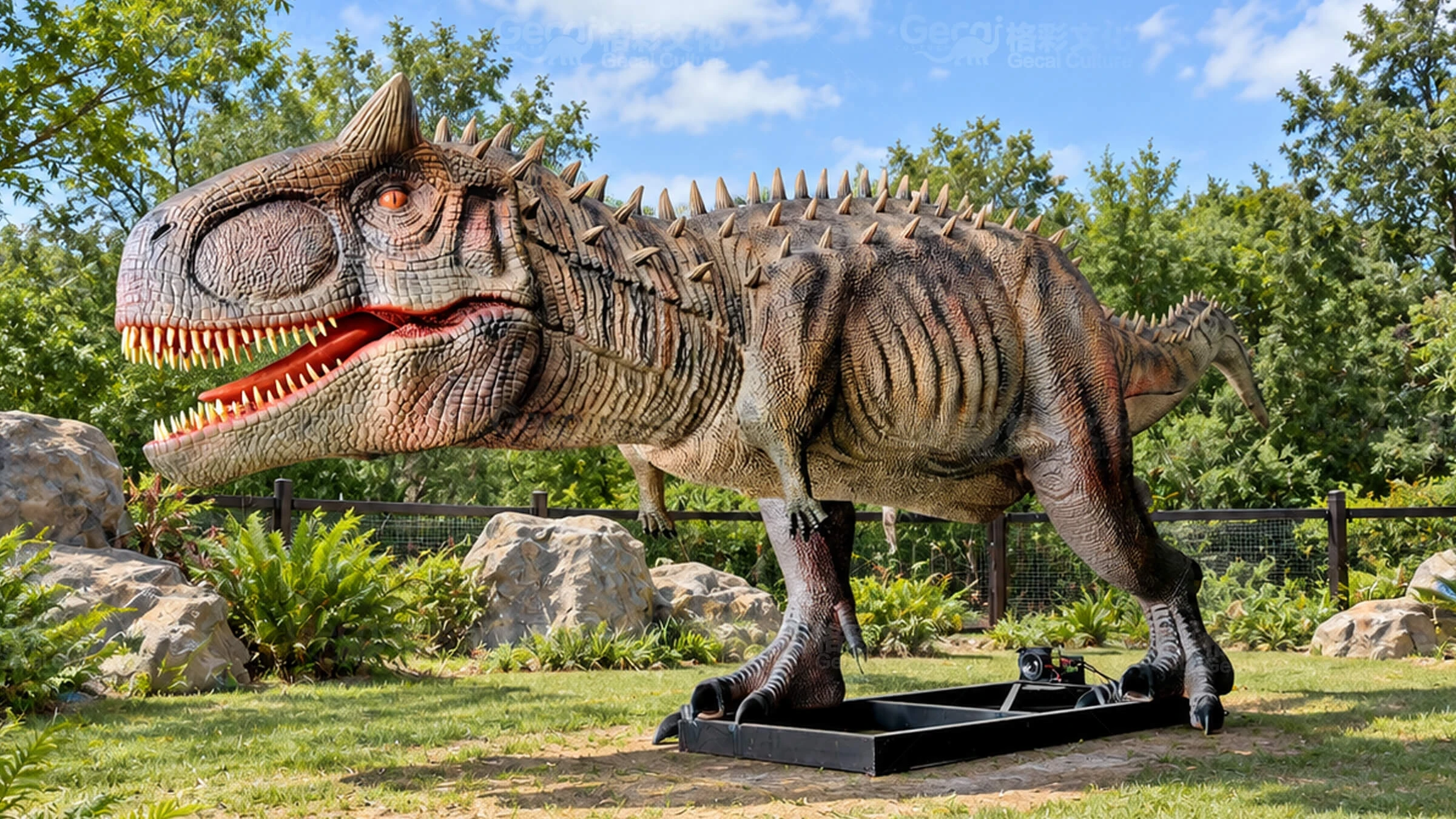
Standard motor systems are suitable for reliable, repeatable preset movements, while servo motor systems are used when a project requires smoother, more precise and better-coordinated motion.
Neither system is automatically suitable for every project. The correct choice depends on the dinosaur’s role, viewing distance, required movements, operating schedule, budget and available maintenance support.
Standard Motor vs Servo Motor: Quick Comparison
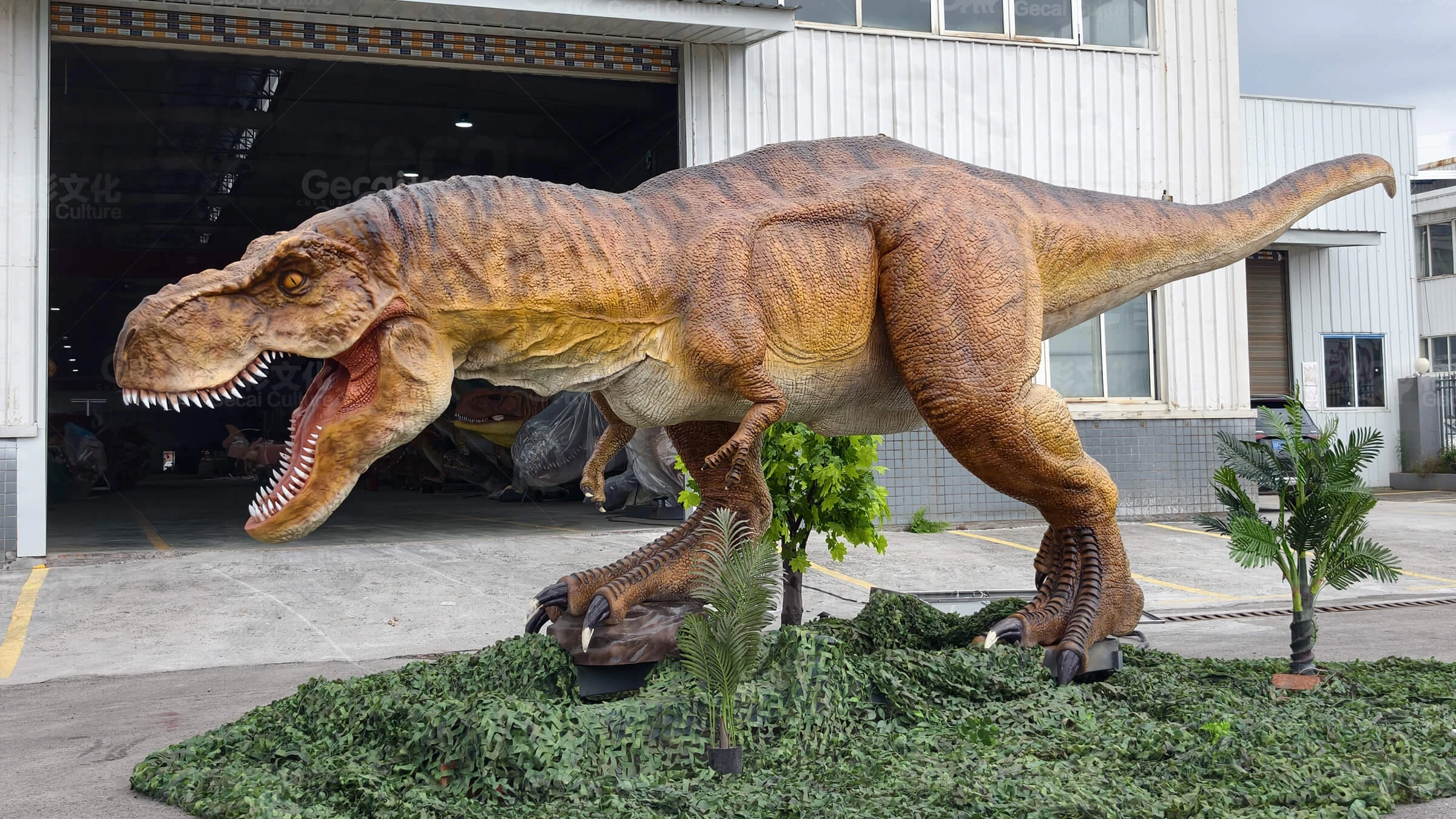
| Factor | Standard Motor | Servo Motor |
|---|---|---|
| Movement style | Repeatable preset actions | Smoother, more precise actions |
| Coordination | Suitable for basic action cycles | Better for coordinated movements |
| Control | Relatively simple | More detailed control |
| Programming | Standard sequences | More complex sequences |
| Initial cost | Usually lower | Usually higher |
| Maintenance | Generally less complex | May require specialist support |
| Typical use | General displays and dinosaur groups | Main attractions and premium exhibits |
Actual performance also depends on the steel structure, transmission design, control program, surface flexibility and production quality. Buyers should not evaluate an animatronic dinosaur only by its motor type.
What Is a Standard Motor Animatronic Dinosaur?
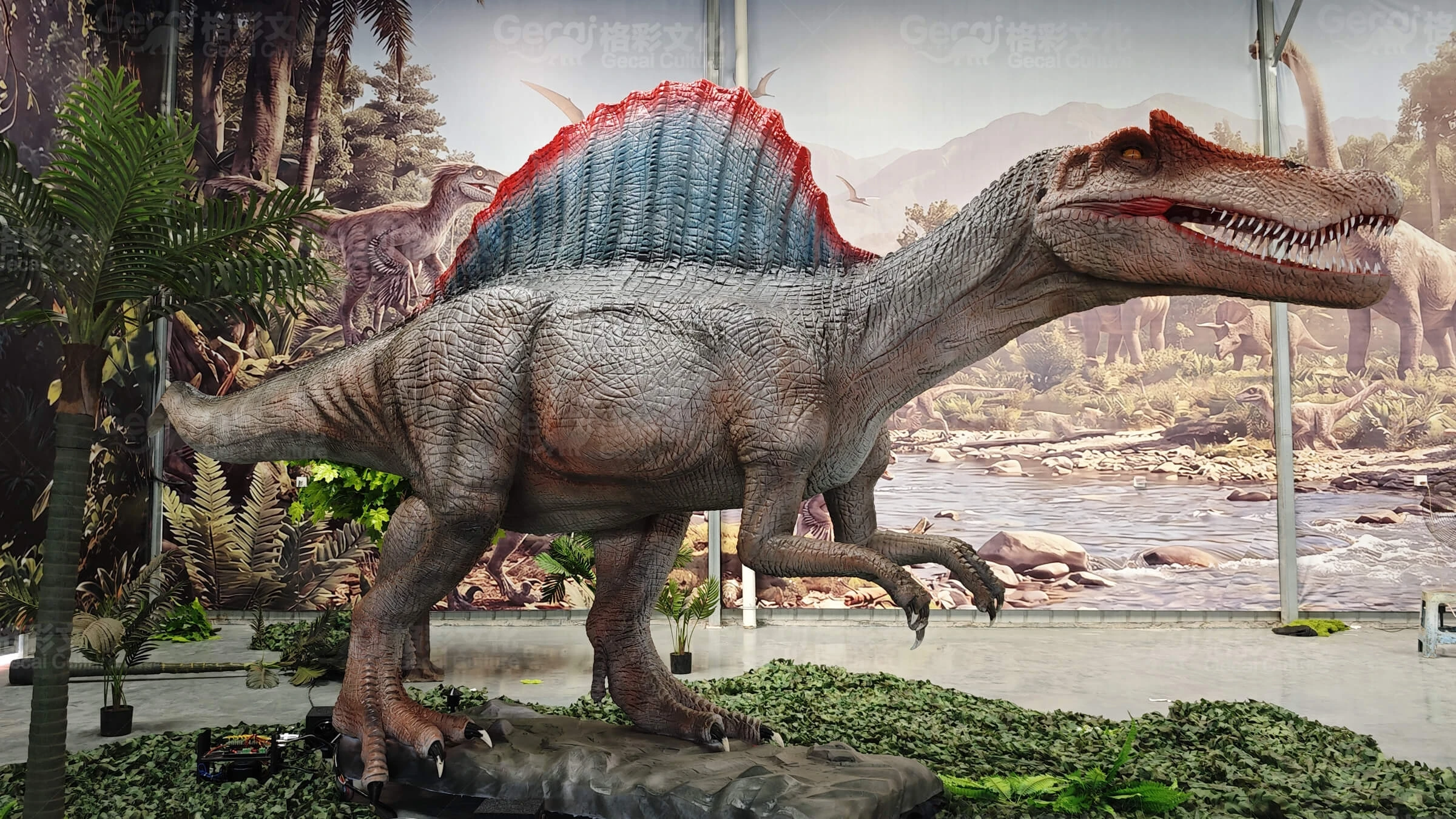
A standard motor animatronic dinosaur typically uses geared motors, mechanical linkages and a controller to produce repeatable movements. The actions follow a preset operating cycle.
Common movements include:
Mouth opening and closing
Head turning
Neck lifting
Forelimb movement
Body breathing
Tail swinging
Synchronized sound
Standard motors are often suitable for large dinosaur parks, outdoor exhibitions and projects that require multiple models to operate regularly. Their relatively straightforward control structure can also make routine operation and fault diagnosis easier.
However, "standard motor" does not mean poor movement. A well-designed steel frame, appropriate movement range and carefully adjusted program can still produce an effective and realistic display.
What Is a Servo Motor Animatronic Dinosaur?
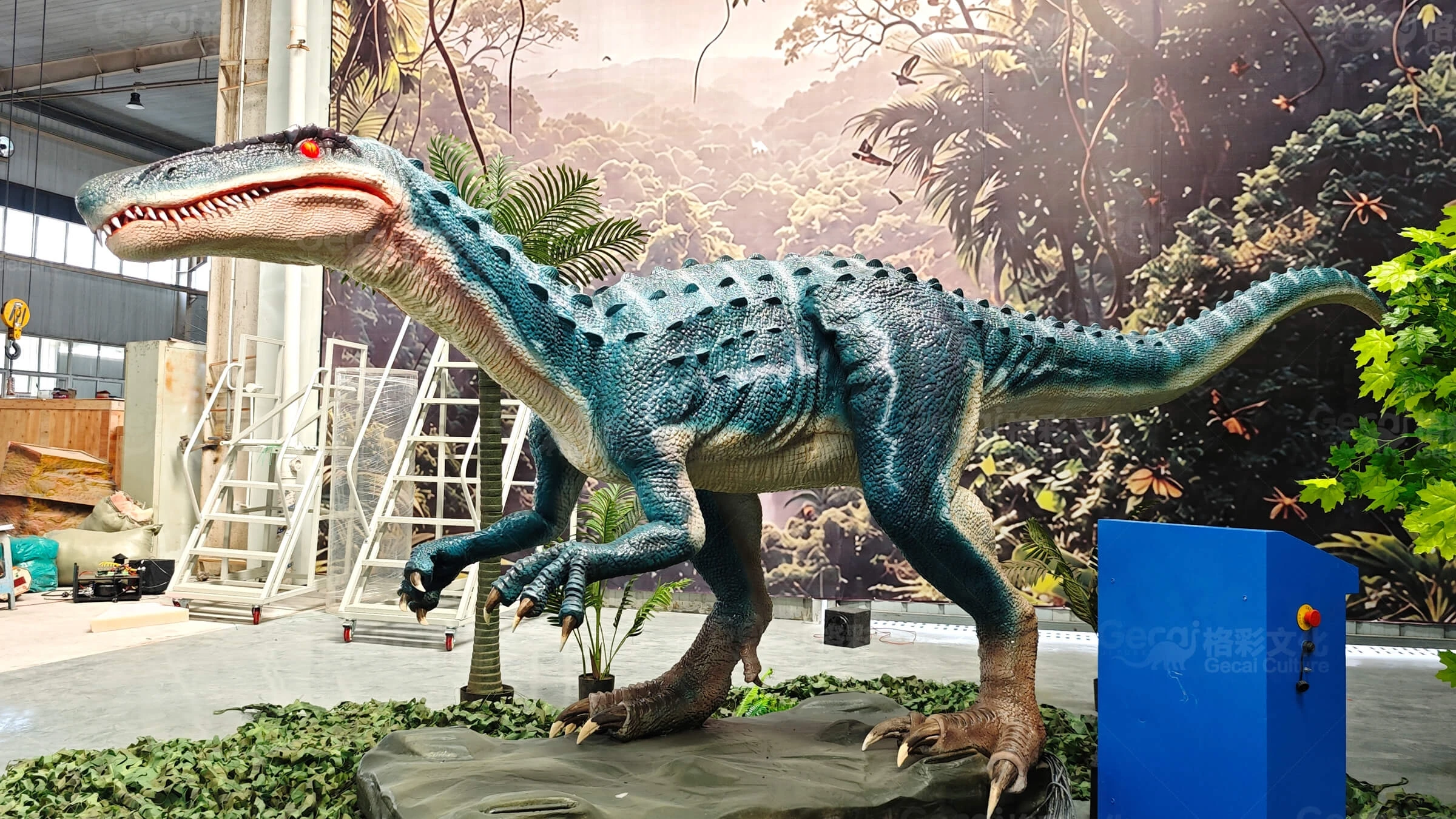
A servo motor system provides more detailed control over movement position, speed and range. When supported by suitable mechanical design and programming, it can create smoother starts, stops and changes of direction.
Servo systems are useful for actions that visitors observe at close range, such as:
Small head and neck adjustments
Smooth mouth movement
Eye and eyelid movement
Coordinated head and body motion
Changes in movement speed
Multi-stage action sequences
Servo animatronic dinosaurs are commonly considered for main attractions, museum displays, trade shows and premium indoor exhibits.
A servo motor alone does not guarantee realistic movement. The internal structure, programming, skin flexibility and movement coordination must work together.
How Do Their Movements Differ?
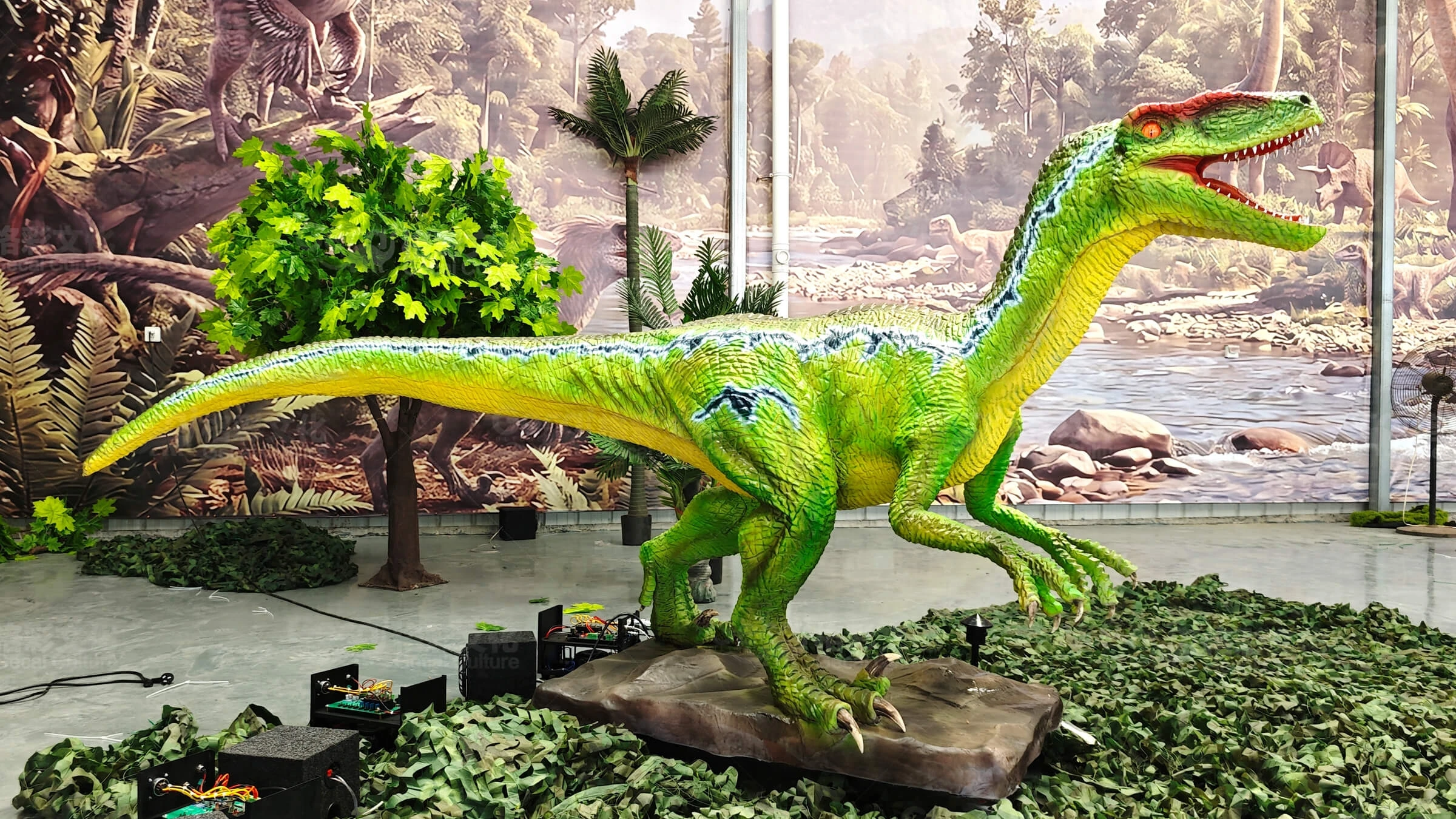
Standard motor systems are effective for repeated movements with a clear rhythm. For example, a dinosaur may turn its head, open its mouth, move its forelimbs and swing its tail during a fixed operating cycle.
Servo systems allow the manufacturer to control movement more precisely. A head can move slowly before turning faster, or several movements can begin at different times to create a more natural sequence.
Viewing distance is an important selection rule. Visitors viewing a dinosaur from a distance may not notice small differences in motion precision. For a central model viewed from only a few metres away, smoother and more detailed movements may provide greater visual value.
Which System Costs More?
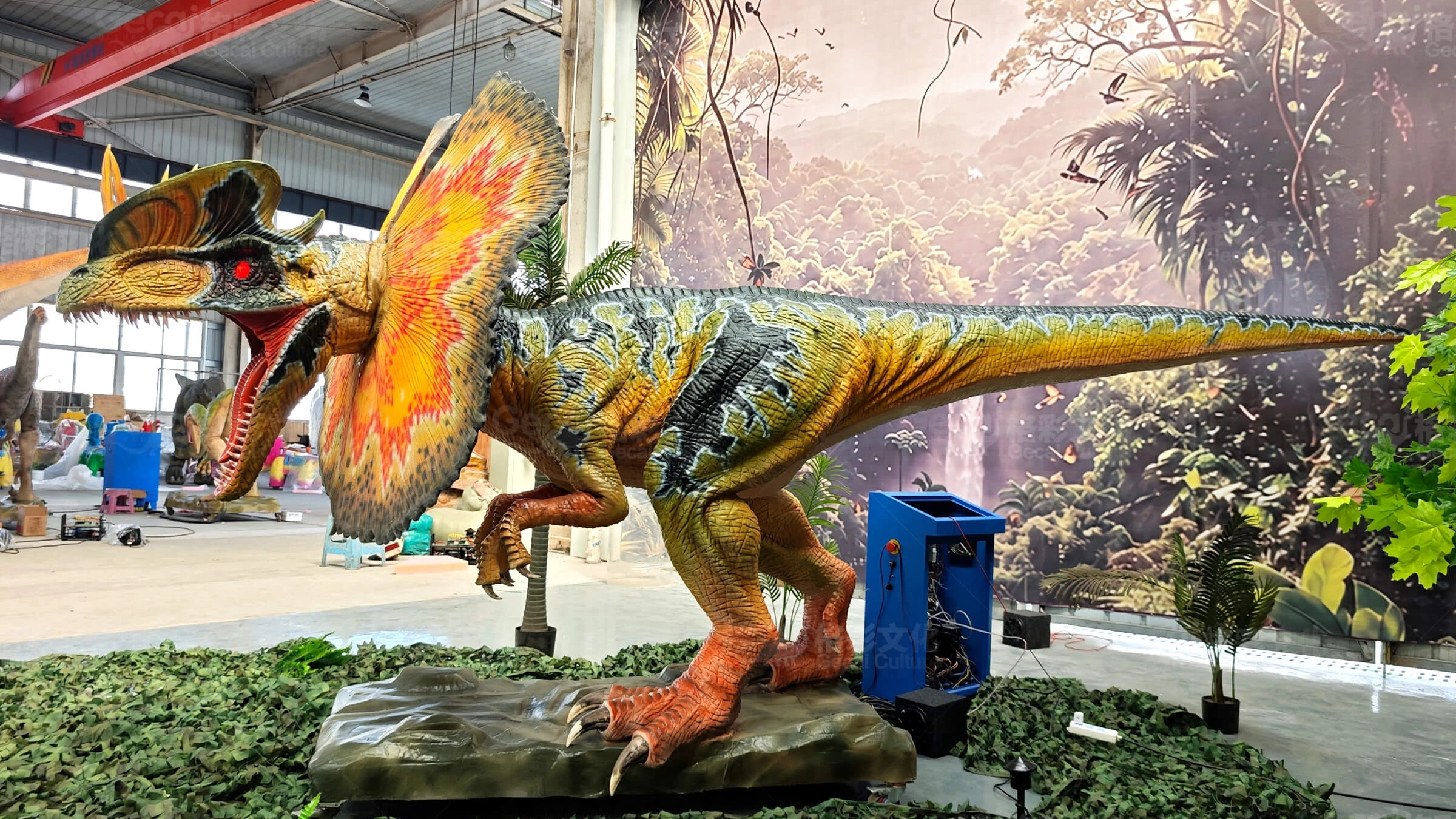
Servo motor animatronic dinosaurs usually cost more because they may require additional control components, more complex programming and longer testing and adjustment.
The total price is also affected by:
Dinosaur dimensions
Number of movements
Number and type of motors
Mechanical complexity
Control method
Sound, sensors and special effects
Surface finish
Testing requirements
Buyers should compare complete movement specifications rather than only asking for a "standard version" and a "servo version." Two suppliers may use the same description but provide different action ranges, components and control systems.
Learn more about the factors that affect animatronic dinosaur prices, including size, movement complexity, materials and customization.
Which System Is Easier to Maintain?
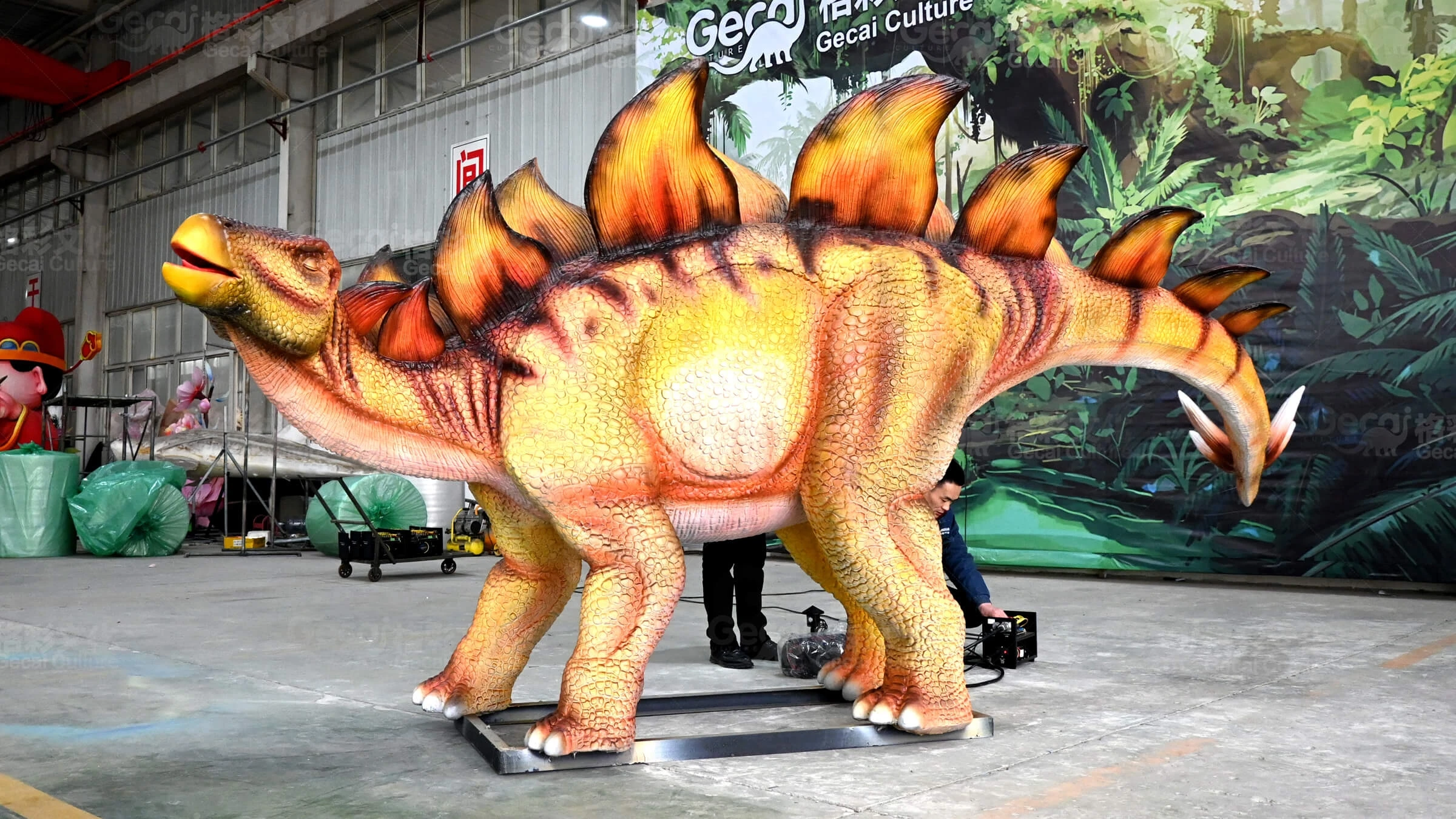
Standard motor systems generally have a simpler operating structure, which may make them suitable for projects with limited local technical support.
Servo systems can require more specialized troubleshooting, adjustment or calibration. Buyers should confirm whether the manufacturer provides operating manuals, wiring information, remote technical support and compatible replacement parts.
Maintenance requirements also depend on daily operating hours, outdoor exposure, model size and movement complexity. Neither system should be described as maintenance-free or guaranteed to last longer in every application.
Before opening the dinosaur or touching internal components, operators should disconnect and isolate the power.
For routine inspection and fault-prevention advice, read our animatronic dinosaur maintenance guide.
Which Motor System Fits Your Project?
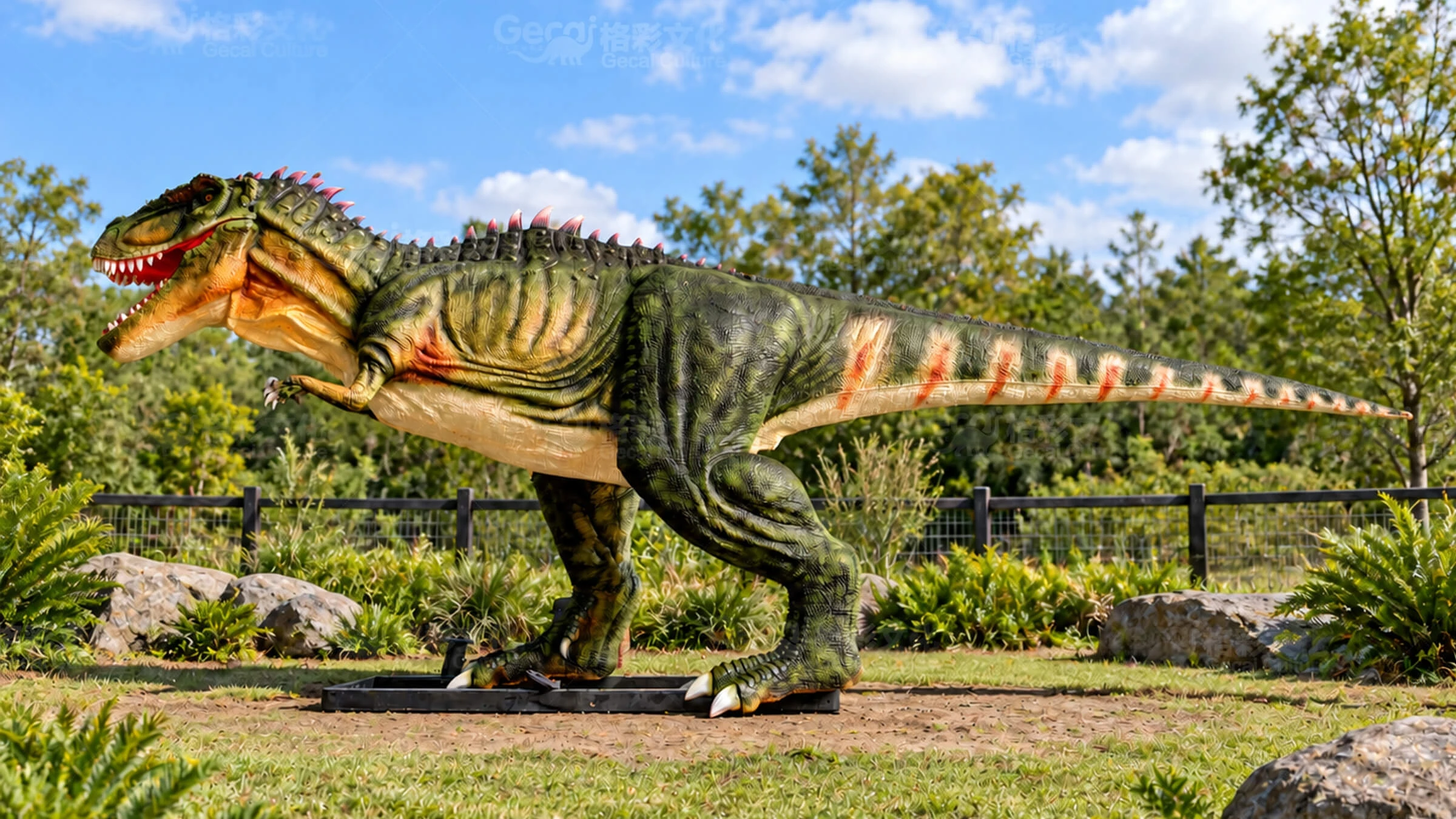
Standard motors may be suitable when:
The project includes many dinosaur models
Visitors mainly watch from a distance
Movements are simple and repetitive
The available budget must cover a large exhibition
The venue prefers less complex operation
The models serve as supporting displays
Servo motors may be suitable when:
The dinosaur is a central attraction
Visitors observe it at close range
Smooth movement is a priority
The design includes detailed head, neck or eyelid actions
Several movements must be coordinated
The project requires a premium presentation
A twenty-model dinosaur park does not necessarily need servo systems for every dinosaur. One practical solution is to use servo systems for several key attractions and standard motors for supporting models.
Can Standard and Servo Motors Be Combined?
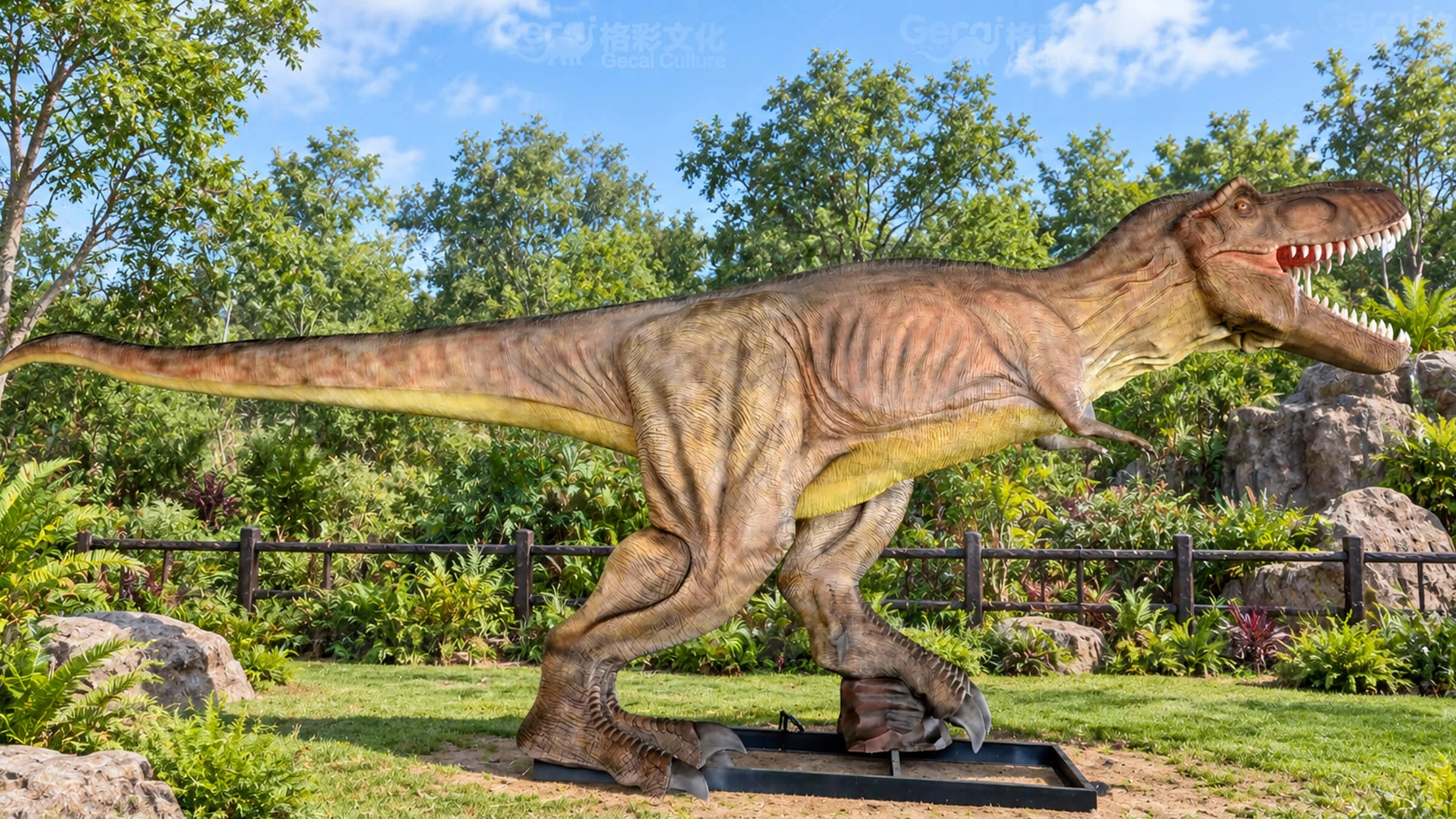
Different systems can be used within the same project. A main Tyrannosaurus rex may use servo control, while smaller dinosaurs along the visitor route use standard motors.
Some individual models may also combine different drive solutions when the mechanical design allows it. Feasibility should be confirmed during the design stage because the steel structure, controller and movement system must be planned together.
What Should Buyers Confirm Before Ordering?
Ask the manufacturer to provide a clear movement and control specification that includes:
Every planned movement
Motor type used for each action
Movement direction and approximate range
Whether speed can be adjusted
How movements are coordinated
Control and activation method
Power requirements
Maintenance and spare-parts support
Pre-shipment testing procedure
Descriptions such as "multiple movements" or "advanced servo dinosaur" are not detailed enough for comparing quotations.
Buyers should also provide the dinosaur size, installation environment, viewing distance, daily operating schedule, required movements, destination and project budget.
Before contacting a manufacturer, review the information required for an accurate animatronic dinosaur quotation.
Frequently Asked Questions
Are servo animatronic dinosaurs always better?
No. Servo systems provide more precise control, but standard motors may be more practical for basic actions, larger dinosaur groups and cost-controlled projects.
Can standard motors create realistic movements?
Yes. Realism also depends on mechanical design, movement range, programming, surface flexibility and the relationship between different actions.
Do servo dinosaurs require more maintenance?
They may require more specialized technical support because the control and adjustment systems are more complex. Actual maintenance depends on the design and operating conditions.
Can a standard motor dinosaur be upgraded to servo later?
Not always. An upgrade may require changes to the steel frame, transmission system, controller, wiring and programming. It is better to confirm future requirements before production.
Conclusion
Choose standard motors for repeatable movements, simpler operation and cost-controlled group displays. Choose servo motors when smoother, more precise and coordinated actions are important.
Send Gecai Culture your preferred dinosaur, size, movements, viewing distance, installation environment, destination and budget. Our team can recommend a suitable standard motor, servo motor or mixed project configuration.
Tags: