About us
Gecai Culture stands at the forefront of bringing the past to life through our state-of-the-art Animatronic Dinosaurs, enchanting Animatronic Creatures, vibrant Chinese Festival Lanterns, and tailored Custom Products. As a professional manufacturer nestled in the heart of China, we harbor a deep-seated passion for showcasing our lifelike dinos and animals in museums, exhibitions, zoos, parks, and beyond, aiming to kindle a flame of curiosity and learning in people of all ages.
Get a free quote
Company News
How Are Animatronic Dinosaurs Shipped Internationally?
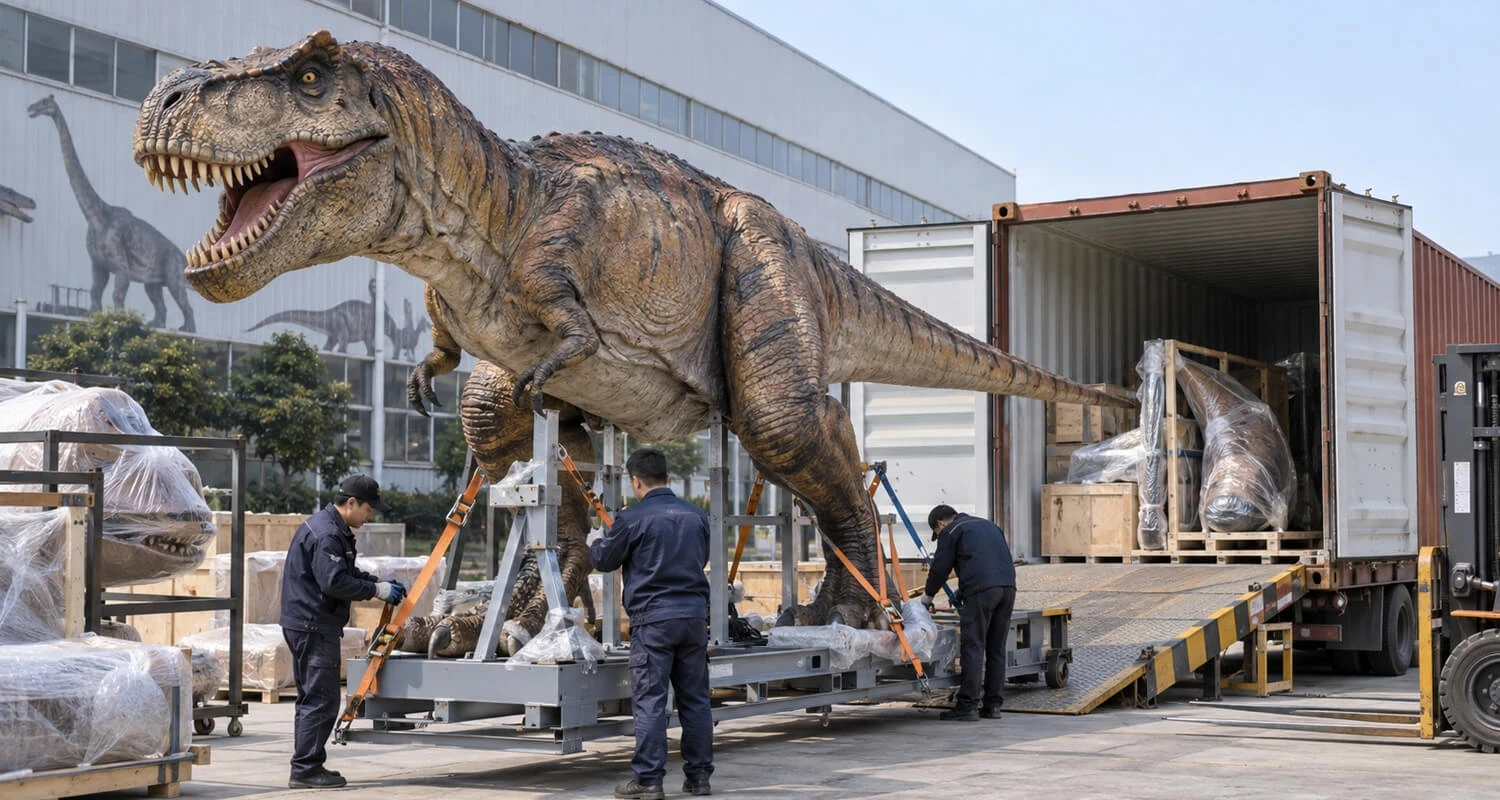
Animatronic dinosaurs are usually tested, divided into transportable sections, protected with suitable packaging and shipped internationally by sea, air, road or rail. The correct method depends on the model’s size, posture, quantity, destination and delivery schedule.
For large projects, transportation should be considered during product design. The manufacturer must ensure that each section can fit inside the selected container, pass through the venue entrance and be safely reassembled after arrival.
Animatronic Dinosaur Shipping Process
| Stage | Main Work |
|---|---|
| Shipping planning | Confirm dimensions, quantity and destination |
| Testing | Check movements, sound and controls |
| Disassembly | Separate the model into transportable sections |
| Packing | Protect the surface, joints and electrical parts |
| Export | Arrange freight and shipping documents |
| Arrival | Complete customs clearance and unloading |
| Installation | Reassemble, secure and test the model |
1. How Is the Dinosaur Prepared for Transportation?
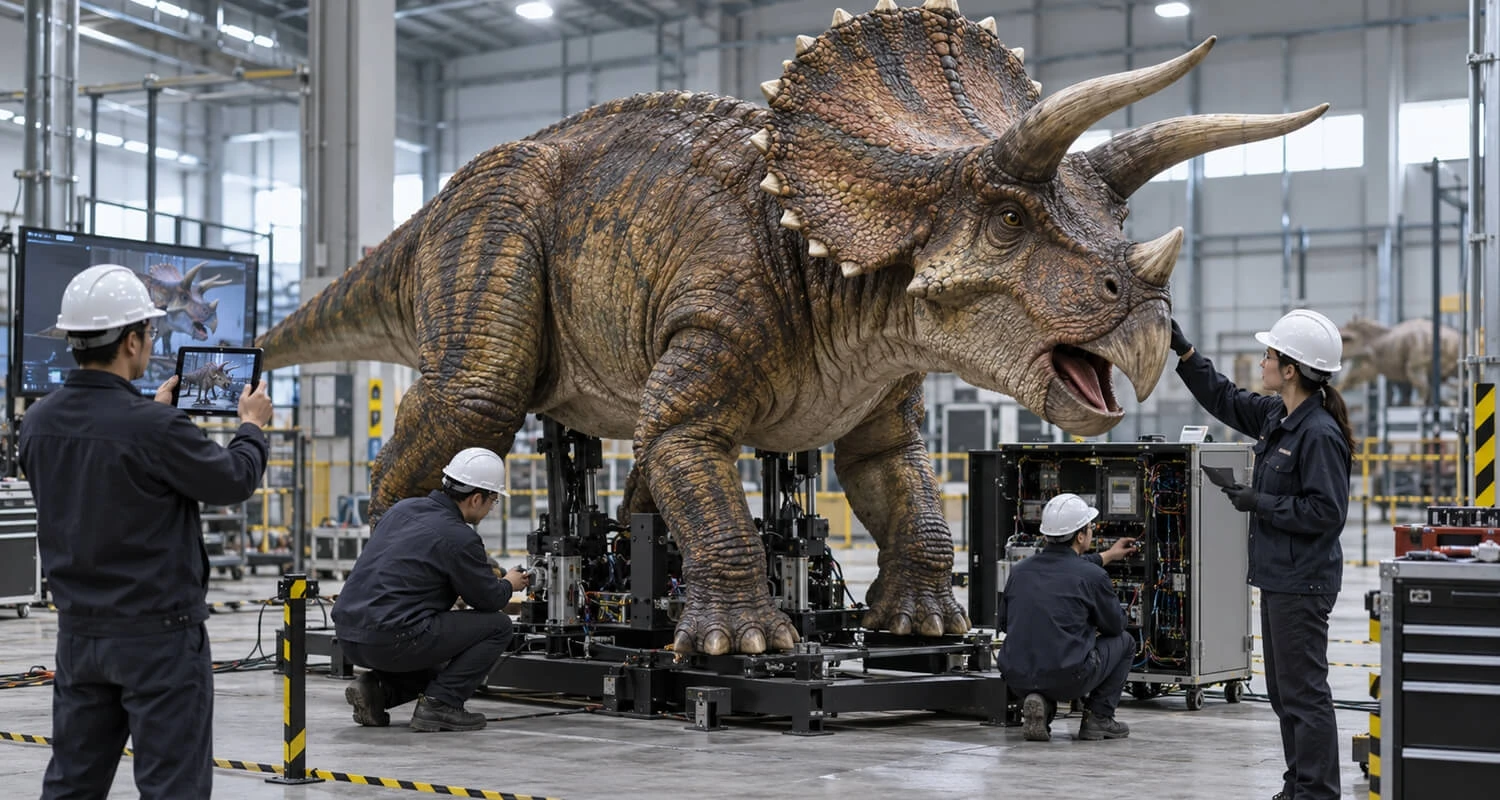
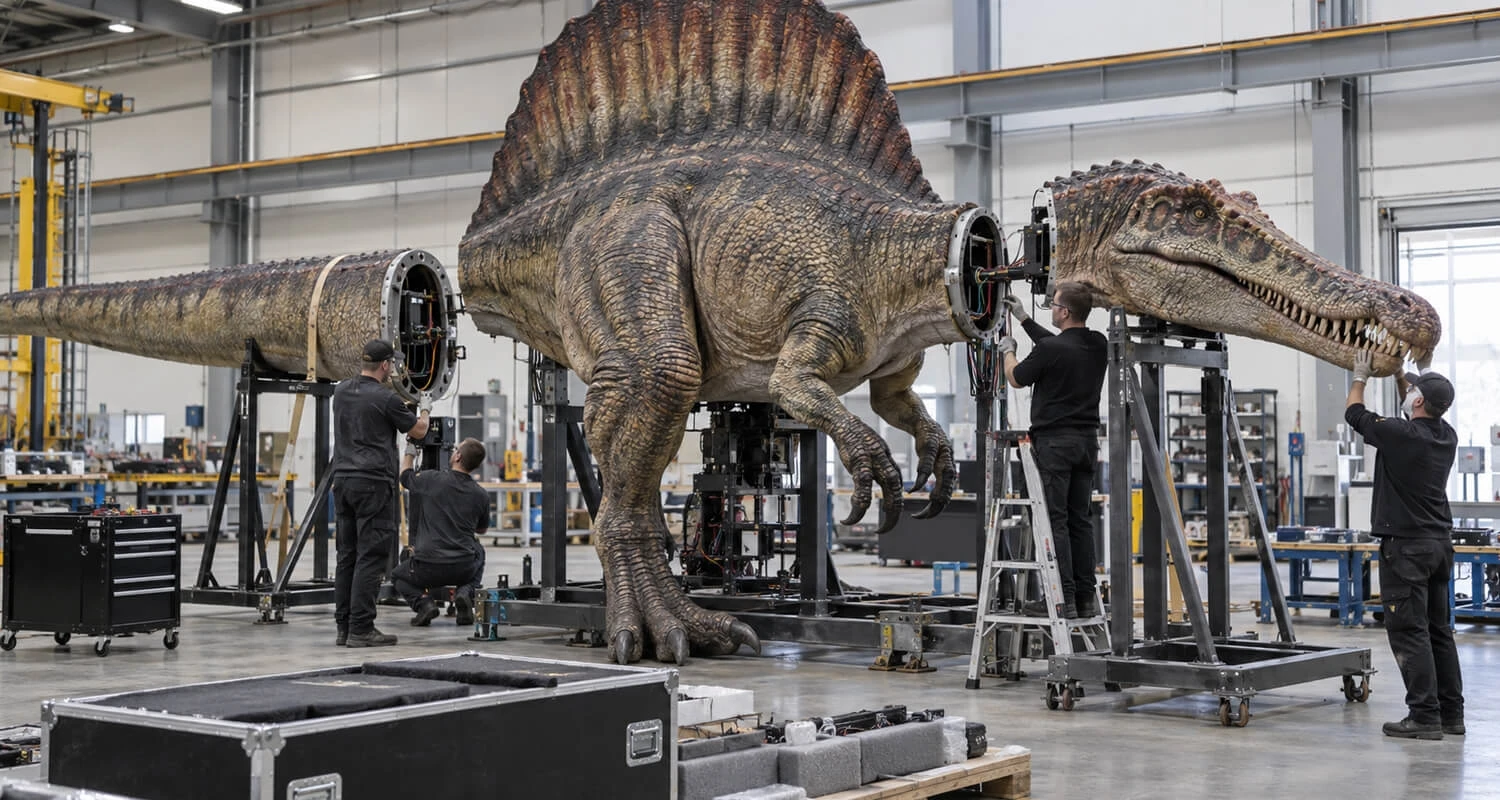
Large animatronic dinosaurs are often divided into sections before shipping. Depending on the design, these sections may include the body, head, tail, legs, base and decorative accessories.
The manufacturer should plan the separation points carefully so that the dinosaur is easier to transport without making installation unnecessarily complicated. Electrical connectors, structural joints and matching parts should be clearly identified.
Small models may be shipped almost fully assembled if their packed dimensions allow. Large dinosaurs with raised heads, long tails or wide bodies usually require more sections.
2. What Is Checked Before Packing?
The complete dinosaur should be tested before disassembly and packing. This confirms that the mechanical and electrical systems are functioning correctly before shipment.
Pre-shipment checks normally include:
Movement sequence
Sound system
Sensors, timers or remote controls
Surface and paint condition
Steel base and connection points
Power requirements
Included accessories
Photos and videos can record the product’s condition and operation before packing. They can also help buyers understand the installation process and identify the correct position of each section.
3. How Are Animatronic Dinosaurs Packed?
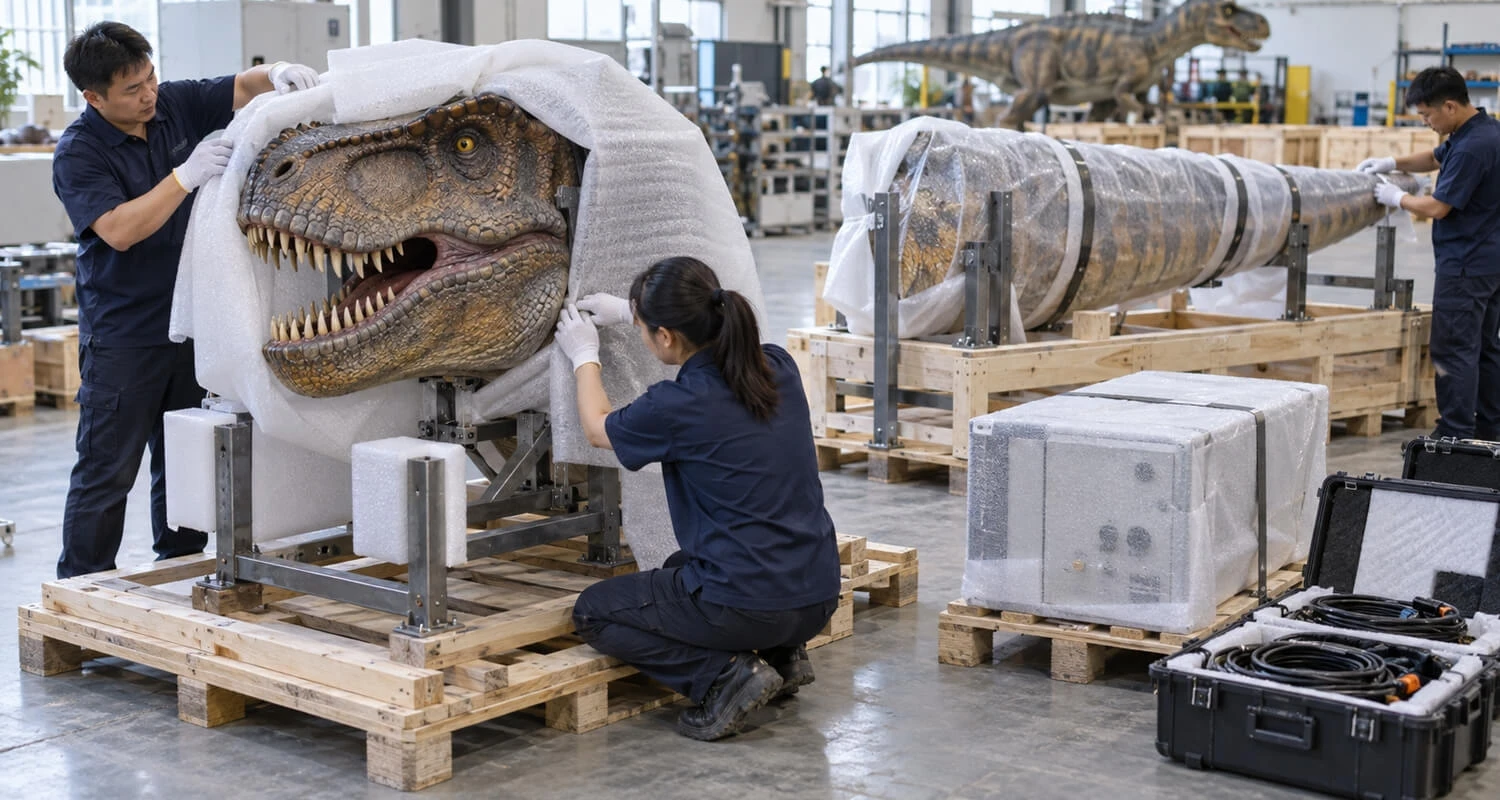
Packaging must protect the dinosaur from movement, pressure, moisture and surface friction during handling and transportation.
Soft protective materials are used around painted surfaces, skin, claws, teeth and other vulnerable areas. Moving joints and separated sections should be secured so that they do not shift inside the container.
Control boxes, cables, speakers, sensors and small accessories are normally packed separately. Transport frames, crates or internal supports may be used depending on the product and shipping method.
Packaging reduces transportation risks but cannot eliminate every possibility of damage. Correct loading, freight handling and unloading are equally important.
4. Which Shipping Method Should Buyers Choose?
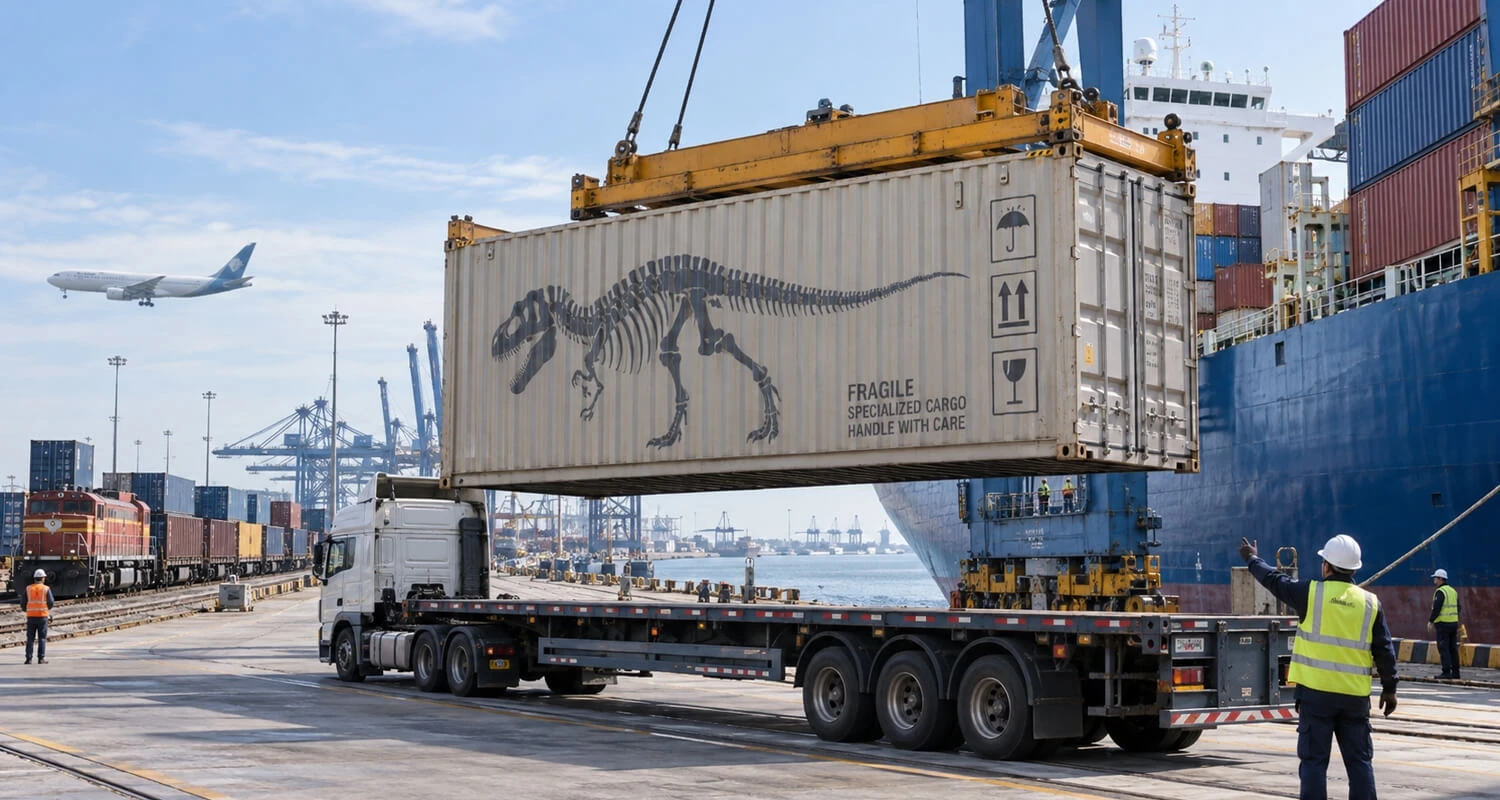
Large animatronic dinosaurs are commonly shipped by sea because ocean freight can accommodate containerized project cargo. Other methods may be suitable for smaller products, urgent orders or certain destinations.
| Method | Suitable For | Main Consideration |
|---|---|---|
| Sea freight | Large models and multiple products | Longer transit time |
| Air freight | Small or urgent orders | Higher freight cost |
| Road freight | Regional and cross-border delivery | Route and vehicle limits |
| Rail freight | Destinations with suitable rail services | Availability and transfers |
The manufacturer or freight forwarder should calculate the shipping method based on packed volume and weight rather than the dinosaur’s advertised length alone.
5. What Documents Are Required?
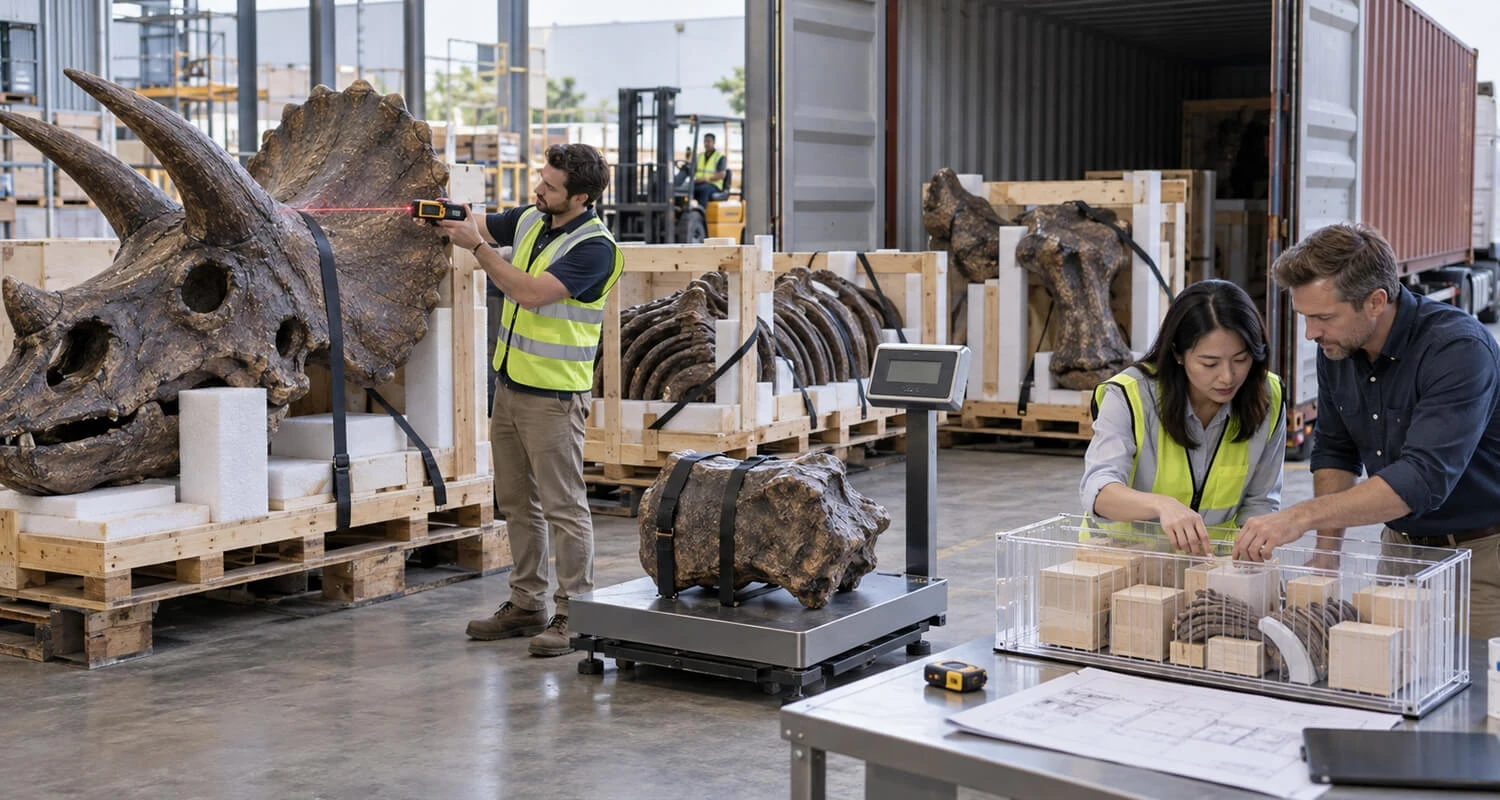
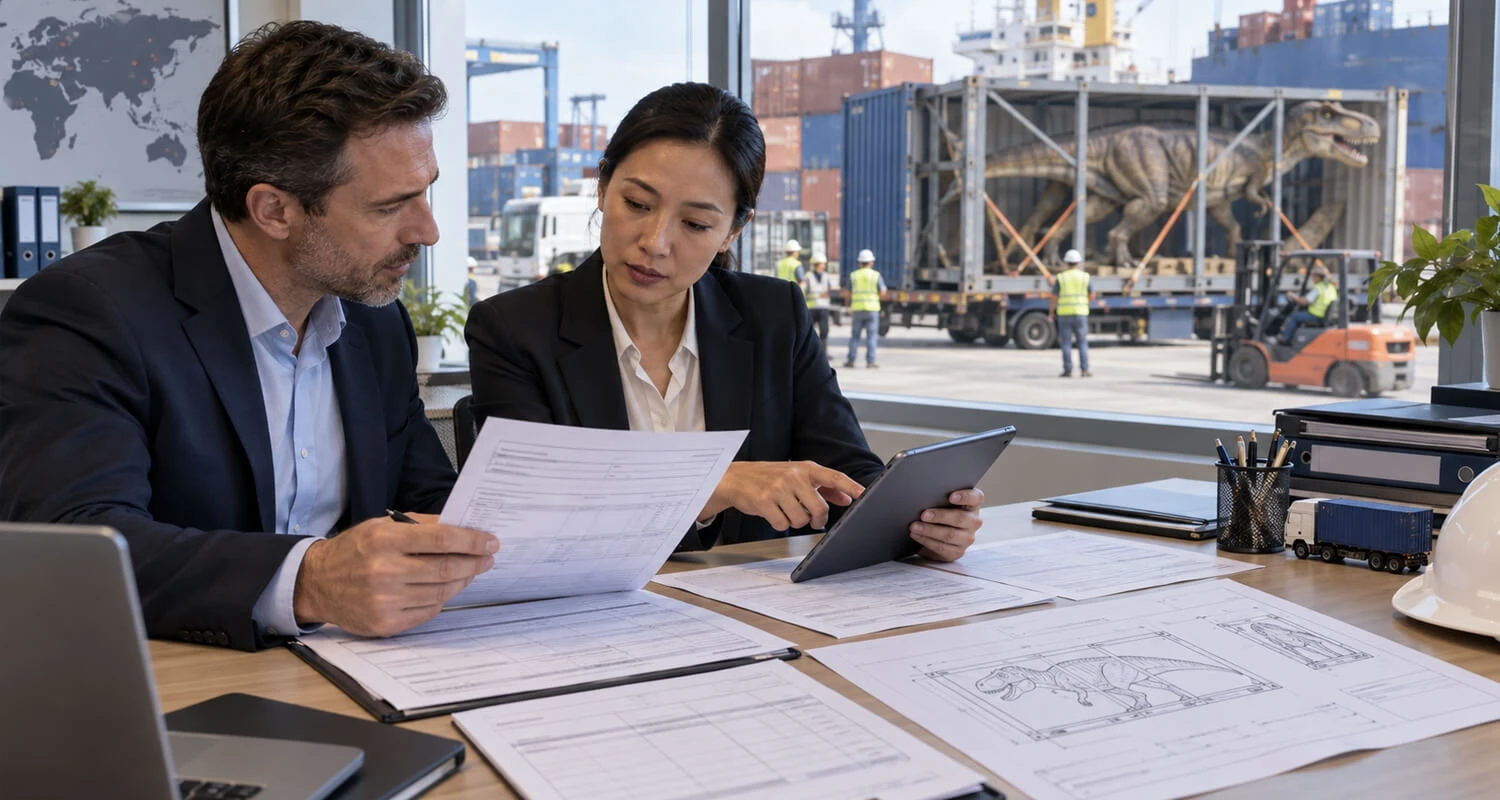
International shipments normally require commercial and transport documents. The exact requirements depend on the destination country, shipping method and product configuration.
Common documents may include:
Commercial invoice
Packing list
Bill of lading or air waybill
Product description
Country-of-origin documents when required
Insurance documents when purchased
The buyer should consult a local customs broker before shipment. Import duties, taxes, documentation and inspection requirements vary by destination and should not be assumed to be the same for every country.
6. What Affects International Shipping Costs?
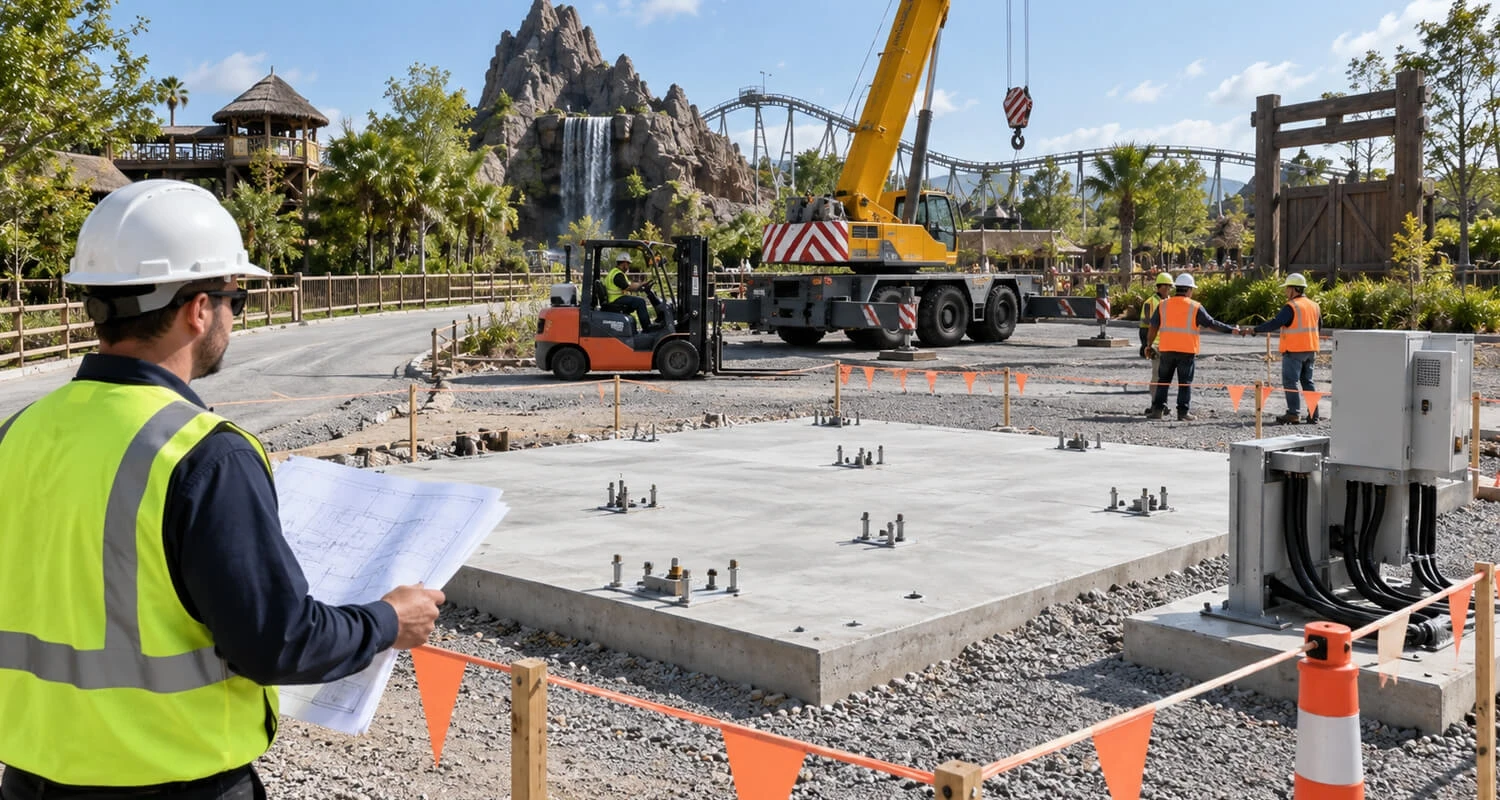
Shipping costs are influenced by the packed dimensions, total weight, number of packages, transport method and destination.
A long dinosaur may be divided efficiently and use less container space than expected, while a shorter model with a wide posture or fixed base may require more space. Special packing, inland delivery, insurance, customs clearance, port charges and installation services can also affect the total project cost.
Before ordering, buyers should confirm which shipping expenses are included in the quotation and which charges must be paid at the destination.
7. What Should Buyers Prepare Before Arrival?
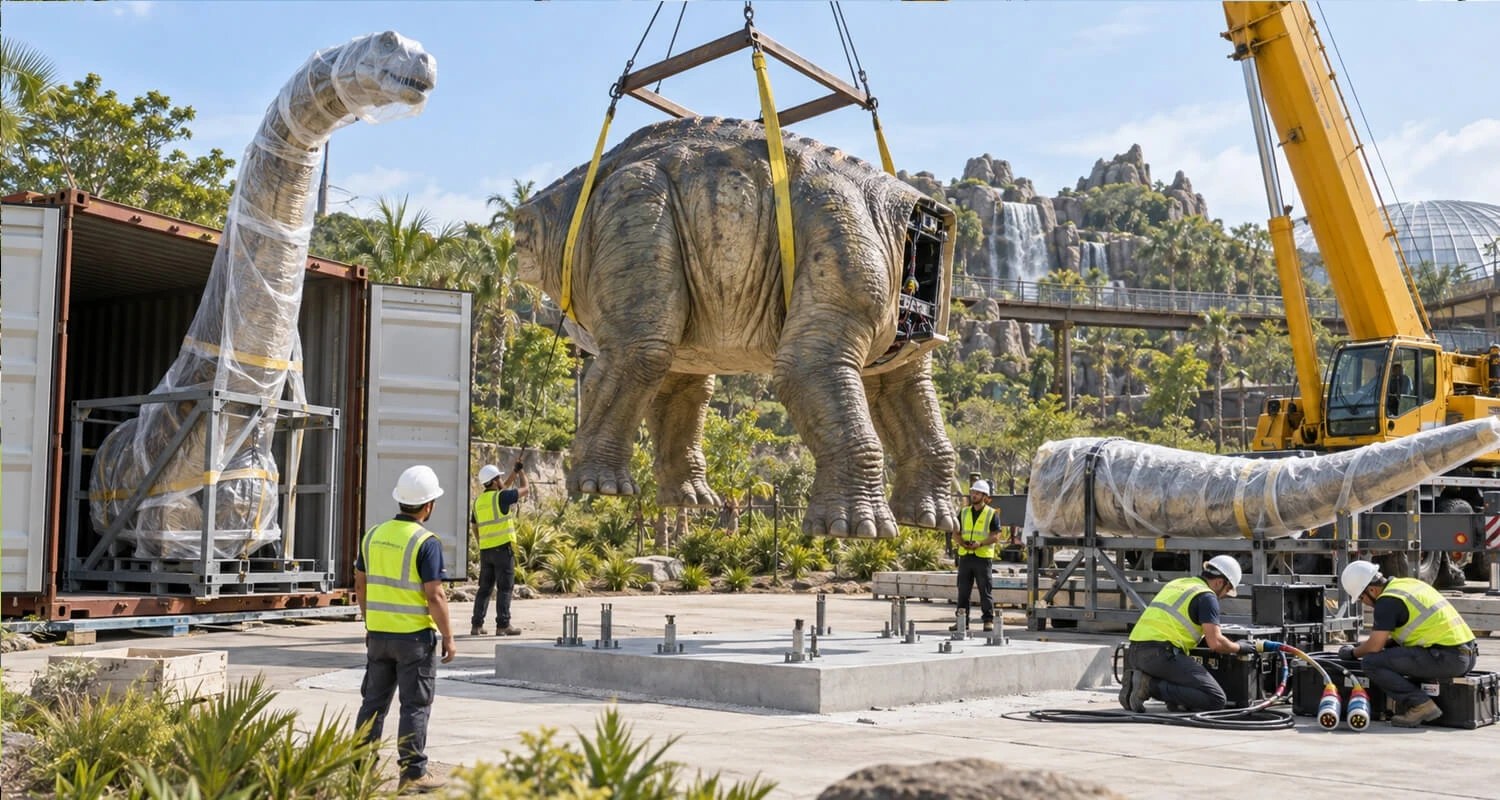
Preparation should begin before the shipment reaches the destination. Delays may occur when the venue lacks unloading equipment, access space or a completed foundation.
Buyers should prepare:
Customs clearance arrangements
A safe unloading and storage area
A forklift, crane or other suitable equipment
Access from the unloading point to the venue
Foundations and fixing points
The correct power supply
Installation tools and personnel
A temporary safety zone
Entrance widths, road conditions, turning space and lifting restrictions should be checked during project planning rather than after shipment.
8. How Are the Dinosaurs Unloaded and Installed?
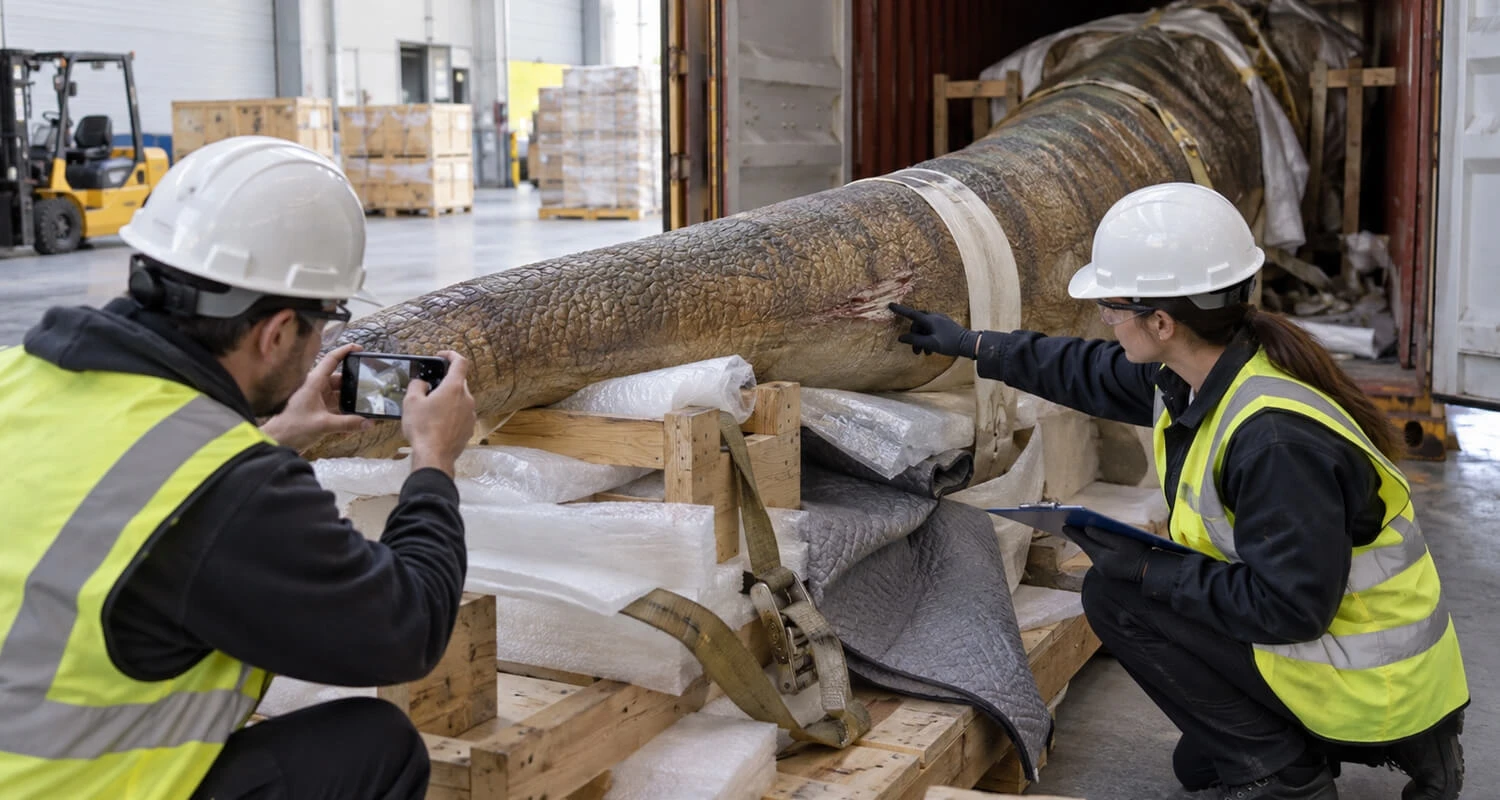
Before unloading, inspect the container and packaging for visible damage and take photographs. Each section should be lifted from the designated supporting position. Workers should never pull the model by its skin, tail, limbs or moving joints.
A typical installation process includes:
Positioning the base
Connecting the main body sections
Installing the head, tail and accessories
Connecting marked electrical cables
Securing the model to the foundation
Testing movements, sound and controls
Checking visitor clearance
Large or technically complex models should be installed by trained personnel using the manufacturer’s instructions or technical support.
9. What If Shipping Damage Is Found?
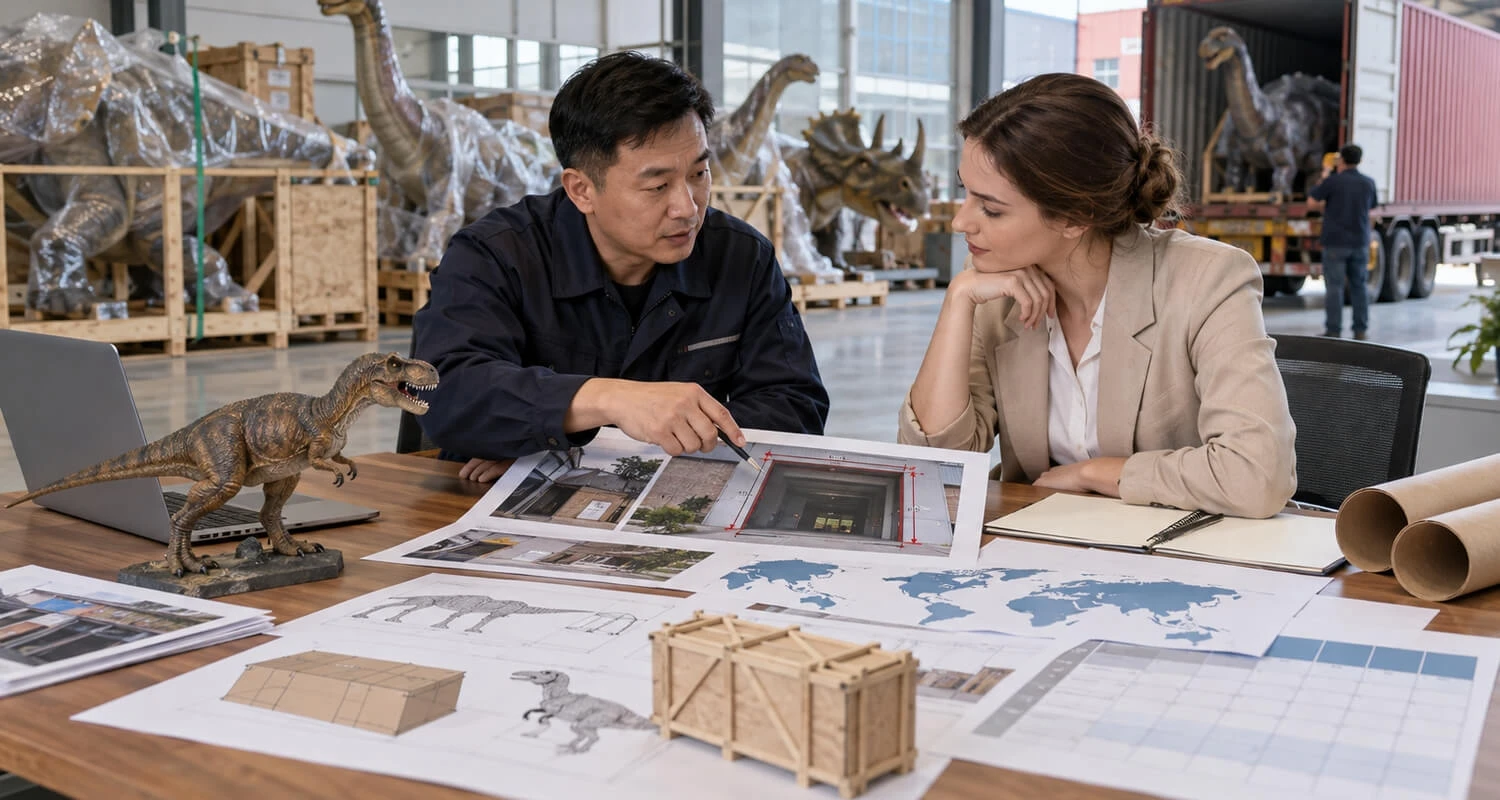
If damage is discovered, photograph the container, packaging and affected product before making repairs. Keep the packaging materials and transport labels, then notify the supplier and logistics provider promptly.
Do not continue operating a model with damaged structural, mechanical or electrical components. Minor surface damage may be repairable on site, but technical guidance should be obtained first.
10. What Information Is Needed for a Shipping Plan?
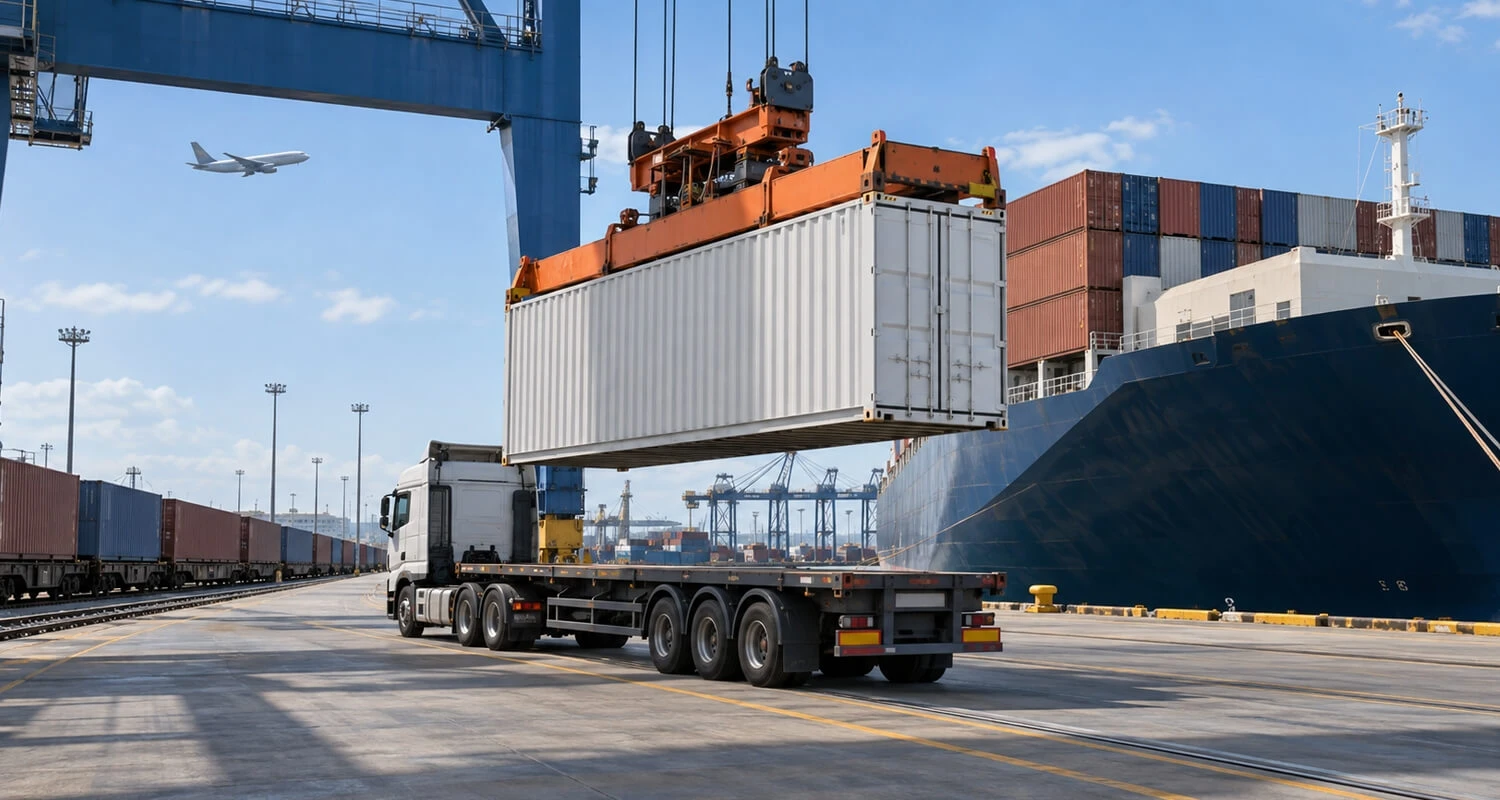
To recommend a suitable transport solution, the manufacturer needs:
Dinosaur type, size and quantity
Destination country and city
Nearest port or delivery address
Required arrival date
Venue entrance dimensions
Road and unloading conditions
Available lifting equipment
Installation requirements
Complete information helps the supplier plan product divisions, packaging, container use and technical support more accurately.
Frequently Asked Questions
Are animatronic dinosaurs shipped fully assembled?
Small models may be shipped assembled. Large models are usually divided into sections and reassembled at the destination.
Can a large dinosaur fit inside a shipping container?
Usually, the structure can be designed in transportable sections. Feasibility depends on the dinosaur’s dimensions, posture and packed volume.
Is international shipping included in the product price?
Not always. Buyers should confirm whether freight, insurance, customs clearance, taxes, destination delivery and installation are included.
Is professional installation required?
It depends on the model’s size and complexity. Large dinosaurs and models with multiple electrical or structural connections may require trained installation personnel.
Conclusion
International animatronic dinosaur shipping involves more than booking freight. Proper section design, pre-shipment testing, protective packing, accurate documentation and destination preparation are all necessary.
Send Gecai Culture the dinosaur size, quantity, destination, venue access conditions and required delivery date. Our team can recommend a suitable packing, shipping and installation plan.
Tags: