About us
Gecai Culture stands at the forefront of bringing the past to life through our state-of-the-art Animatronic Dinosaurs, enchanting Animatronic Creatures, vibrant Chinese Festival Lanterns, and tailored Custom Products. As a professional manufacturer nestled in the heart of China, we harbor a deep-seated passion for showcasing our lifelike dinos and animals in museums, exhibitions, zoos, parks, and beyond, aiming to kindle a flame of curiosity and learning in people of all ages.
Get a free quote
Company News
How to Choose the Right Animatronic Dinosaur Size for Your Venue
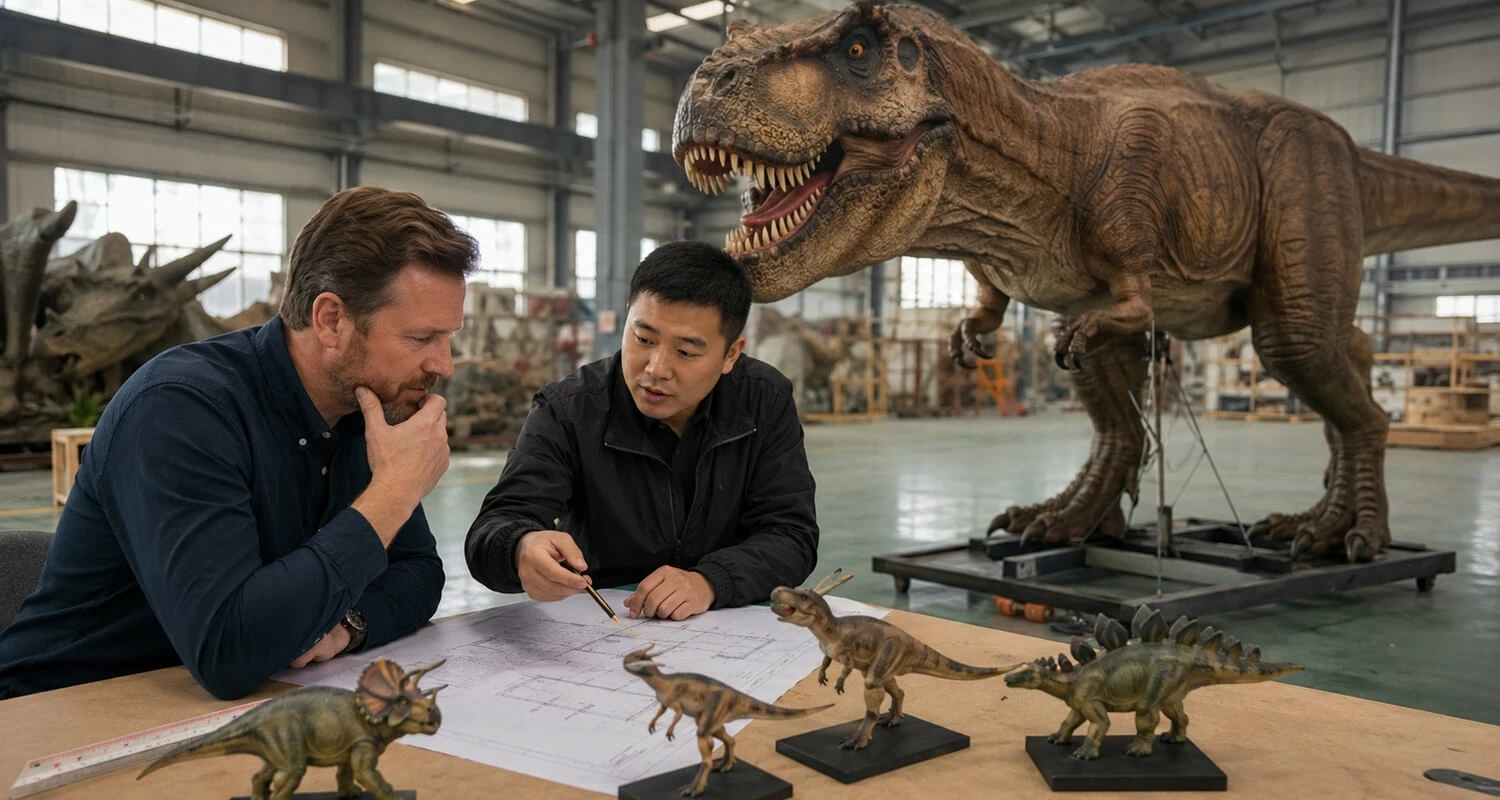
The right animatronic dinosaur size depends on more than the available floor area. Buyers should also consider venue height, viewing distance, dinosaur posture, movement range, visitor routes, delivery access and installation conditions.
A large dinosaur can create a strong landmark, but it may not suit a venue with limited height or narrow entrances. A balanced selection should provide visual impact without creating problems during transportation, installation or daily operation.
Measure the Venue Before Choosing a Size
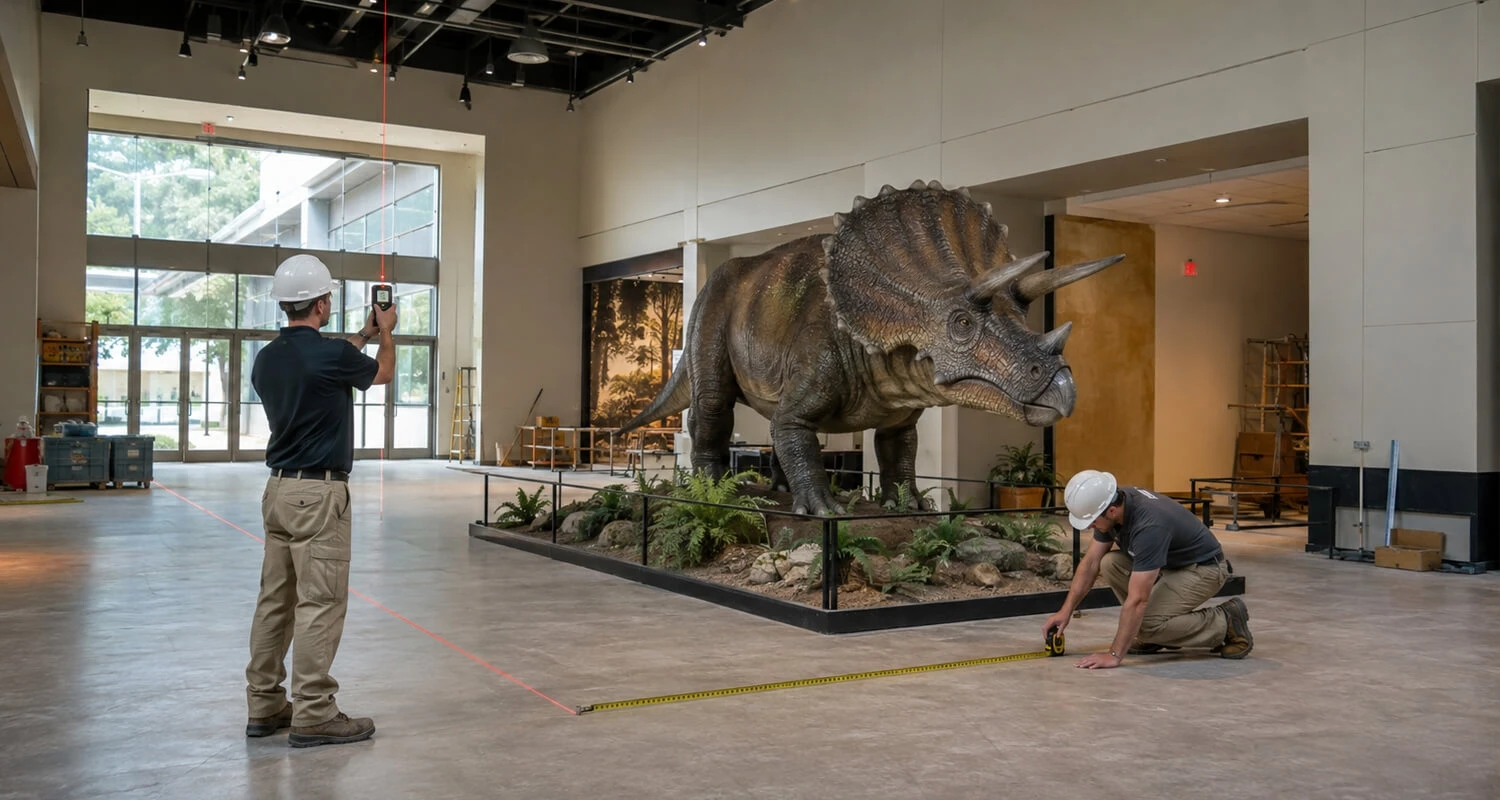
Before selecting a dinosaur, measure the complete space it must pass through and occupy. The model may fit inside the display area but still be too large for the building entrance, corridor or installation route.
Important measurements include:
Available length, width and height
Entrance width and height
Corridor and turning space
Ceiling height
Visitor walkway width
Maintenance access
Access for trucks, forklifts or cranes
Indoor projects should also consider floor conditions, emergency routes and power locations. Outdoor projects need suitable foundations, drainage and enough open space around the model.
Venue photos, videos and layout drawings can help the manufacturer identify possible size restrictions before production.
Match the Dinosaur Scale to the Venue Type
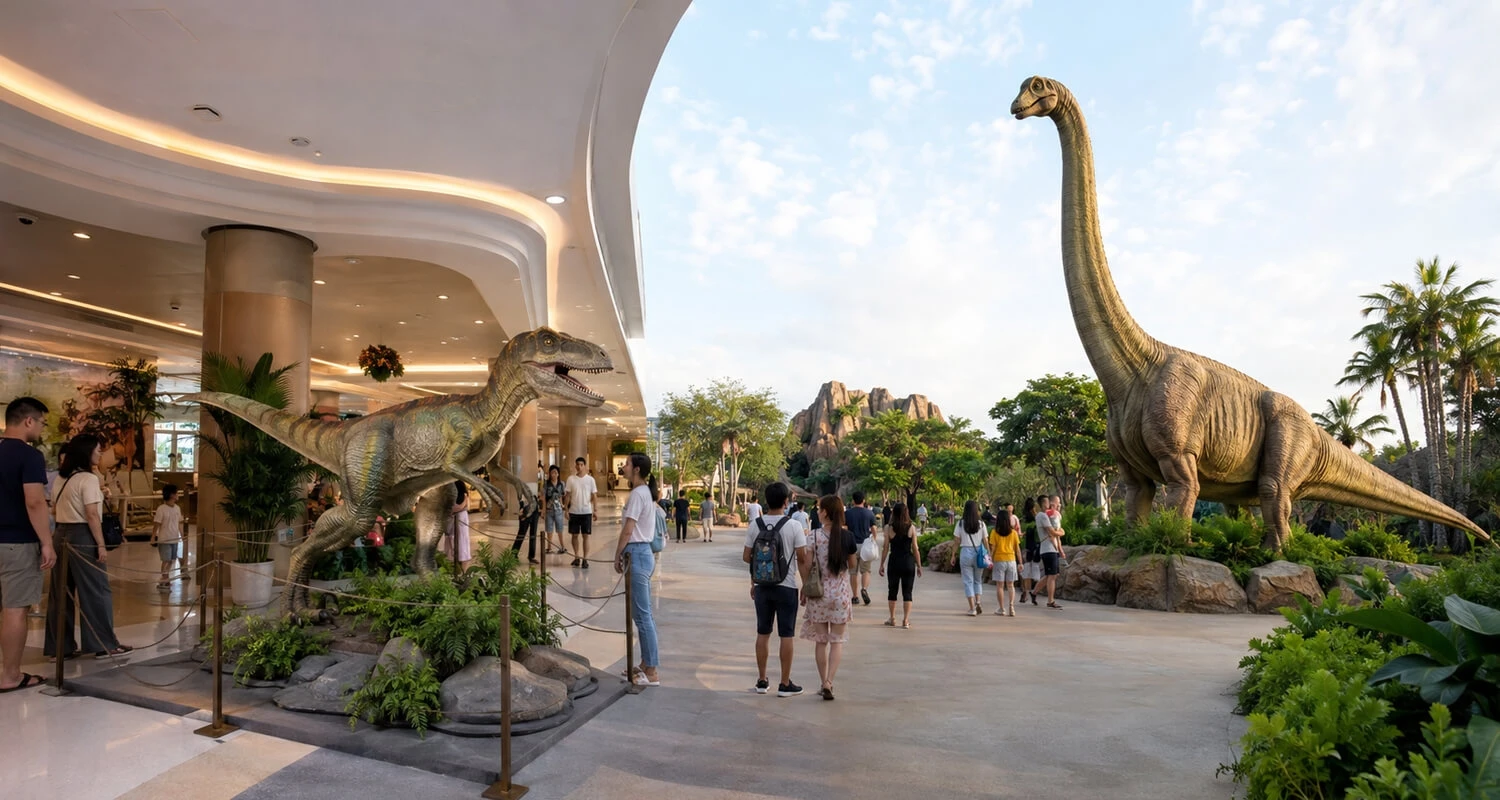
Different venues require different dinosaur scales. A shopping mall normally has stricter entrance and ceiling limits than an outdoor theme park, while a traveling exhibition may need models that are easier to disassemble and transport repeatedly.
| Venue | Suitable Scale | Main Consideration |
|---|---|---|
| Small indoor area | Small models | Entrance and ceiling height |
| Shopping mall | Small to medium | Visitor flow and floor space |
| Museum | Small to large | Viewing distance and exhibit design |
| Traveling exhibition | Small to medium | Transport and quick assembly |
| Outdoor theme park | Medium to giant | Landscape scale and foundations |
| Zoo or botanical garden | Medium to large | Natural environment and visitor route |
These are general planning recommendations rather than fixed size standards. The final selection should be based on actual venue measurements and project requirements.
Consider Viewing Distance, Species and Posture
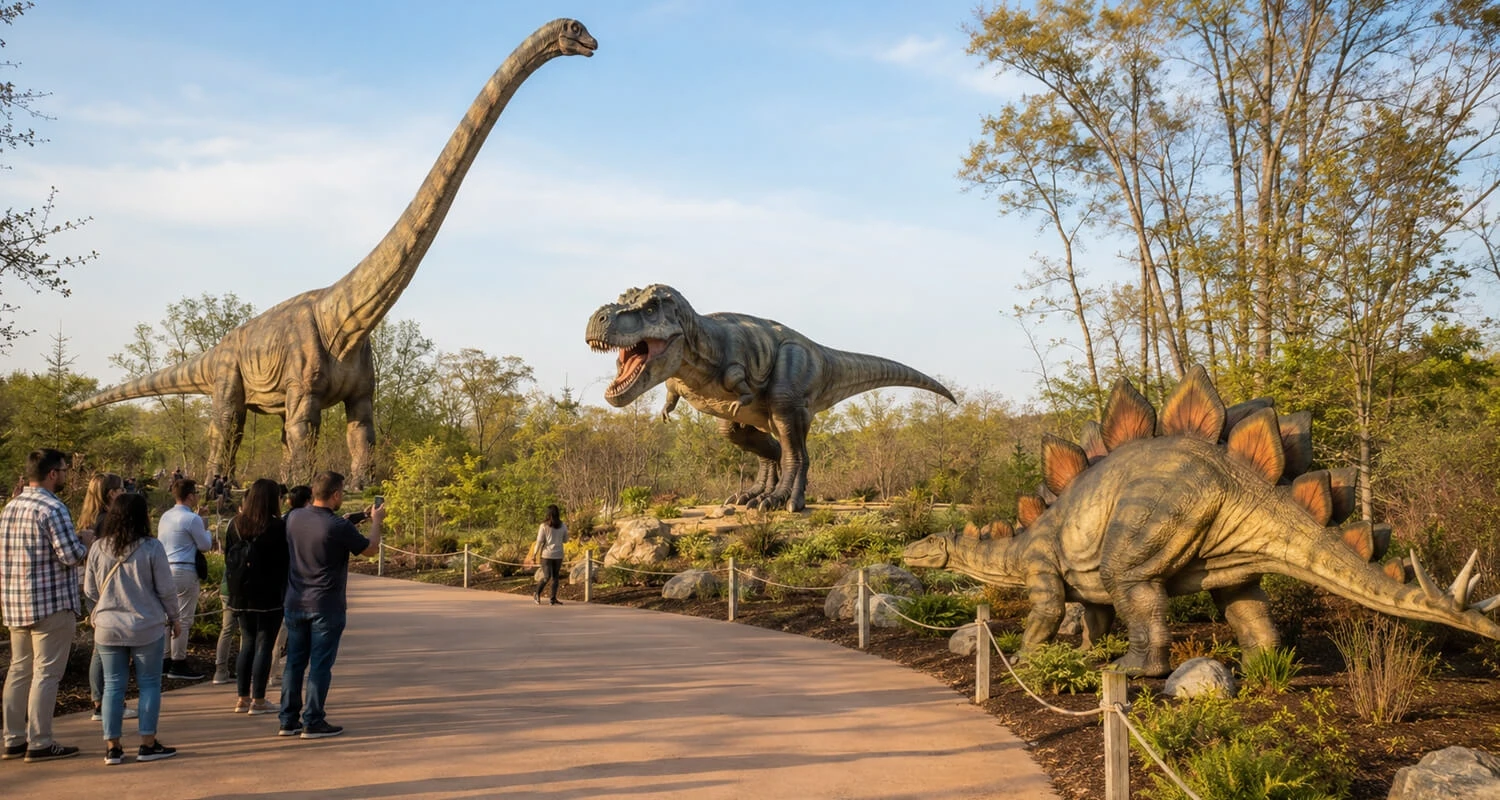
Viewing distance affects how large a dinosaur appears. Small and medium models work well when visitors can observe them closely. Large dinosaurs are more suitable for open areas, entrances and central landmarks where they will be viewed from farther away.
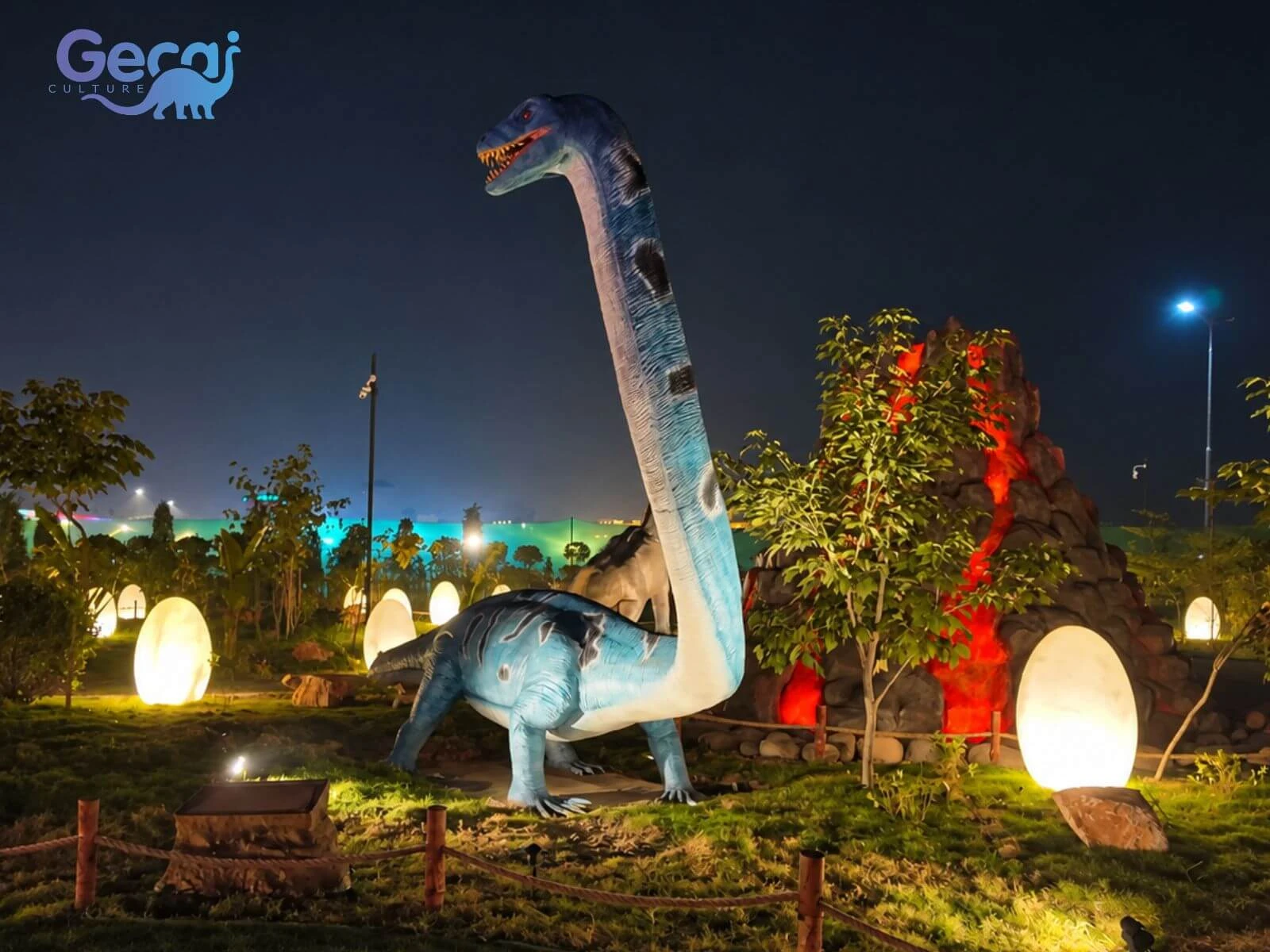
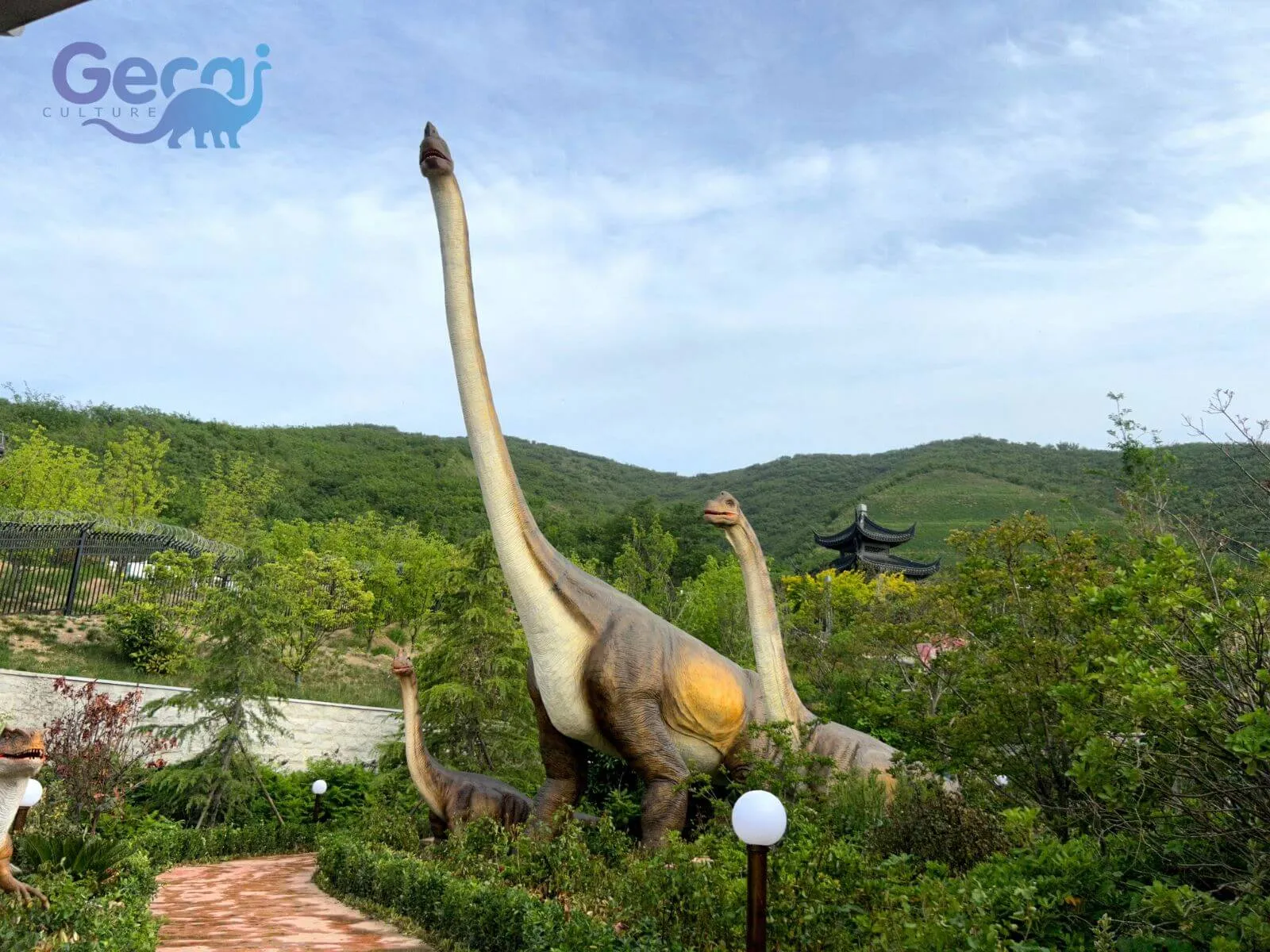
Species and posture also change the required space. A long-necked Brachiosaurus requires more vertical clearance, while a T-Rex or Spinosaurus may need additional space around its moving head and tail. Triceratops and Stegosaurus have lower body profiles but can still occupy considerable ground area.
Posture can sometimes be adjusted for the venue. A lowered head, curved tail or lying position may help a dinosaur fit into a restricted indoor space, subject to structural and movement feasibility.
Leave Space for Movements and Visitors
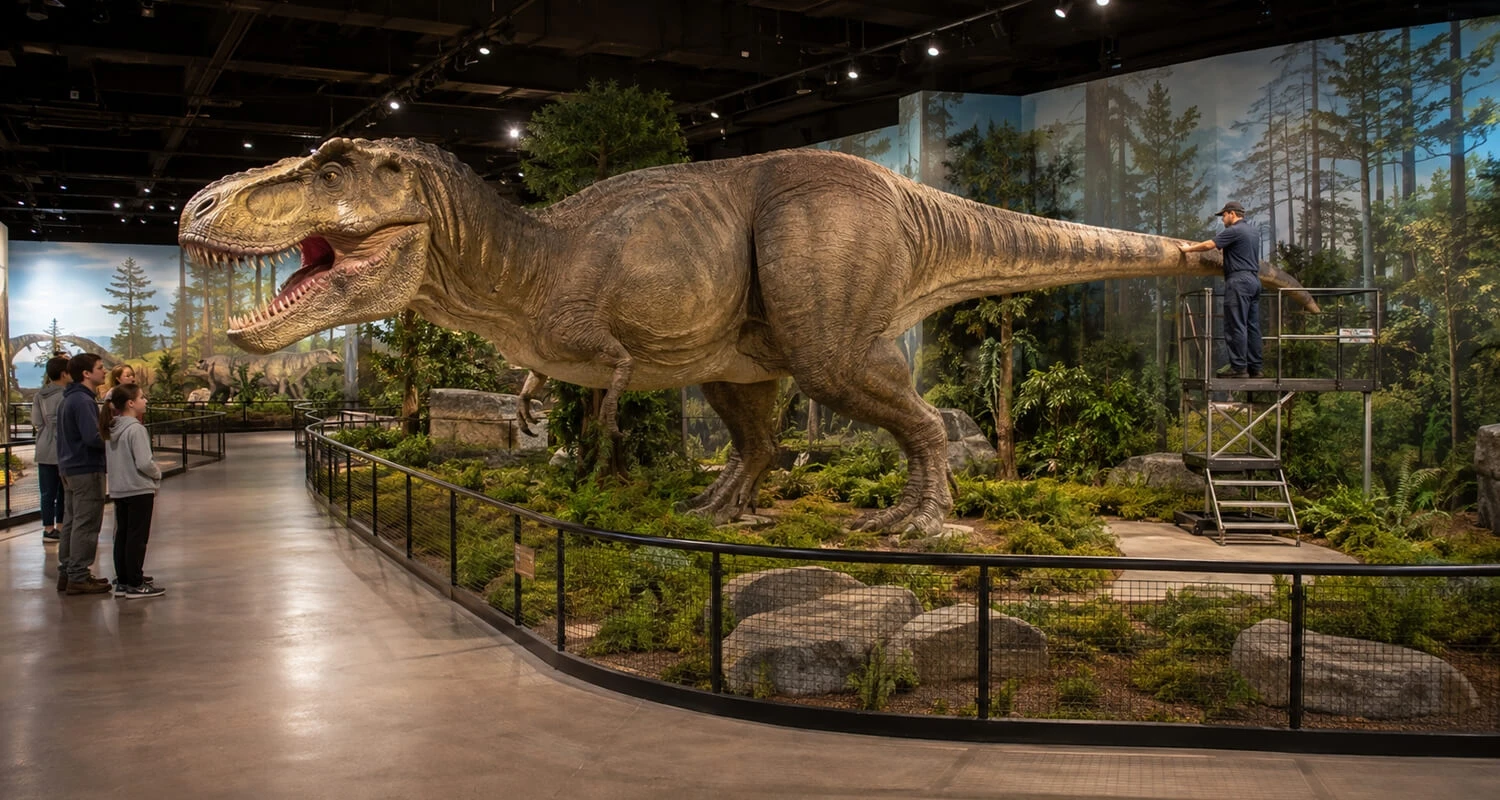
The listed product dimensions describe the dinosaur in a fixed position. A moving animatronic dinosaur requires additional clearance around its head, neck, forelimbs, body and tail.
Common movements include:
Mouth opening and closing
Head turning
Neck movement
Body movement
Forelimb movement
Tail swinging
Breathing simulation
Visitors, barriers, plants and other exhibits should remain outside the model’s movement range. The installation layout should also leave enough space for technicians to inspect the base, skin, joints, cables and control system.
There is no universal clearance distance for every dinosaur. It should be determined according to the model’s dimensions, movement range, visitor route and local venue requirements.
Check Transportation and Installation Access
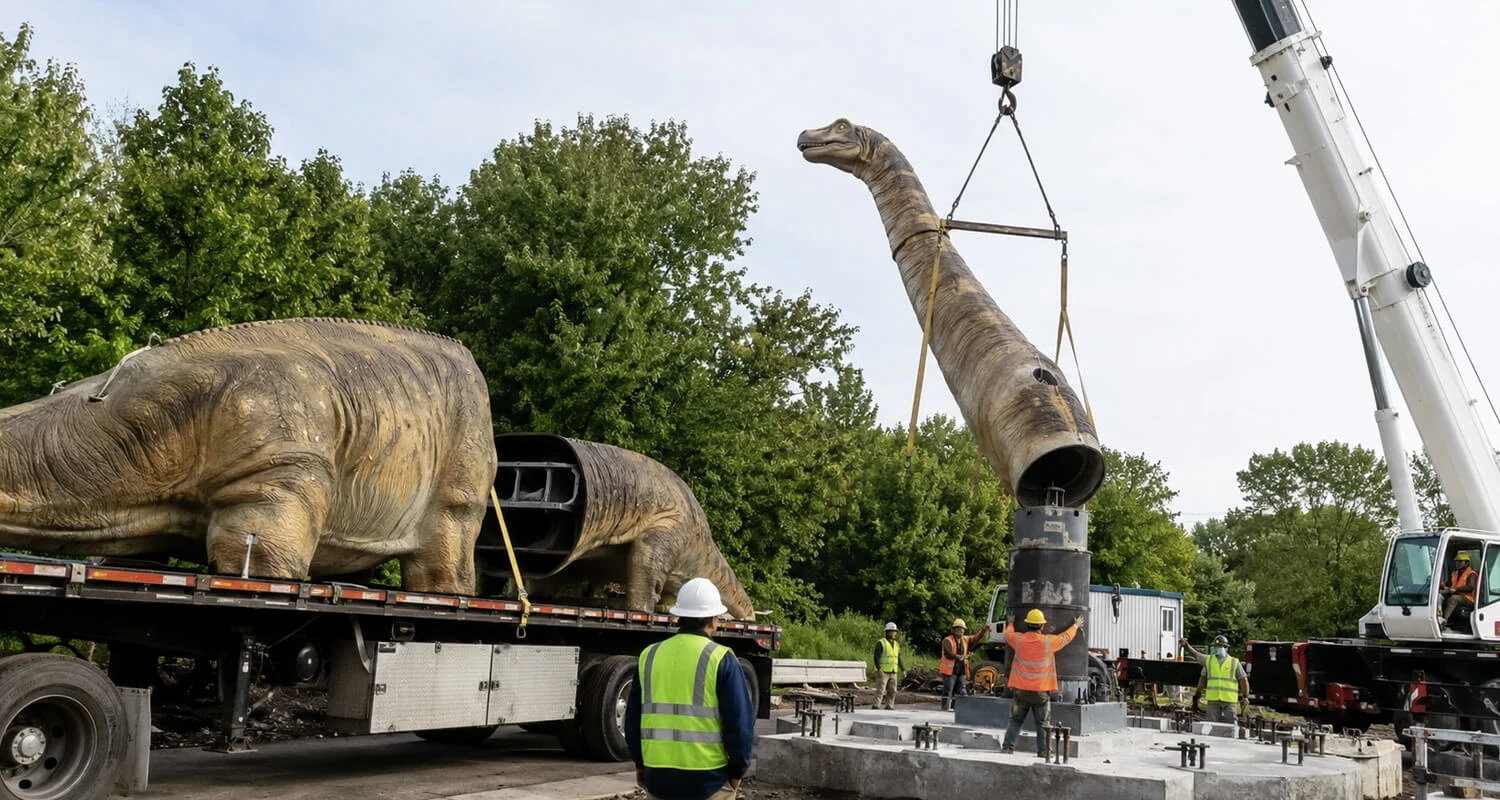
A dinosaur should not be selected only according to the final display area. Buyers must also confirm whether the model can be transported to and assembled at that location.
Large animatronic dinosaurs can often be divided into sections, such as the body, legs, neck and tail, for container transportation. However, the largest section must still pass through the venue entrance and installation route.
Before ordering, confirm:
Road and truck access
Entrance dimensions
Maximum component size
Unloading area
Available lifting equipment
Foundation conditions
Assembly and wiring space
Remote or on-site installation requirements
These details should be discussed before production so the manufacturer can plan suitable separation points, packing and installation methods.
Combine Different Sizes for a Better Project Layout
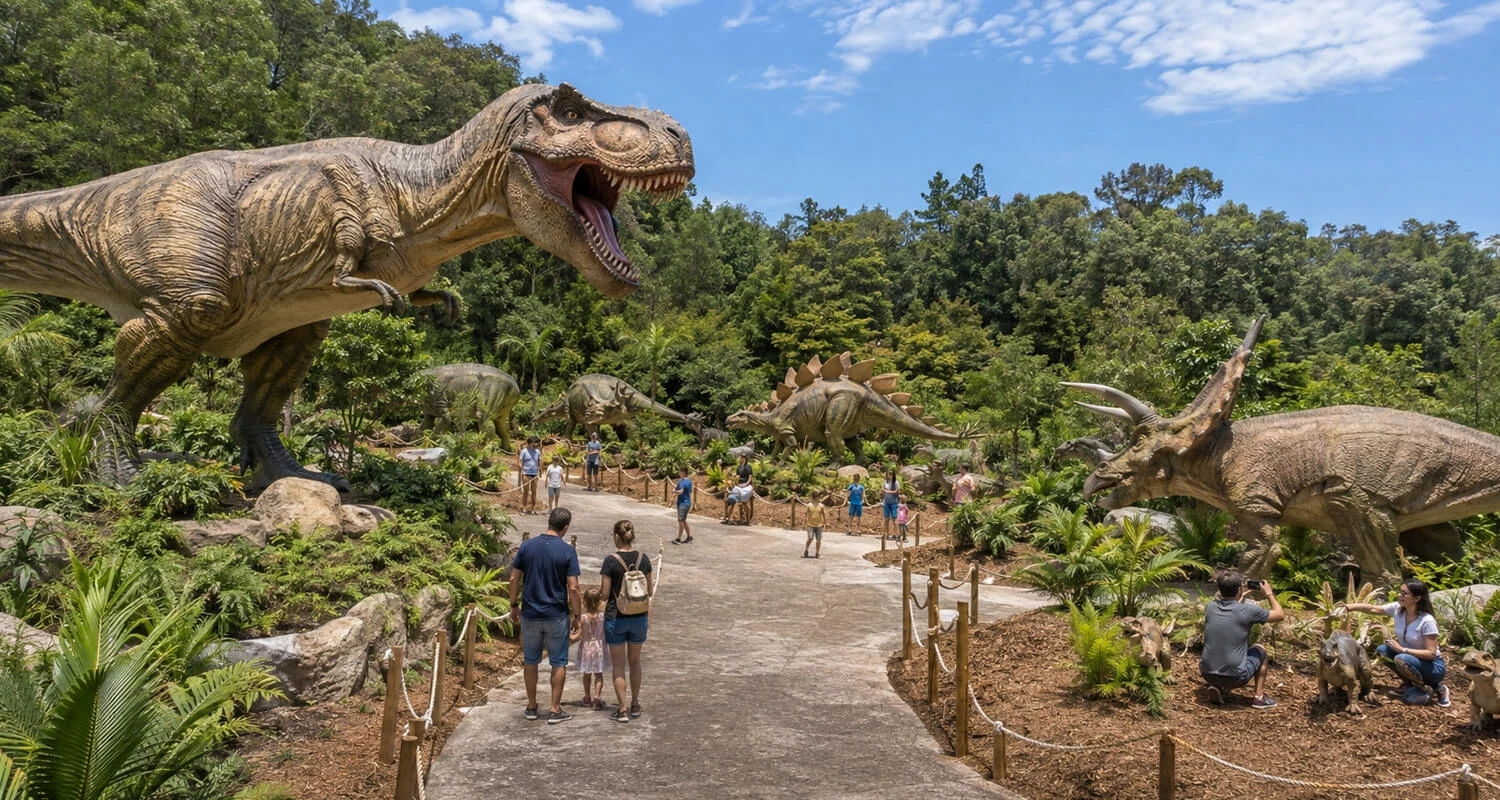
Using only large dinosaurs can increase transportation and installation requirements and may make the venue feel crowded. Using only small models may reduce the visual impact of a large outdoor attraction.
A mixed-size combination is often more effective:
One large dinosaur as the main landmark
Medium models along the visitor route
Dinosaur families or scene combinations in themed areas
Small models near interactive and photo zones
This creates visual layers while allowing the project budget to focus on the most important exhibits. For more planning considerations, read our guide on how to build an outdoor dinosaur park.
To receive a suitable size recommendation, buyers should provide the venue type, available dimensions, entrance measurements, preferred species, required movements, installation location, project timeline and approximate budget.
Send Gecai Culture your venue photos or layout drawings. Our team can recommend suitable animatronic dinosaur sizes, postures and product combinations for your available space.
Tags: