About us
Gecai Culture stands at the forefront of bringing the past to life through our state-of-the-art Animatronic Dinosaurs, enchanting Animatronic Creatures, vibrant Chinese Festival Lanterns, and tailored Custom Products. As a professional manufacturer nestled in the heart of China, we harbor a deep-seated passion for showcasing our lifelike dinos and animals in museums, exhibitions, zoos, parks, and beyond, aiming to kindle a flame of curiosity and learning in people of all ages.
Get a free quote
Company News
Animatronic Dinosaur Maintenance Guide and Checklist
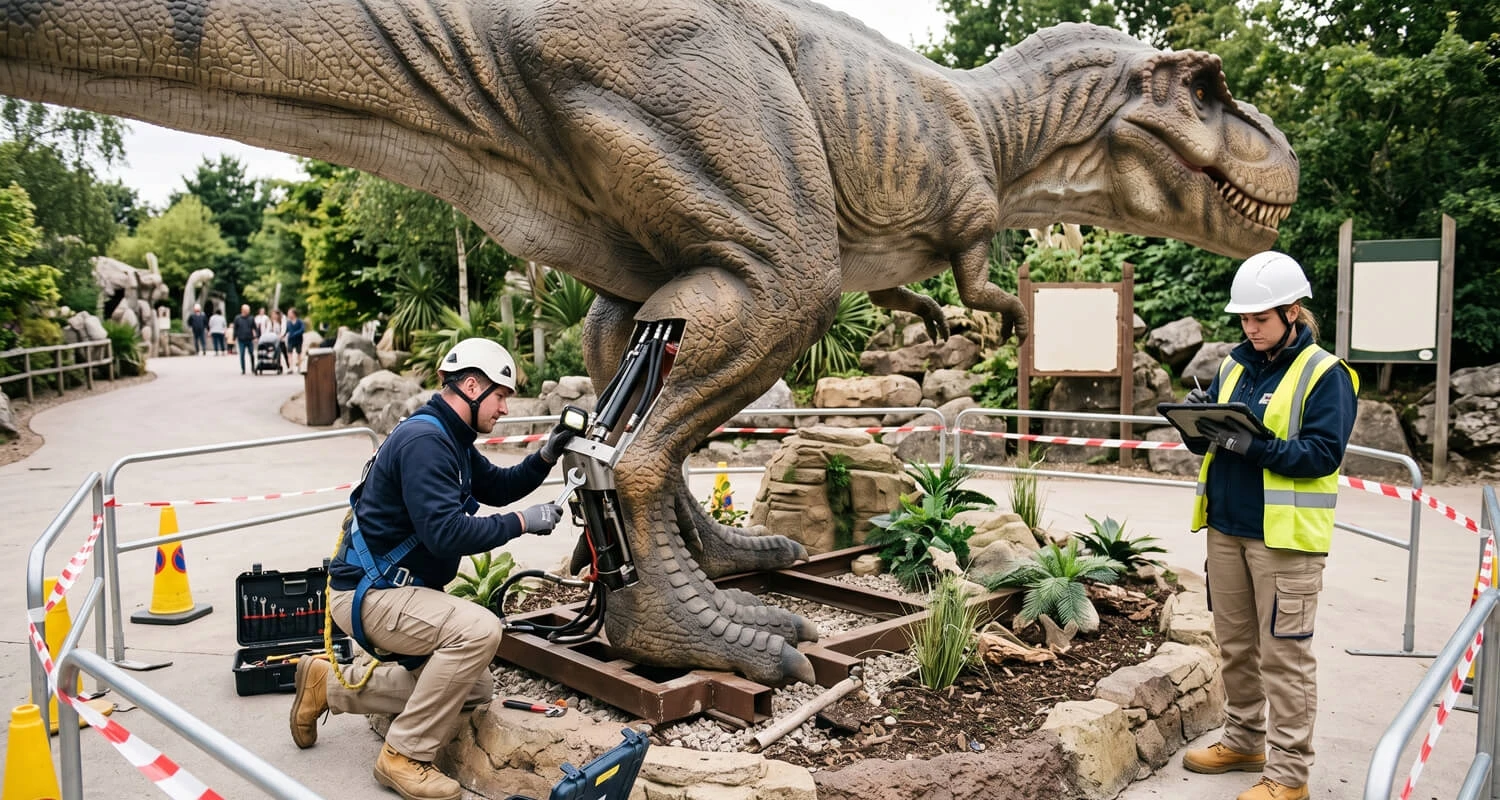
Animatronic dinosaurs require regular surface cleaning, skin and paint inspection, mechanical checks, electrical inspection and protection from unsuitable weather. A consistent maintenance routine helps operators identify small problems before they cause longer downtime or more extensive repairs.
Maintenance frequency depends on the dinosaur's movement system, daily operating hours and installation environment. Outdoor models and frequently operated dinosaurs normally require closer inspection than indoor models used only at scheduled times.
Always disconnect and isolate the power before touching internal mechanical or electrical components. Technical repairs should be completed by trained personnel according to the manufacturer's instructions.
Animatronic Dinosaur Maintenance Schedule
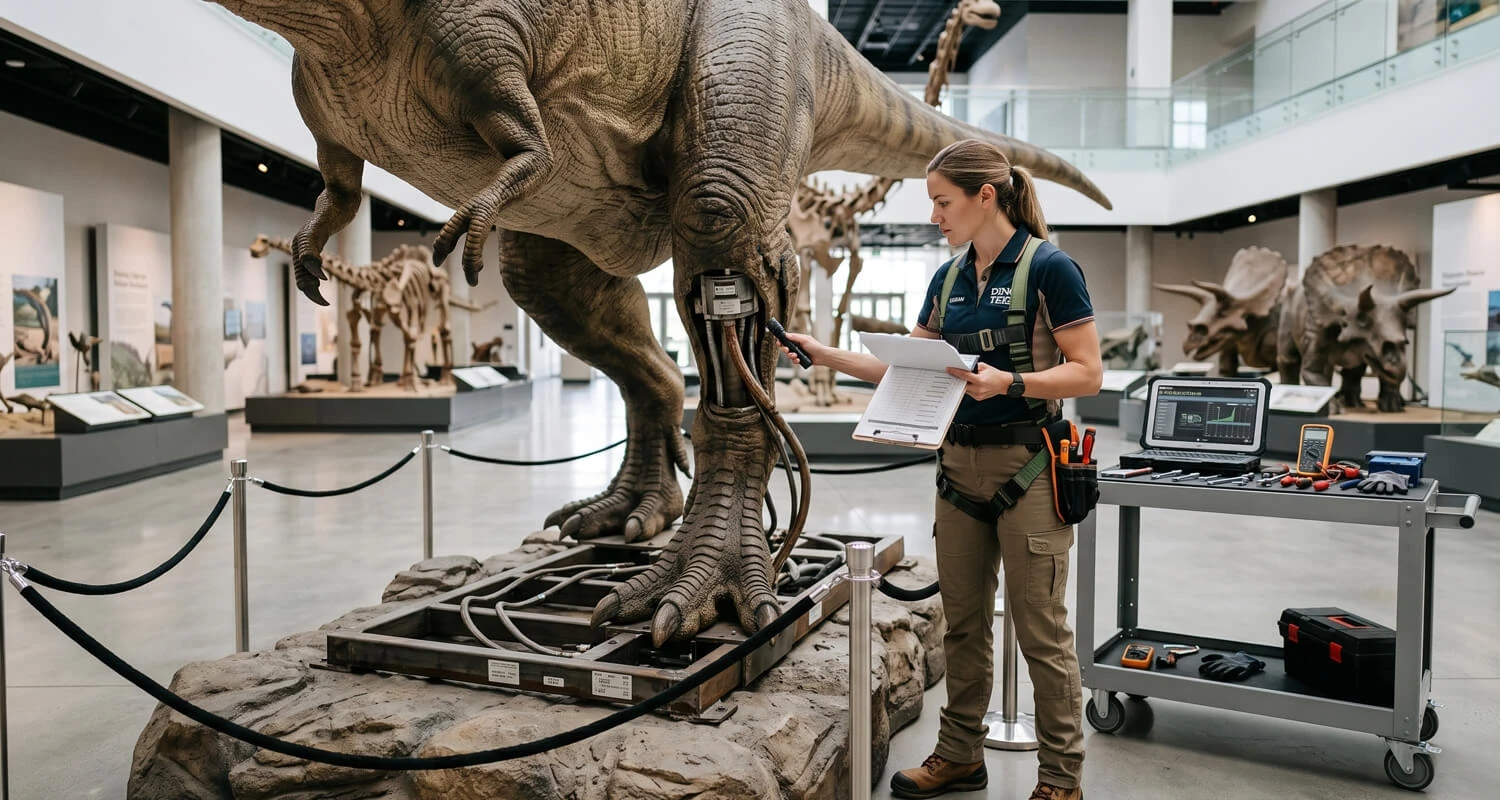
The following schedule provides a general reference. Actual intervals should be adjusted according to operating conditions and the manufacturer's manual.
| Frequency | Main Checks |
|---|---|
| Before Use | Base, cables, movement |
| Weekly | Skin, joints, fasteners |
| Monthly | Motors, wiring, controls |
| Seasonal | Weather protection |
| As Needed | Repairs and parts |
1. Clean the Surface Regularly
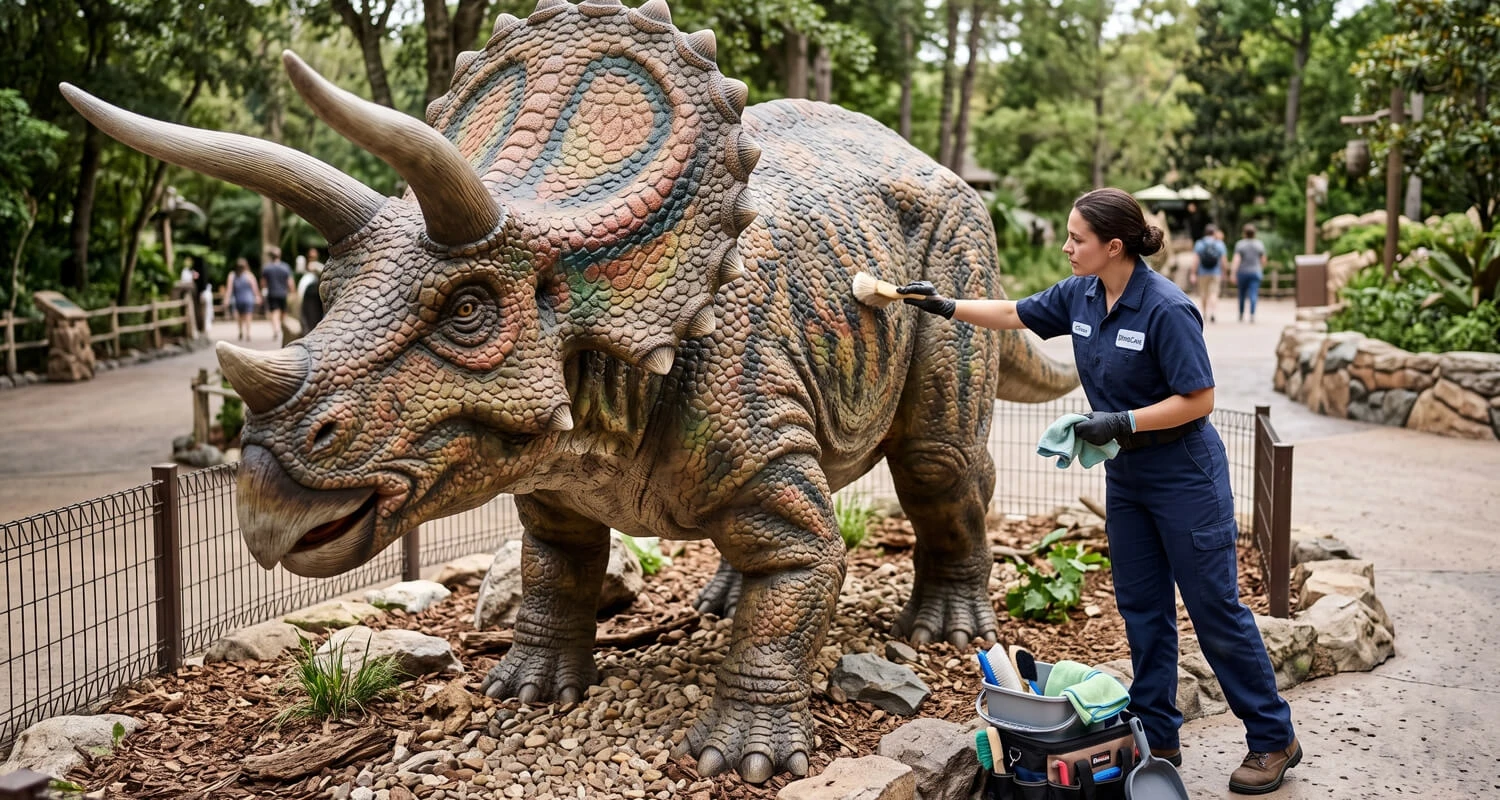
Dust, dirt, leaves and other debris can collect on the dinosaur's skin, especially in outdoor attractions. Regular cleaning helps maintain its appearance and makes surface damage easier to identify.
Use a soft cloth or brush suitable for the surface material. Avoid strong chemicals or abrasive cleaning tools that may damage the paint or skin.
Do not use high-pressure water directly on moving joints, seams, control boxes or electrical components. After cleaning, make sure the dinosaur is dry before operation.
2. Inspect the Skin and Paint
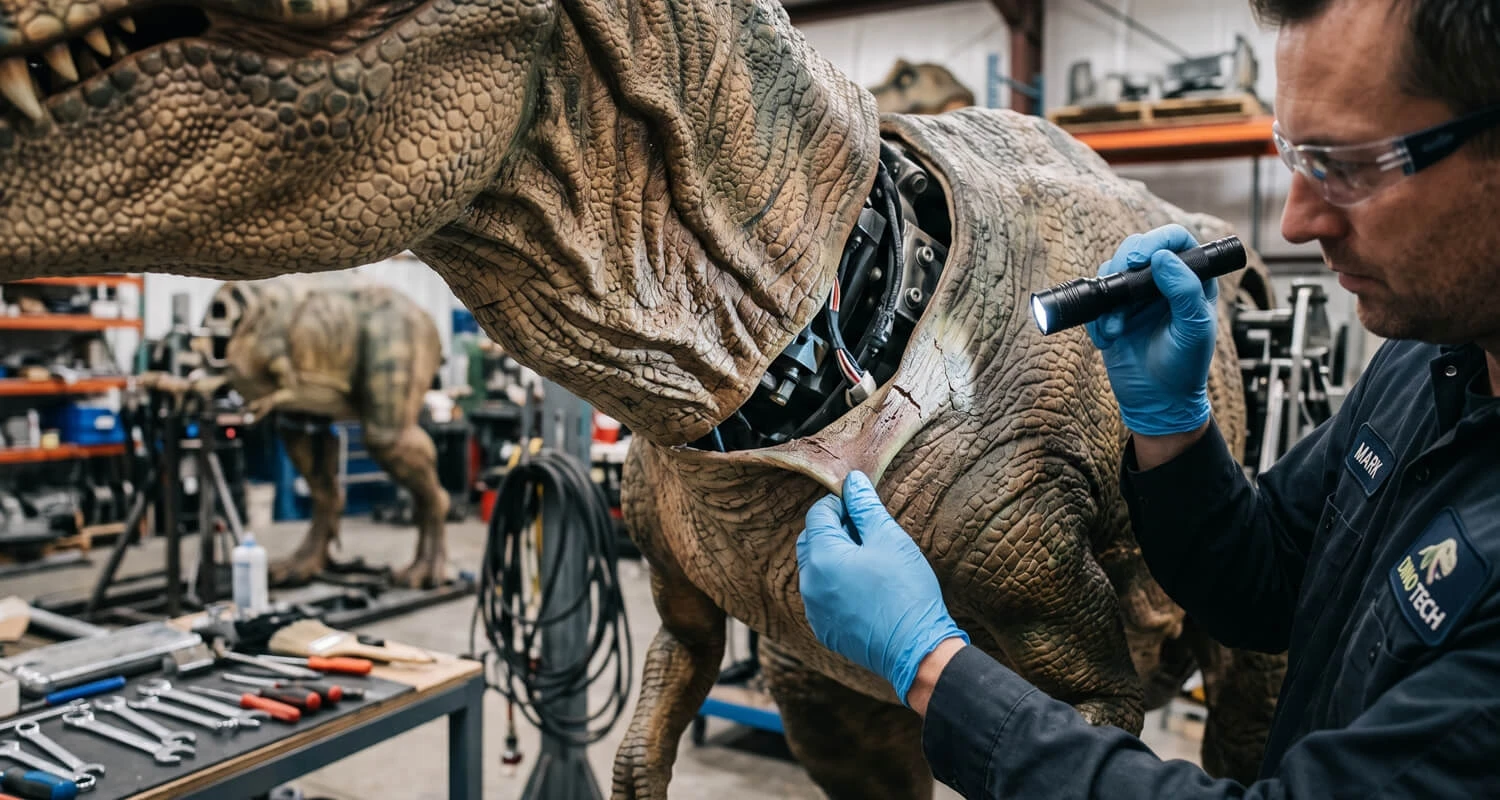
The outer surface should be checked for:
Cracks or tears
Fading or peeling paint
Damage around moving joints
Open seams
Loose surface sections
Signs of water entering the outer layer
Areas around the neck, mouth, legs and tail may experience more movement-related stress. Small tears and surface damage should be addressed early before repeated movement or weather exposure makes them worse.
Repair materials and paint should match the original surface system. Contact the manufacturer when the correct material or repair method is uncertain.
3. Check Mechanical and Moving Parts
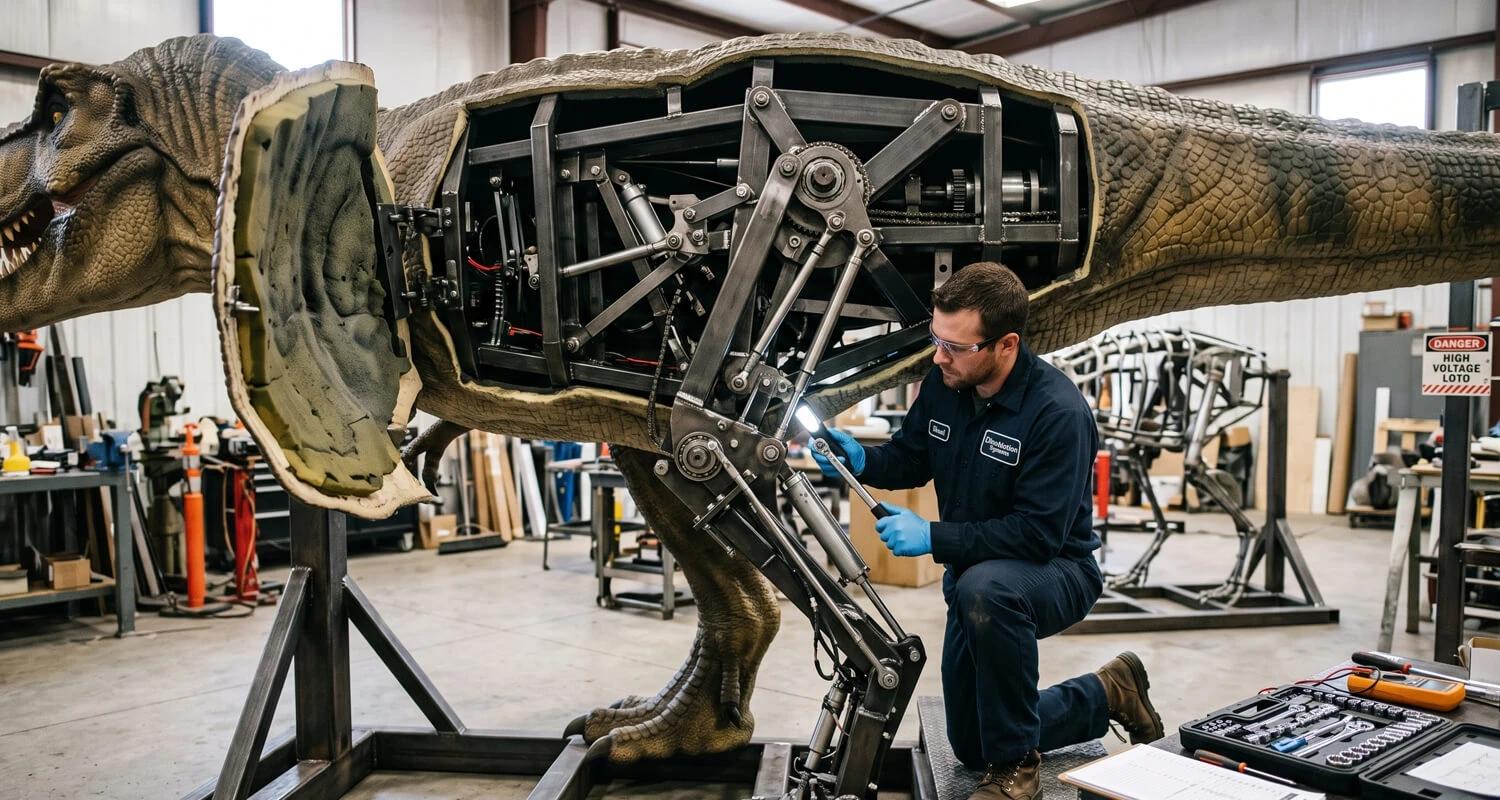
Observe the dinosaur during a complete movement cycle. Check whether each movement remains smooth and follows the expected sequence.
Warning signs may include:
Unusual noise
Strong vibration
Jerky movement
Reduced movement range
Loose fasteners
Movement stopping midway
Contact between internal and external parts
Bolts, linkages, bearings and other moving components may require inspection according to the product design. Only apply lubricant at manufacturer-specified points and use the recommended type.
Do not continue operating a dinosaur with abnormal or uncontrolled movement. Repeated operation may increase mechanical damage or create a safety risk.
4. Inspect Electrical and Control Systems
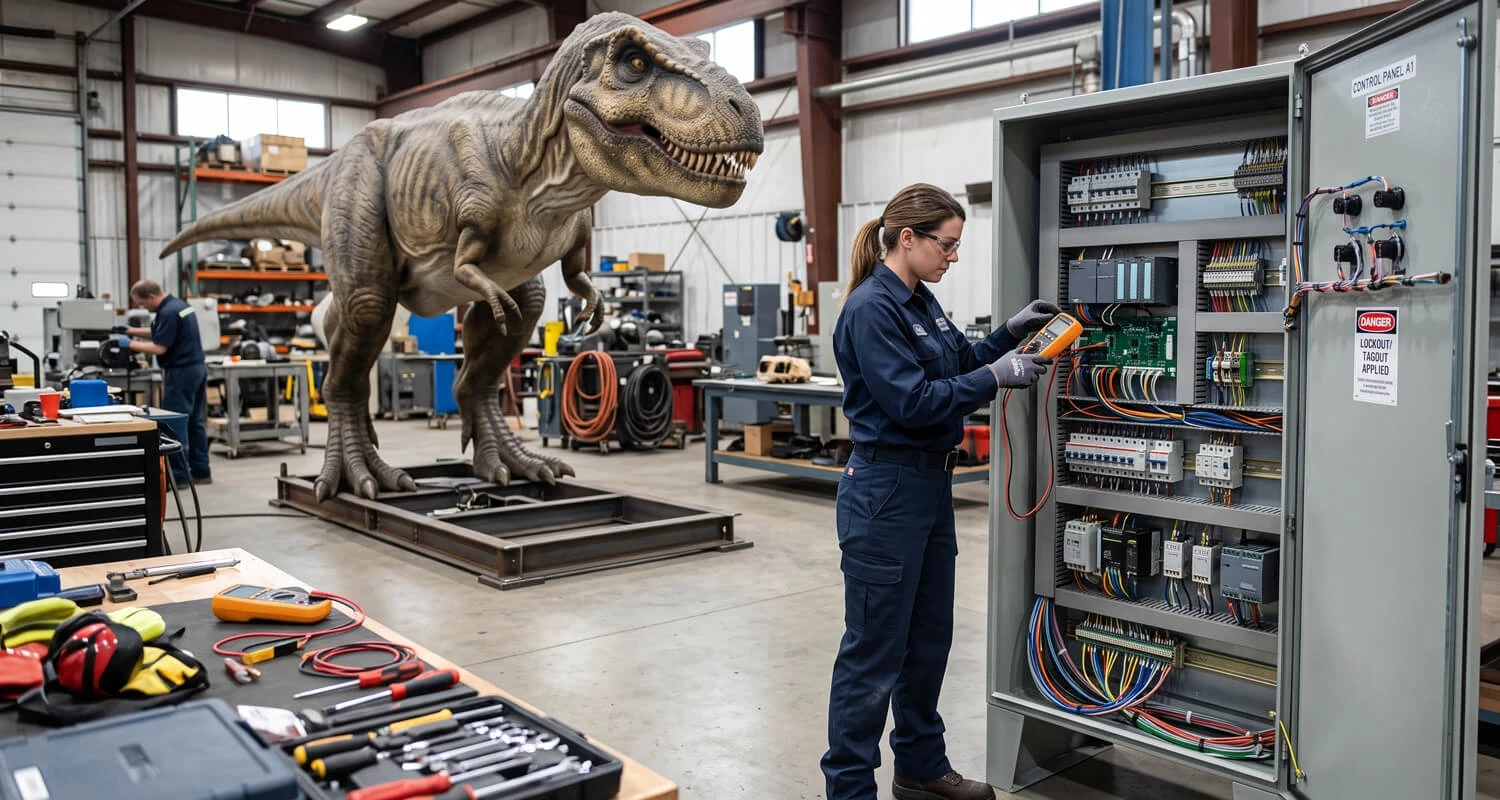
Electrical maintenance should include visual checks of:
Power cables and plugs
Control boxes
Cable connections
Switches and sensors
Speakers and sound systems
Remote-control functions
Visible signs of moisture or overheating
Stop using the equipment if cables are damaged, electrical enclosures contain water, or the system produces unusual heat or odor.
Opening control boxes, replacing motors, repairing internal wiring and adjusting servo systems should be handled by qualified personnel. Operators should not change control programs or electrical components without technical guidance.
5. Protect Outdoor Animatronic Dinosaurs
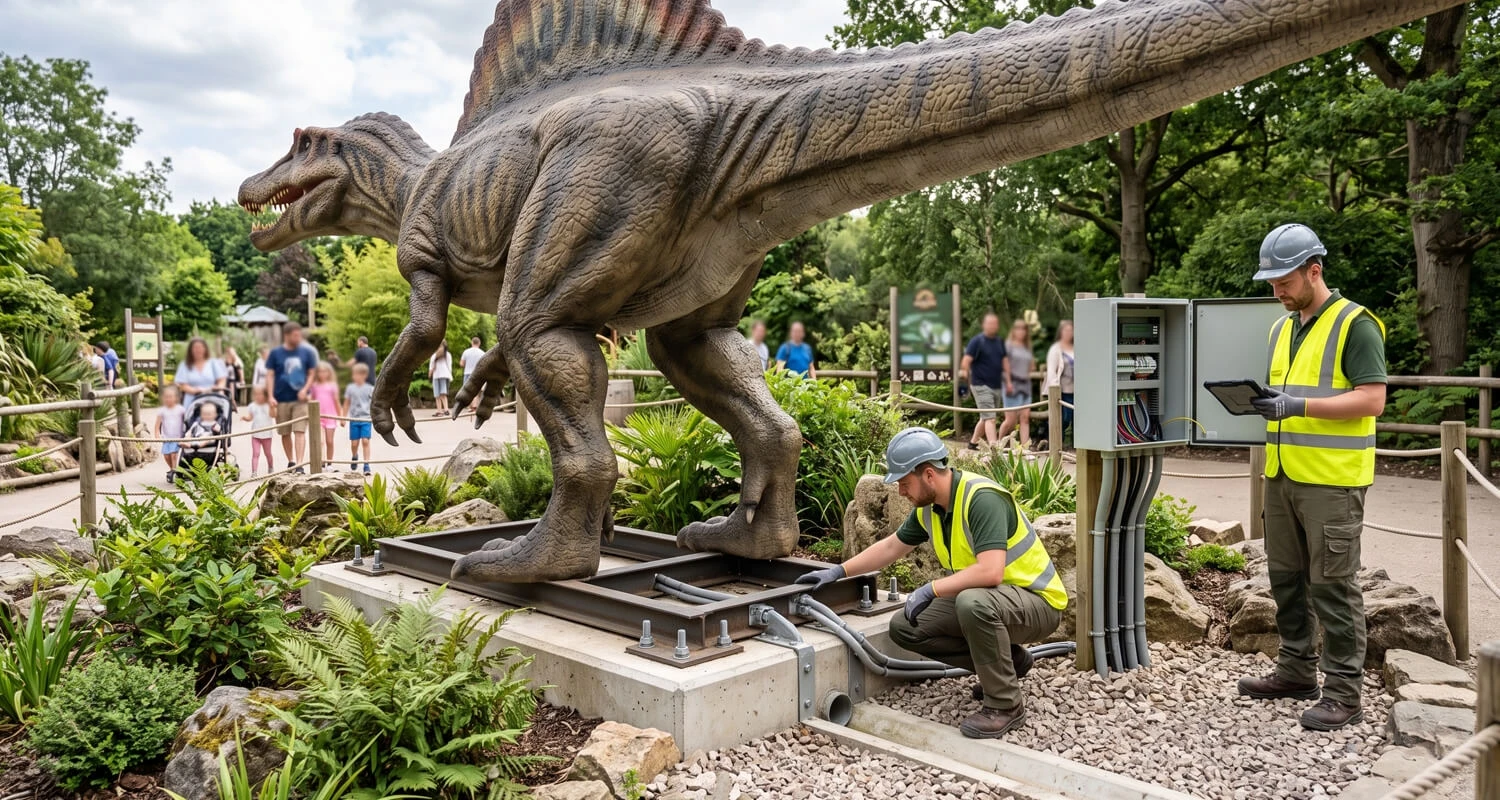
Outdoor animatronic dinosaurs face rain, sunlight, dust, temperature changes and wind. Maintenance should therefore include checks of the product and its installation area.
Operators should:
Keep drainage areas clear
Check the base and fixing points
Keep the control box away from standing water
Inspect exposed cables and connections
Check for weather-related fading or cracking
Stop operation during unsafe weather
Protect the model during long periods of inactivity
Outdoor-ready does not mean suitable for submersion or operation in every extreme weather condition. Site climate, drainage, foundations and electrical protection should be considered during installation.
Read more about using animatronic dinosaurs outdoors.
When Should an Animatronic Dinosaur Be Stopped?
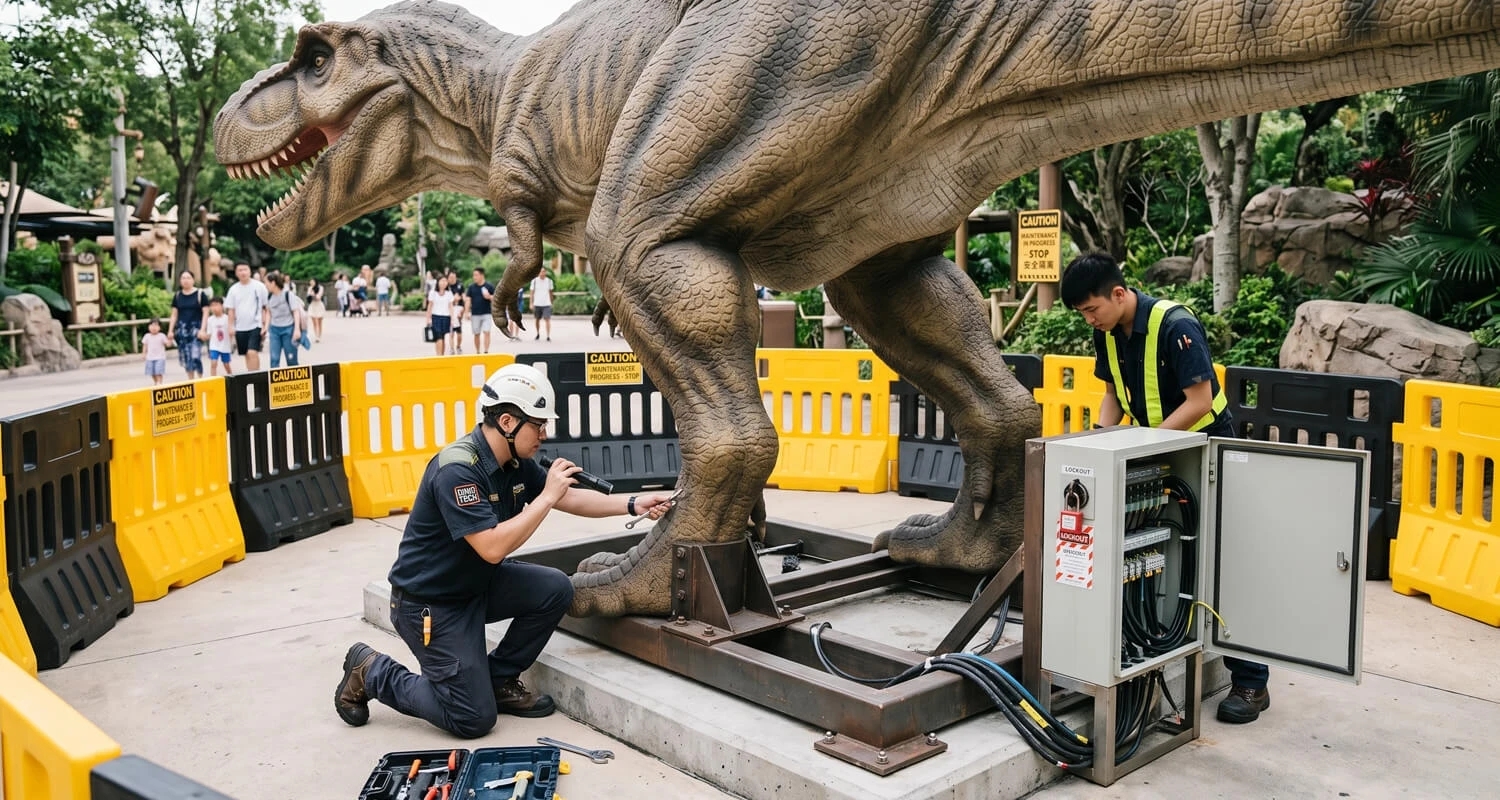
An animatronic dinosaur should be stopped immediately if it shows signs that could affect visitors, staff or the equipment itself.
Stop operation and isolate the power when there is:
An unstable base or fixing point
Exposed or damaged wiring
Water inside electrical parts
Abnormal heat or a burning smell
Loud or unusual mechanical noise
Jerky or uncontrolled movement
Loose mechanical components
Damage that may enter the visitor area
Keep visitors away from the equipment until it has been inspected. Do not repeatedly restart the dinosaur to reproduce a potentially dangerous fault.
Operator Checks vs Professional Repairs
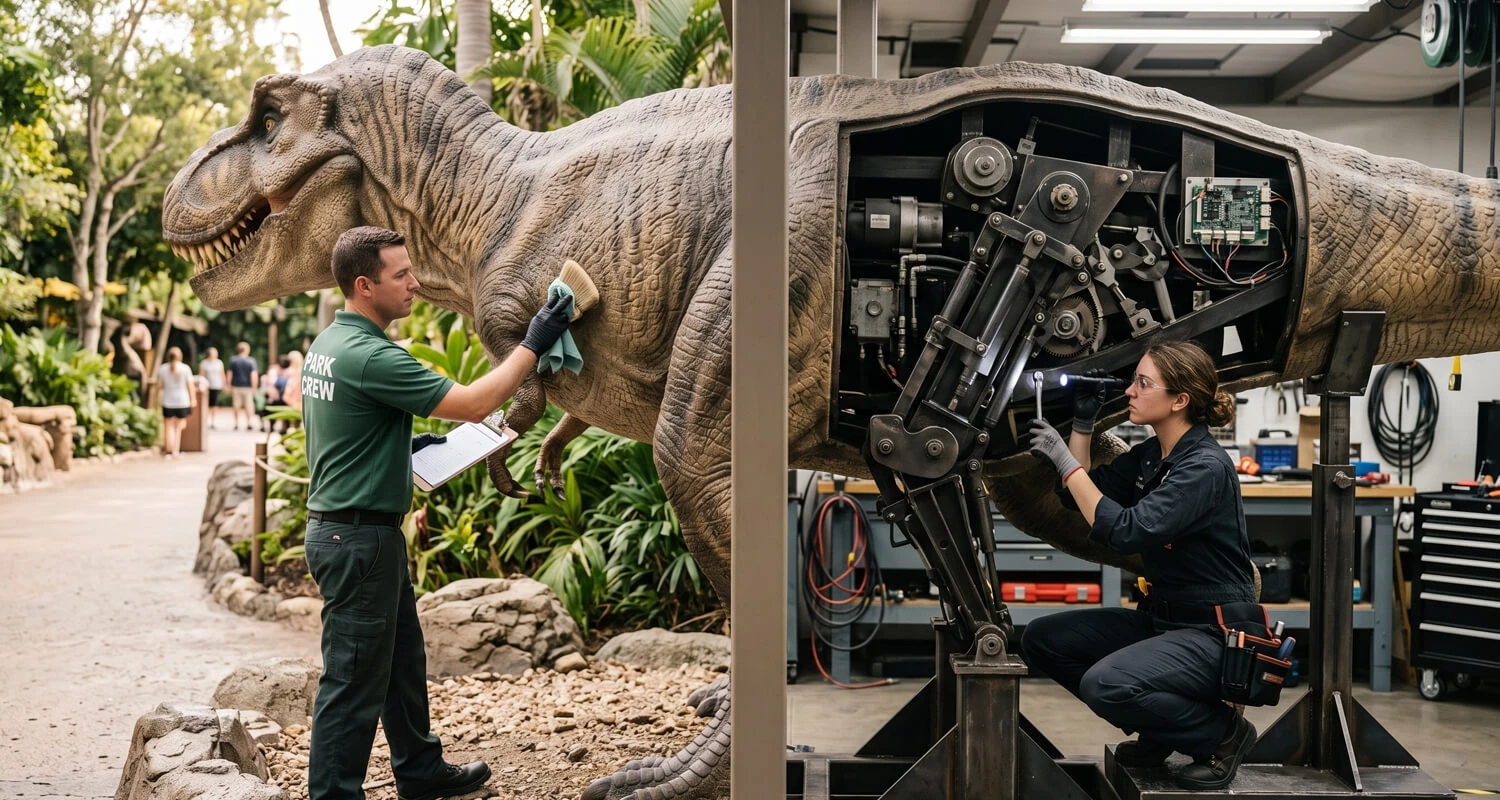
Routine visual checks can be completed by trained site staff, while internal electrical, mechanical and structural work should be assigned to qualified technicians.
| Operator Checks | Technician Repairs |
|---|---|
| Cleaning | Motor replacement |
| Visual inspection | Electrical repair |
| Movement testing | Servo calibration |
| Drainage checks | Structural repair |
| Maintenance records | Major skin repair |
Clear maintenance responsibilities help prevent incorrect repairs and unauthorized changes to the equipment.
Spare Parts and Maintenance Records
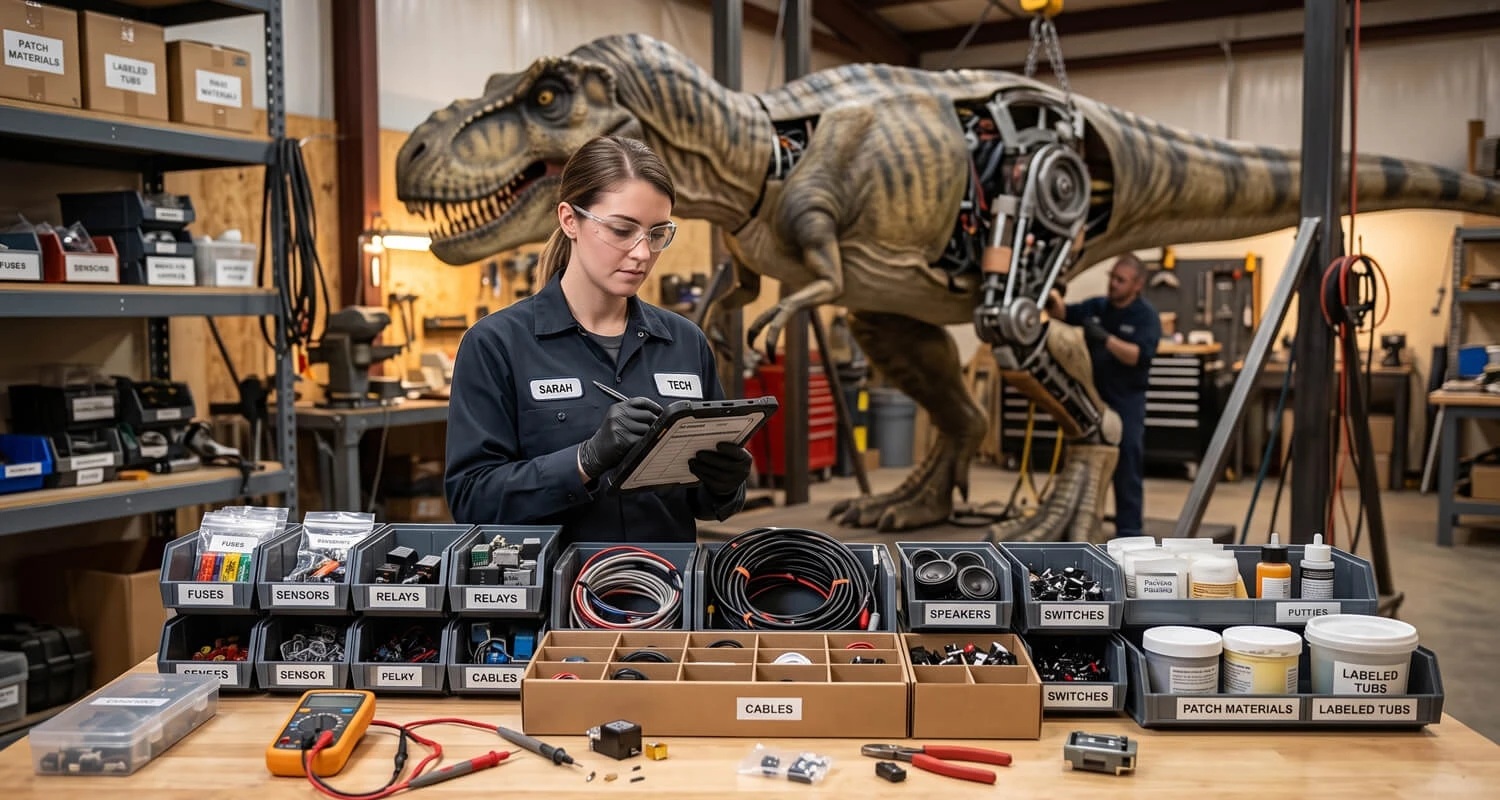
The spare parts required depend on the dinosaur's motor system, controller and additional functions. Recommended items may include:
Fuses
Switches
Sensors
Relays
Cables
Speakers
Surface repair materials
Model-specific mechanical parts
Confirm the correct part numbers and specifications with the manufacturer before ordering or replacing components.
Operators should also keep a maintenance record containing:
Inspection date
Operating hours
Problems found
Parts replaced
Repair photos
Technician notes
These records make repeated faults easier to identify and help operators plan future inspections and spare-parts purchases.
How Does Maintenance Affect Service Life?
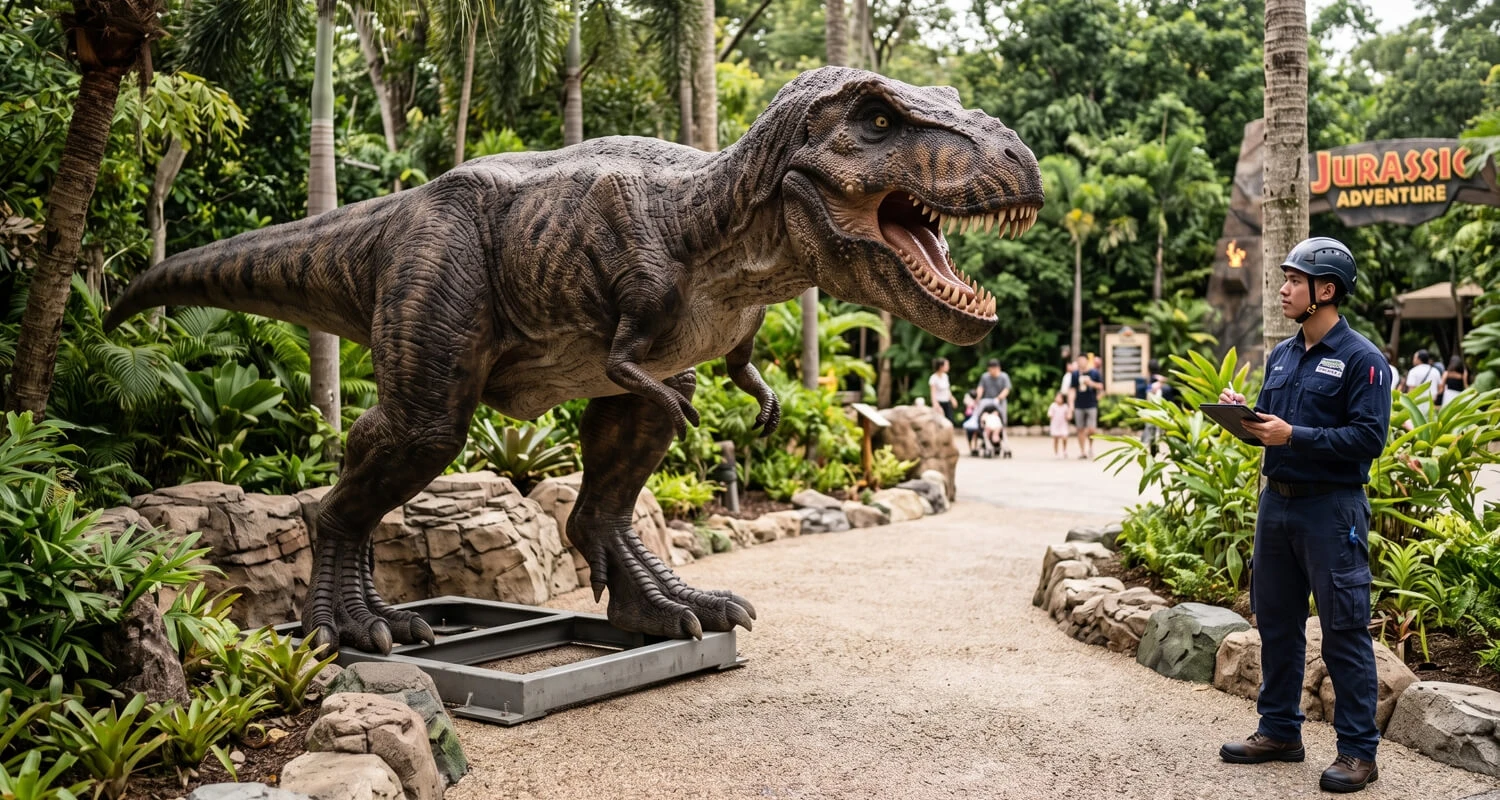
Operating frequency, movement complexity and environmental exposure all affect wear. A dinosaur running throughout the day in an outdoor park will usually require more attention than an indoor museum model operating at scheduled intervals.
Regular inspection does not prevent every fault, but it can identify loose parts, damaged surfaces and electrical problems before the damage expands.
Learn more about the factors affecting animatronic dinosaur lifespan.
Frequently Asked Questions
How often should animatronic dinosaurs be inspected?
Basic visual and movement checks should be completed before operation. More detailed inspections should be scheduled according to operating hours, installation conditions and the manufacturer’s recommendations.
Can animatronic dinosaurs be cleaned with water?
The outer surface may be cleaned using a suitable method, but high-pressure water should not be directed at joints, seams, control boxes or electrical components.
Do animatronic dinosaurs require lubrication?
Some mechanical parts may require lubrication. Only use the lubricant and maintenance points specified by the manufacturer, because different transmission systems may have different requirements.
Can park staff repair animatronic dinosaurs?
Trained staff can perform cleaning, visual inspection and basic operating checks. Internal electrical, mechanical, structural and servo-system repairs should be completed by qualified technicians.
What should operators do before long-term storage?
Clean and dry the model, disconnect the power, inspect the skin and mechanical parts, and follow the manufacturer’s instructions for covering, dismantling or storage.
Conclusion
Effective animatronic dinosaur maintenance includes regular cleaning, surface inspection, mechanical checks, electrical inspection and suitable weather protection. Operators should stop the equipment when abnormal movement, unstable installation, damaged wiring or water intrusion is detected.
A clear maintenance schedule, suitable spare parts and accurate service records can help reduce unexpected downtime and support long-term operation.
For maintenance guidance or spare-parts support, contact Gecai Culture with the dinosaur model, control system, installation environment, photos or videos of the problem, and a description of the fault.
Tags: