About us
Gecai Culture stands at the forefront of bringing the past to life through our state-of-the-art Animatronic Dinosaurs, enchanting Animatronic Creatures, vibrant Chinese Festival Lanterns, and tailored Custom Products. As a professional manufacturer nestled in the heart of China, we harbor a deep-seated passion for showcasing our lifelike dinos and animals in museums, exhibitions, zoos, parks, and beyond, aiming to kindle a flame of curiosity and learning in people of all ages.
Get a free quote
Company News
How Much Does an Animatronic Dinosaur Cost?
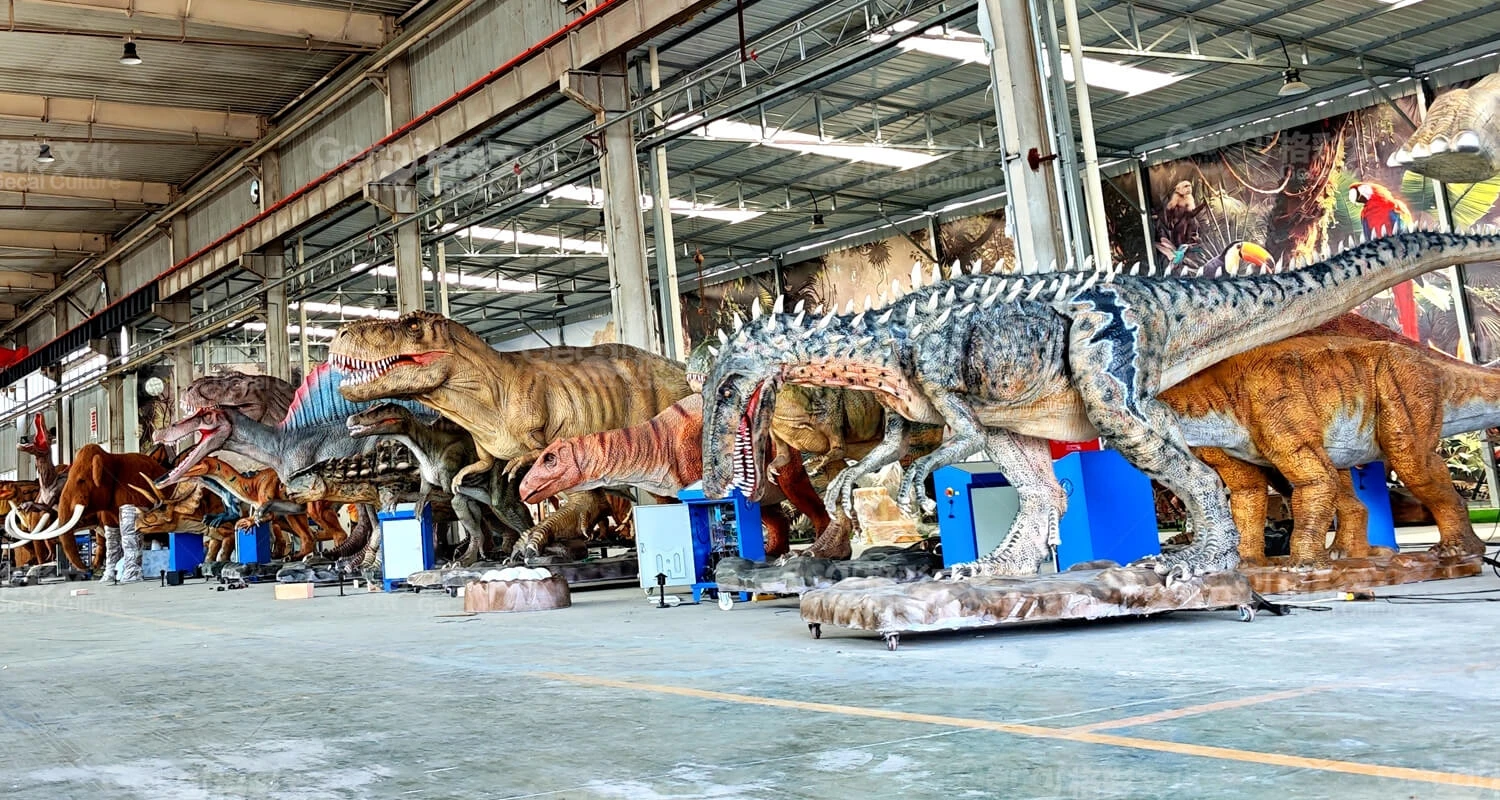
There is no single standard price for an animatronic dinosaur. The final cost depends on its size, movements, motor system, appearance, functions, installation environment and delivery requirements.
A standard model with basic movements usually costs less than a large custom dinosaur with servo-controlled motion and interactive functions. Buyers should therefore compare product specifications rather than looking only at the total price.
Animatronic Dinosaur Price Factors
| Factor | Main Impact |
|---|---|
| Size | Materials and structure |
| Movements | Motors and programming |
| Motor Type | Motion precision |
| Appearance | Labor and detailing |
| Functions | Extra components |
| Environment | Outdoor protection |
| Customization | Design and testing |
| Delivery | Packing and installation |
1. Size and Structural Design
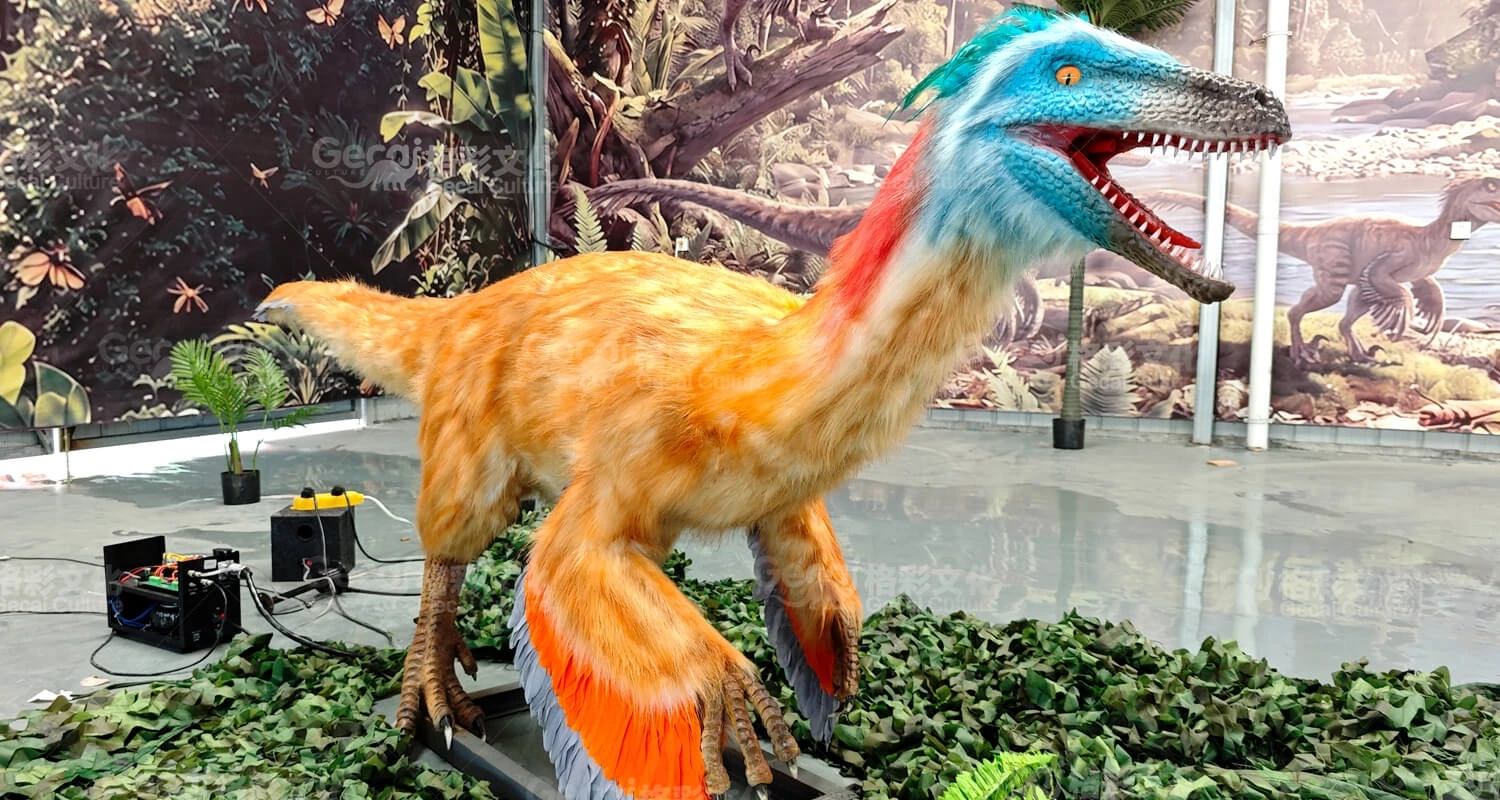
Larger dinosaurs require more steel, surface materials and structural support. They may also need stronger motors to move the head, body and tail.
However, price is not determined by length alone. Height, posture, weight, supporting points and movement range also affect the internal structure.
For example, a tall dinosaur with a raised neck may require a different frame from a low, long model of a similar length.
2. Movements and Motor Systems
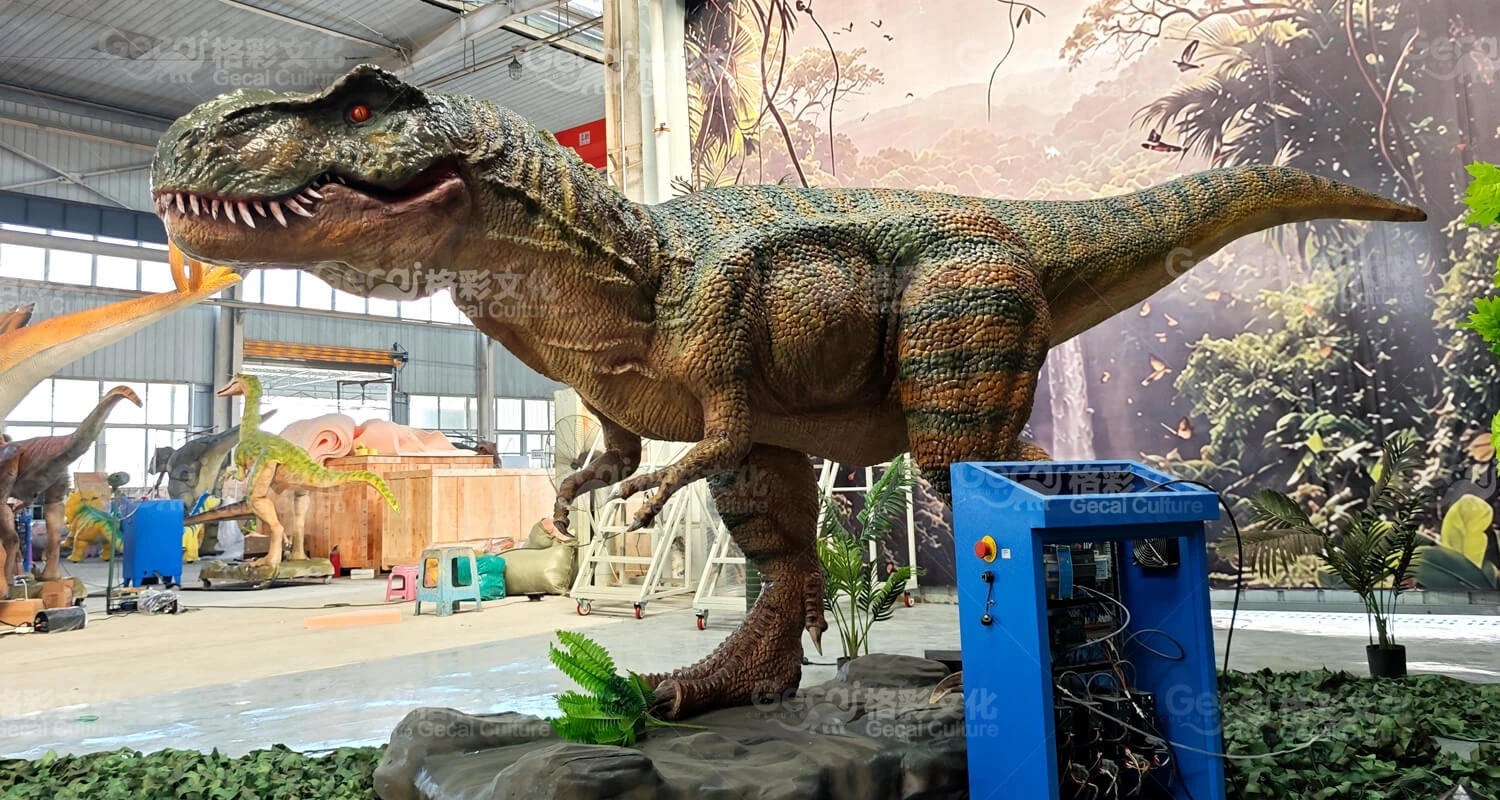
Common movements include:
Mouth opening and closing
Eye blinking
Head and neck movement
Body movement
Arm movement
Tail movement
Breathing simulation
More movements require additional motors, mechanical components, programming and testing. Movement range and coordination can also affect the cost.
Animatronic dinosaurs generally use standard or servo motor systems:
| Motor System | Suitable Use |
|---|---|
| Standard Motor | Regular preset movements |
| Servo Motor | Smooth, precise movements |
Standard motors are practical for many conventional displays. Servo motors are suitable when smoother and more coordinated movements are required.
Servo-controlled dinosaurs may require more precise mechanical design, programming and testing. However, not every project needs servo motors. The choice should depend on the venue, viewing distance and expected visitor experience.
3. Appearance and Artistic Detail
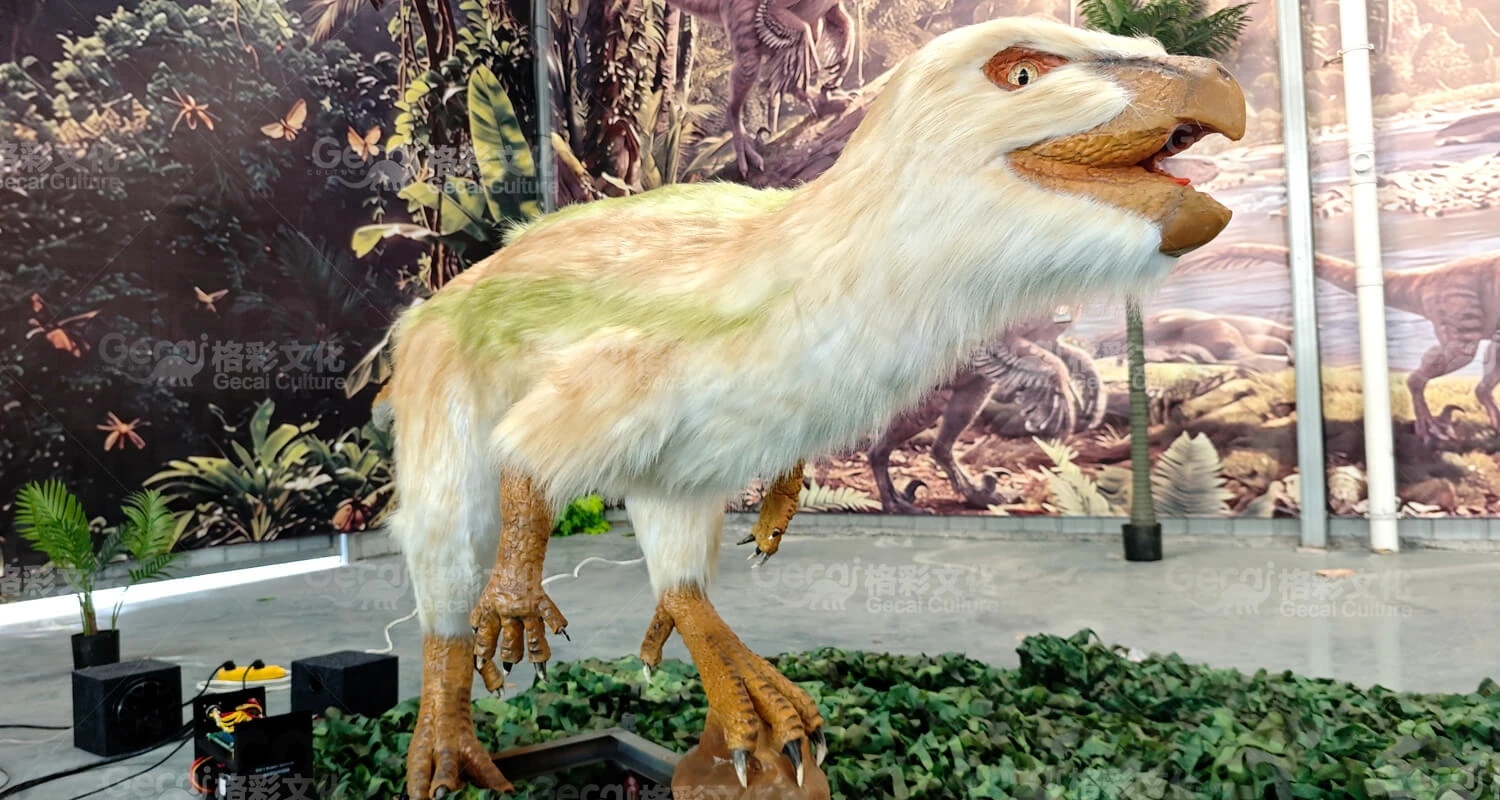
Animatronic dinosaur production involves body shaping, texture carving, skin application and painting. More detailed designs usually require additional manual work.
Appearance-related factors include:
Skin texture
Color complexity
Facial details
Teeth, claws and eyes
Feathers or special surfaces
Scientific reconstruction
Custom poses or designs
A realistic museum dinosaur may have different production requirements from a cartoon model designed for a children’s attraction.
4. Additional Functions
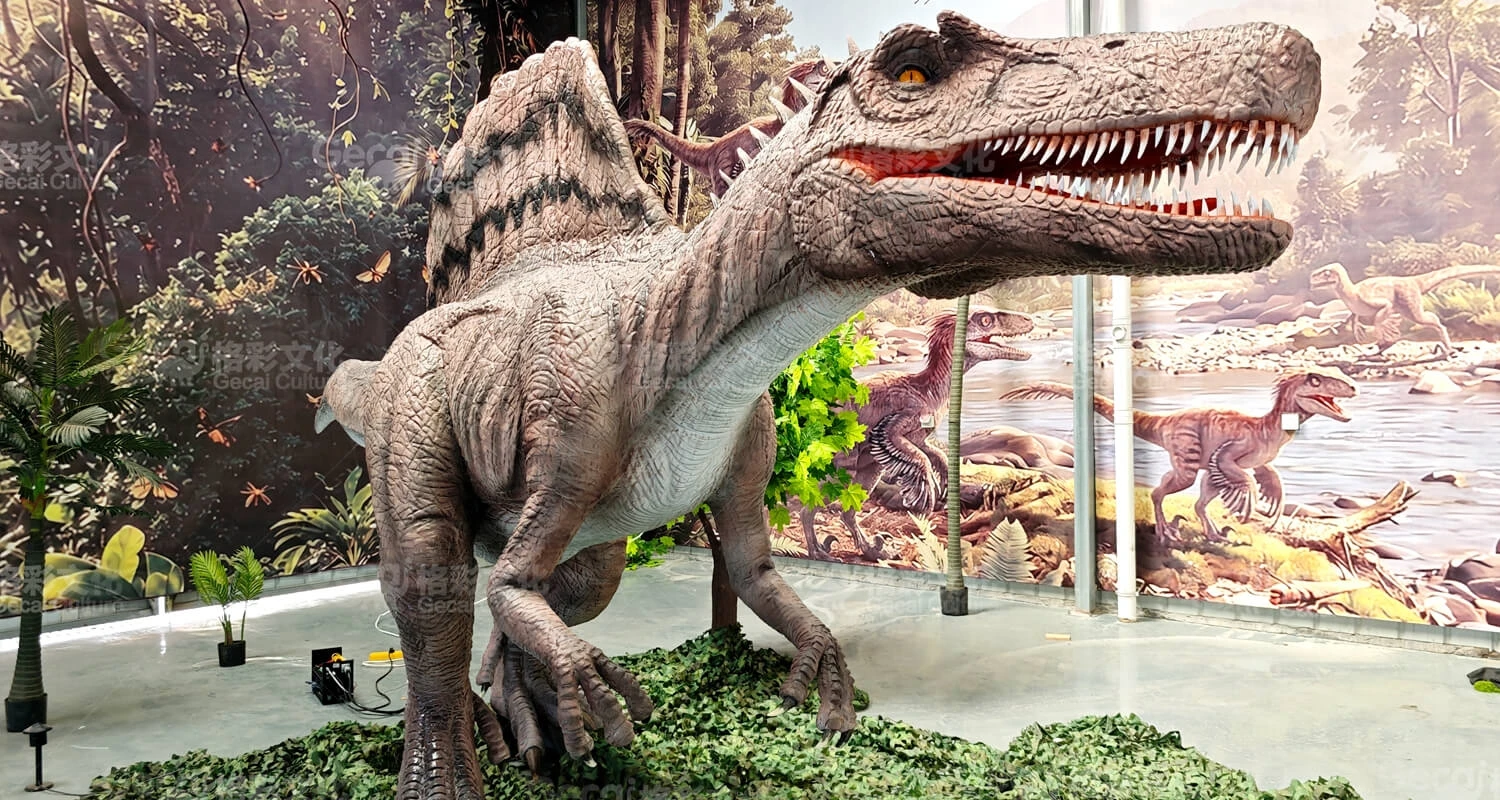
Optional functions can also increase the price:
Sound effects
Infrared sensors
Remote control
Lighting
Water spray
Mist effects
Timed operation
Customized programs
Each function may require additional components, wiring, programming and testing. Buyers should select functions that provide practical value for their attraction rather than simply adding as many effects as possible.
5. Indoor or Outdoor Use
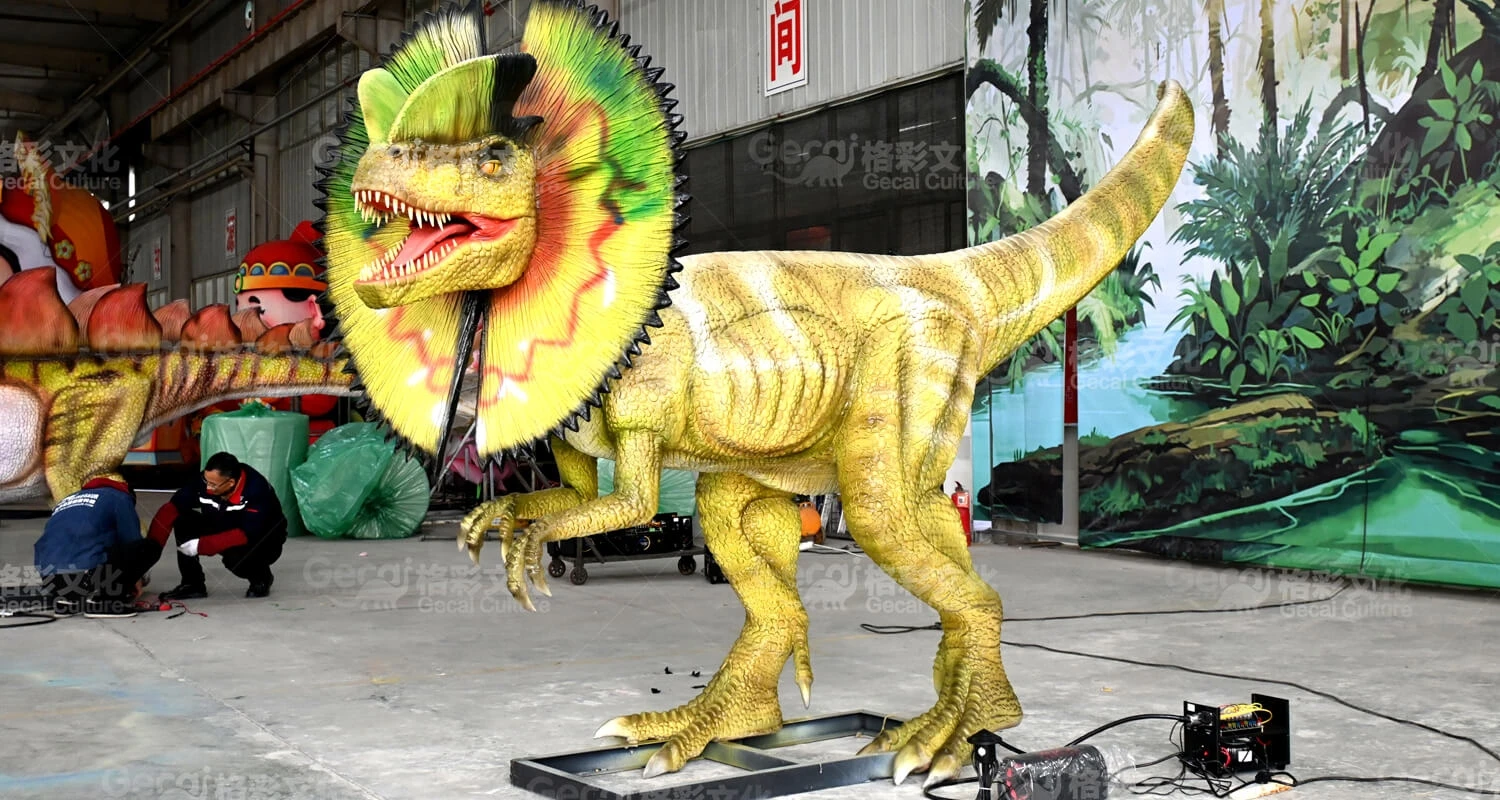
The installation environment affects the required product configuration.
Outdoor animatronic dinosaurs may require additional consideration for rain, sunlight, temperature, ground drainage, structural fixing and electrical protection.
Indoor projects may need to consider entrance dimensions, ceiling height, floor loading and emergency routes.
Outdoor suitability does not mean that a model can be submerged in water or operated during every type of extreme weather. Venue conditions should be discussed before production.
Read more about using animatronic dinosaurs outdoors.
6. Custom vs In-Stock Dinosaurs
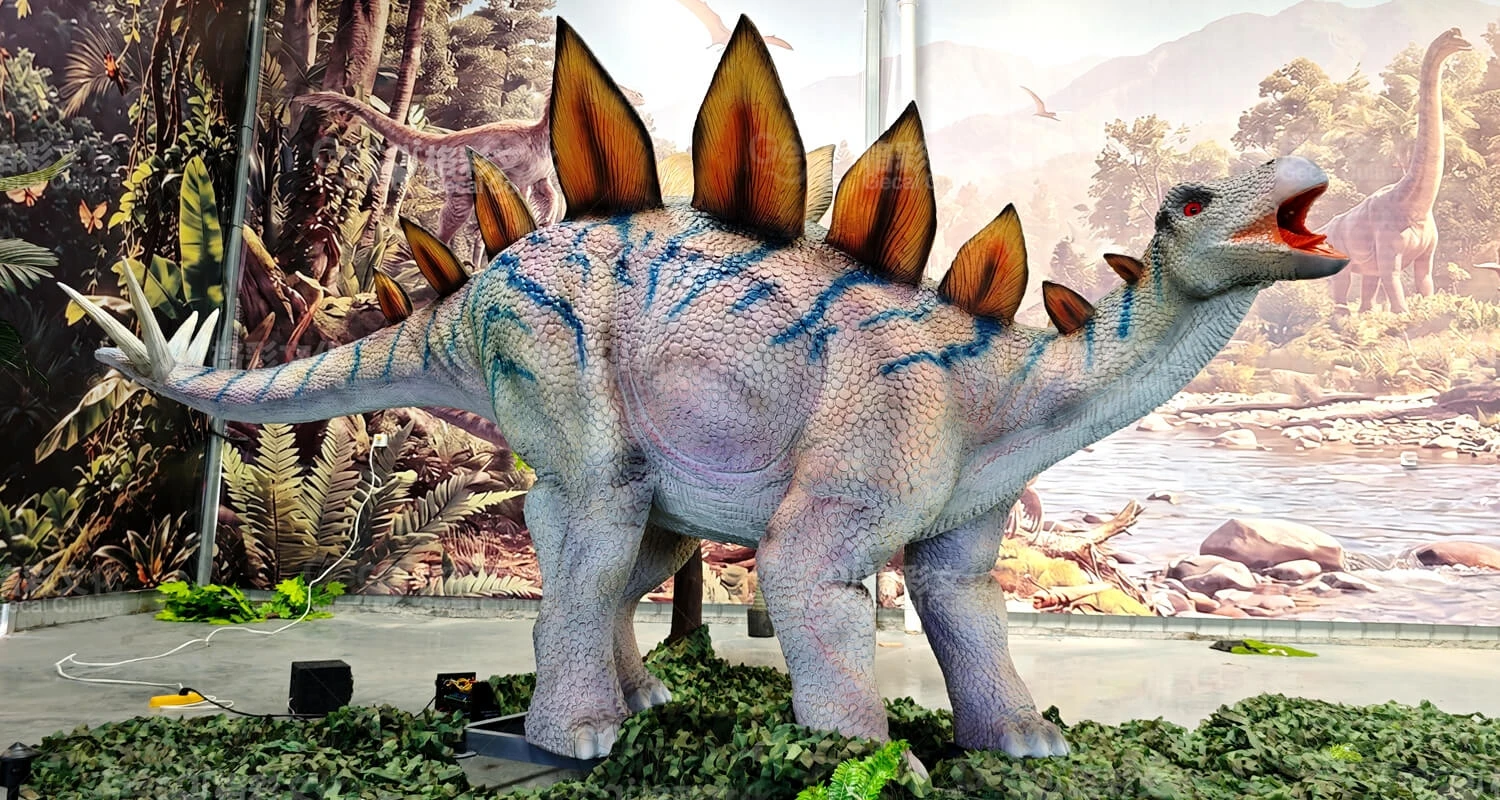
In-stock dinosaurs are already completed or nearly completed. Their size, posture and mechanical structure are usually fixed, although limited changes may be possible.
Custom dinosaurs can be produced according to specific requirements, including:
Size and posture
Color and texture
Movement system
Interactive functions
Installation method
Customization requires additional design, production and testing. A mixed solution can also be used: custom models for key areas and in-stock models for secondary displays.
Learn more about custom and in-stock animatronic dinosaurs.
7. Quantity and Project Configuration
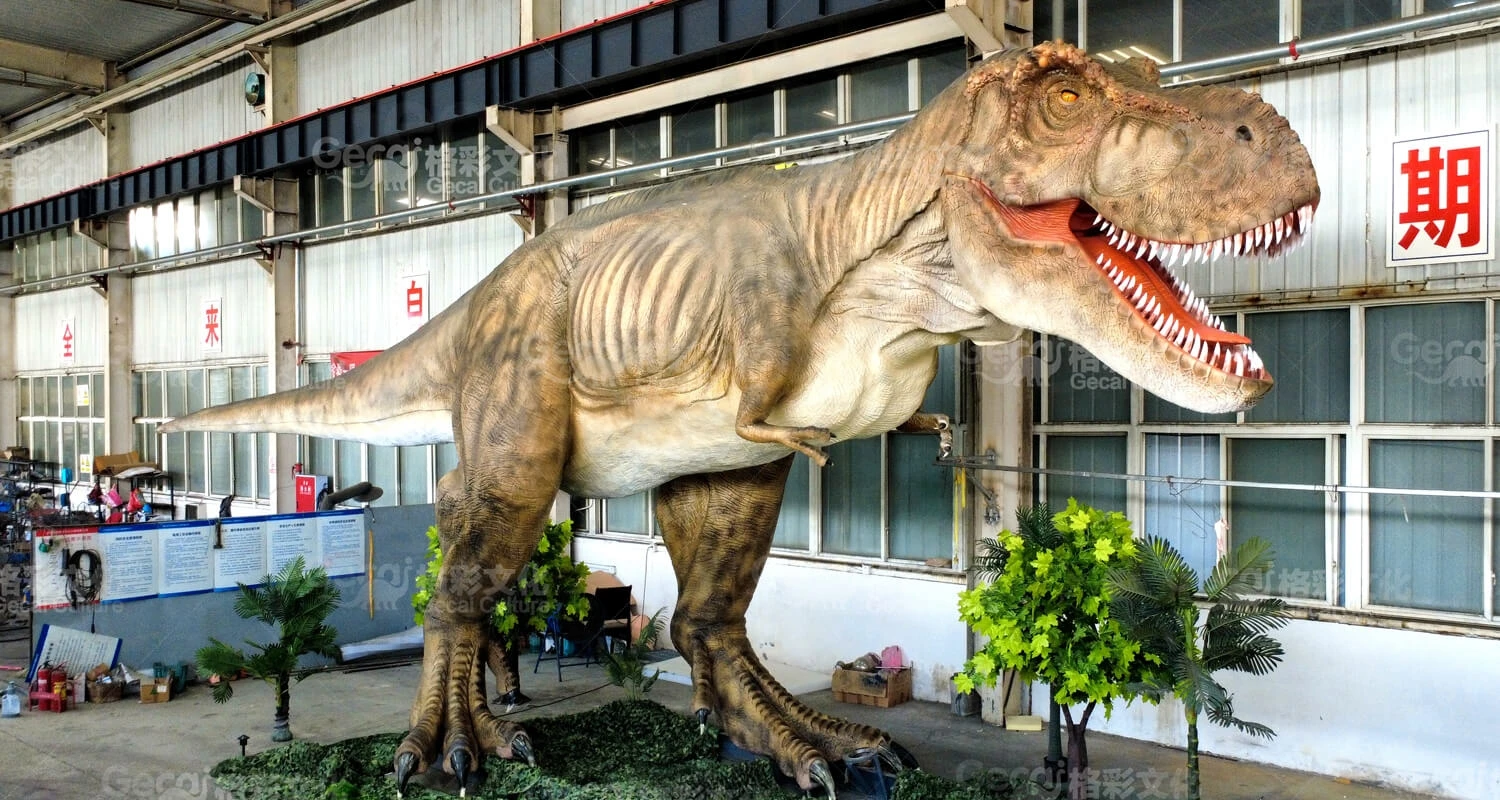
Ordering several dinosaurs does not mean that every model must use the same configuration.
A dinosaur park may use a large custom T-Rex or servo dinosaur as its main attraction while selecting standard movements for other models along the visitor route.
This approach allows buyers to focus their budget on the most visible exhibits while maintaining the overall quantity and variety of the project.
8. Packing, Shipping and Installation
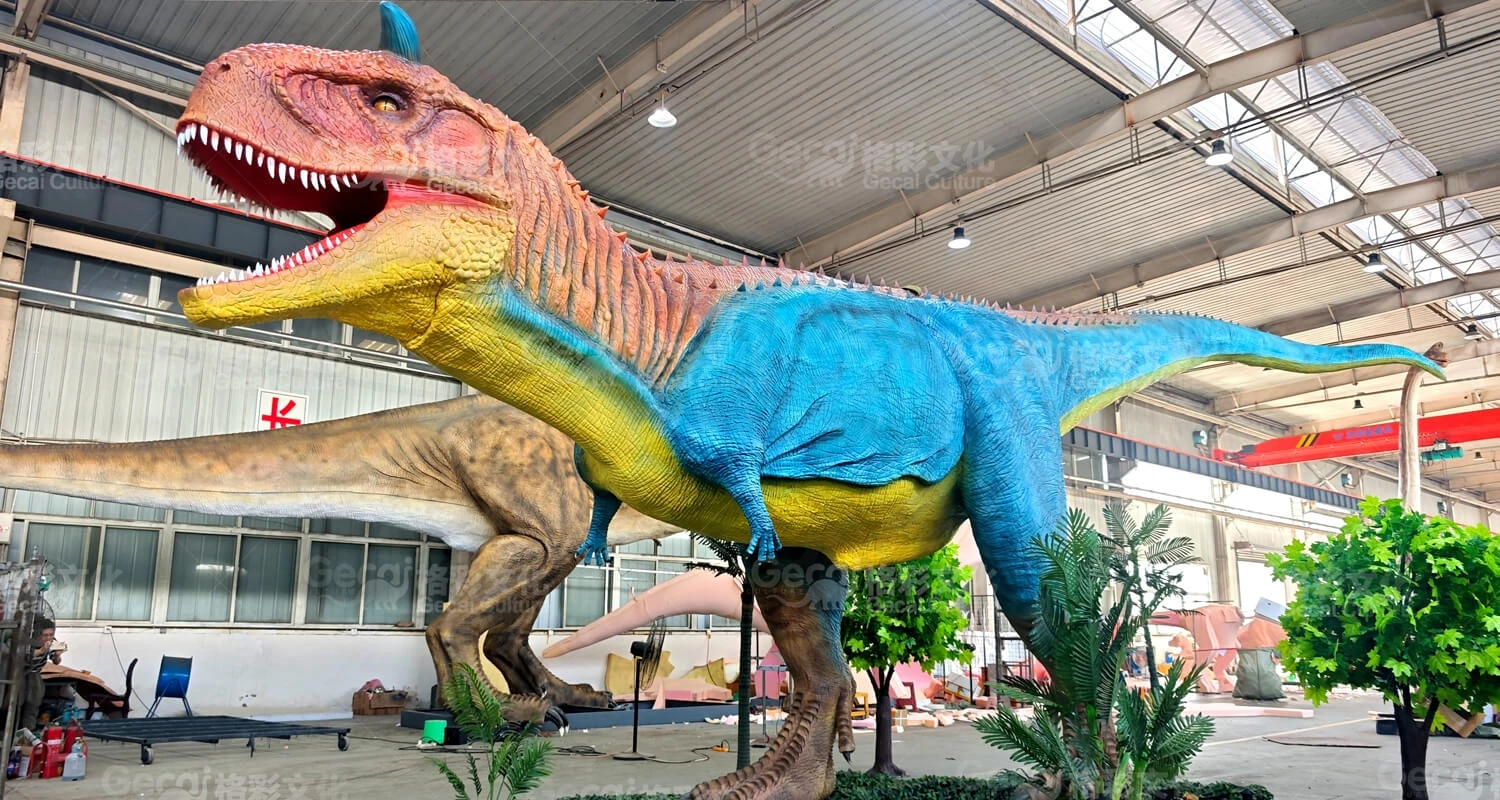
The product price is not always the final project cost. Buyers may also need to consider:
Protective packing
International shipping
Import clearance and taxes
Foundations
Lifting equipment
Installation
Maintenance and spare parts
A simple way to understand the complete budget is: Total Project Cost = Product Cost + Packing + Shipping + Installation + Maintenance
The items included depend on the supplier’s quotation and delivery terms. Buyers should confirm these details before comparing offers.
How to Compare Quotations
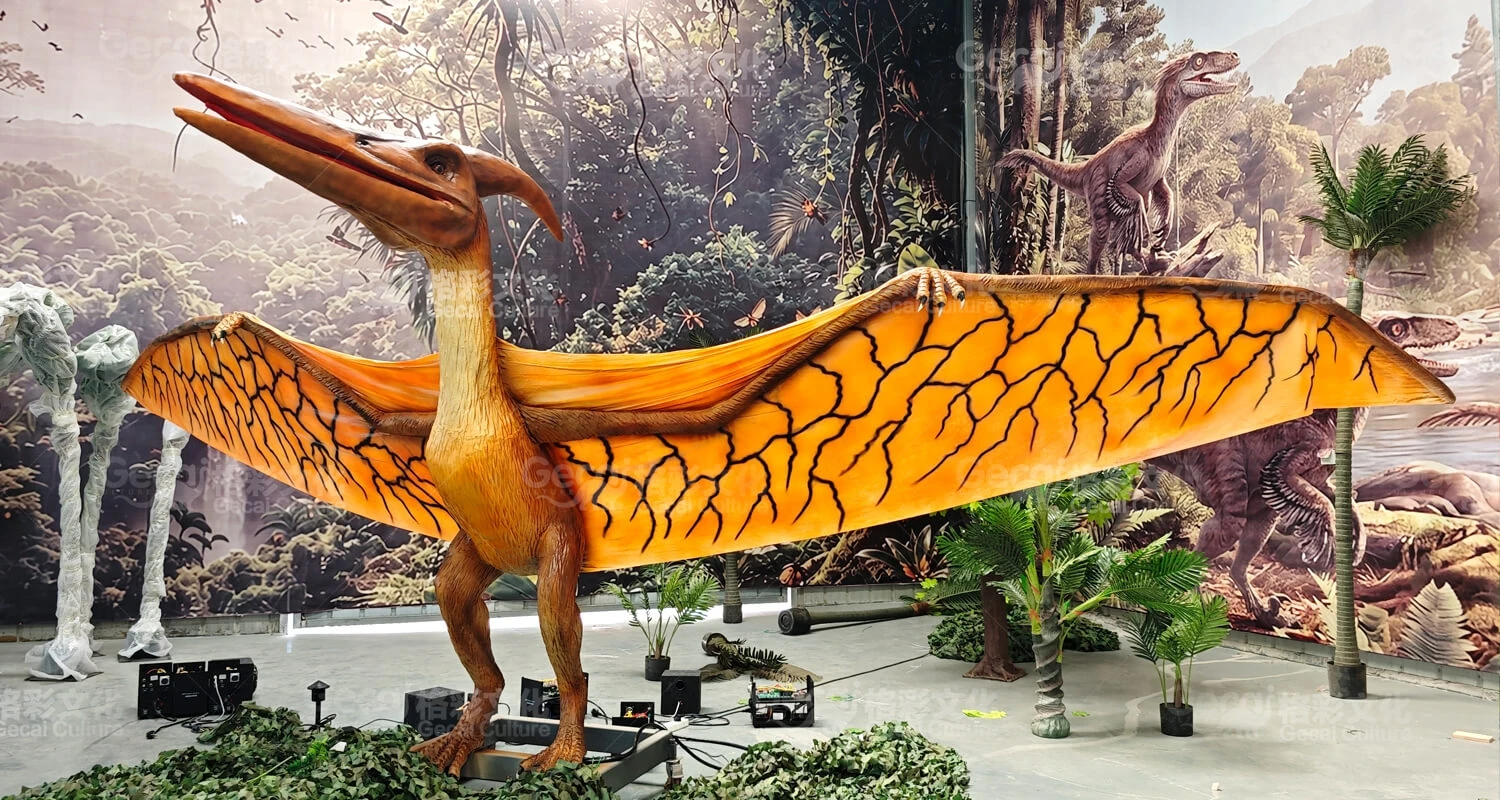
Two quotations may describe similar dinosaurs but include different configurations. Before choosing a supplier, compare:
Product dimensions and posture
Movement list and range
Standard or servo motors
Indoor or outdoor configuration
Included functions and accessories
Packing and delivery terms
Installation and after-sales support
Buyers should also request recent photos and a movement test video showing the quoted configuration.
For a broader checklist, read the animatronic dinosaur buying guide.
Information Needed for a Quote
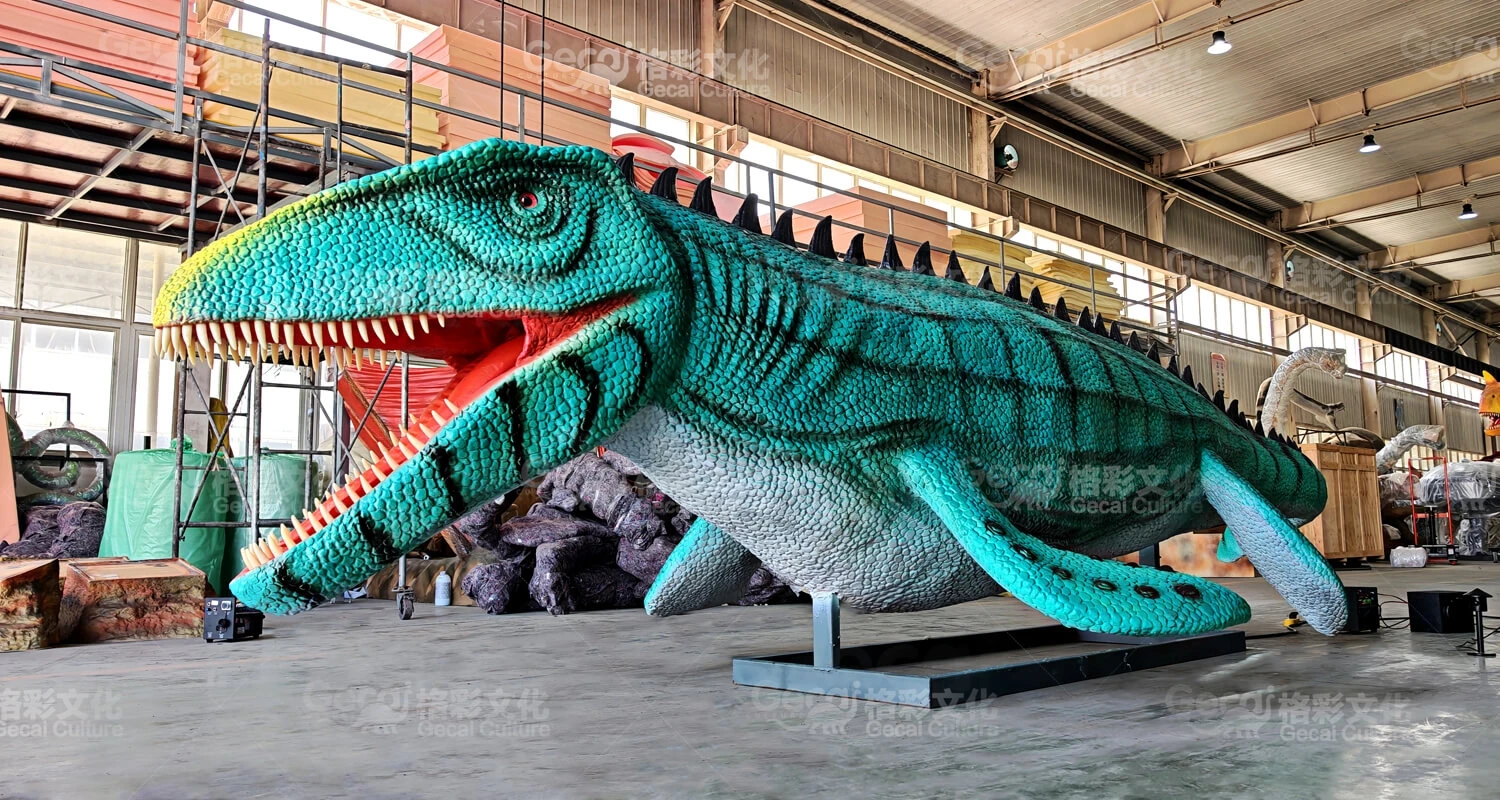
To receive a more accurate quotation, provide:
Dinosaur species
Required size
Quantity
Indoor or outdoor use
Standard or servo motors
Required movements
Additional functions
Destination
Project schedule
Venue photos or dimensions
If you are unsure about the specifications, the manufacturer can recommend a suitable configuration based on your venue, application and budget.
Frequently Asked Questions
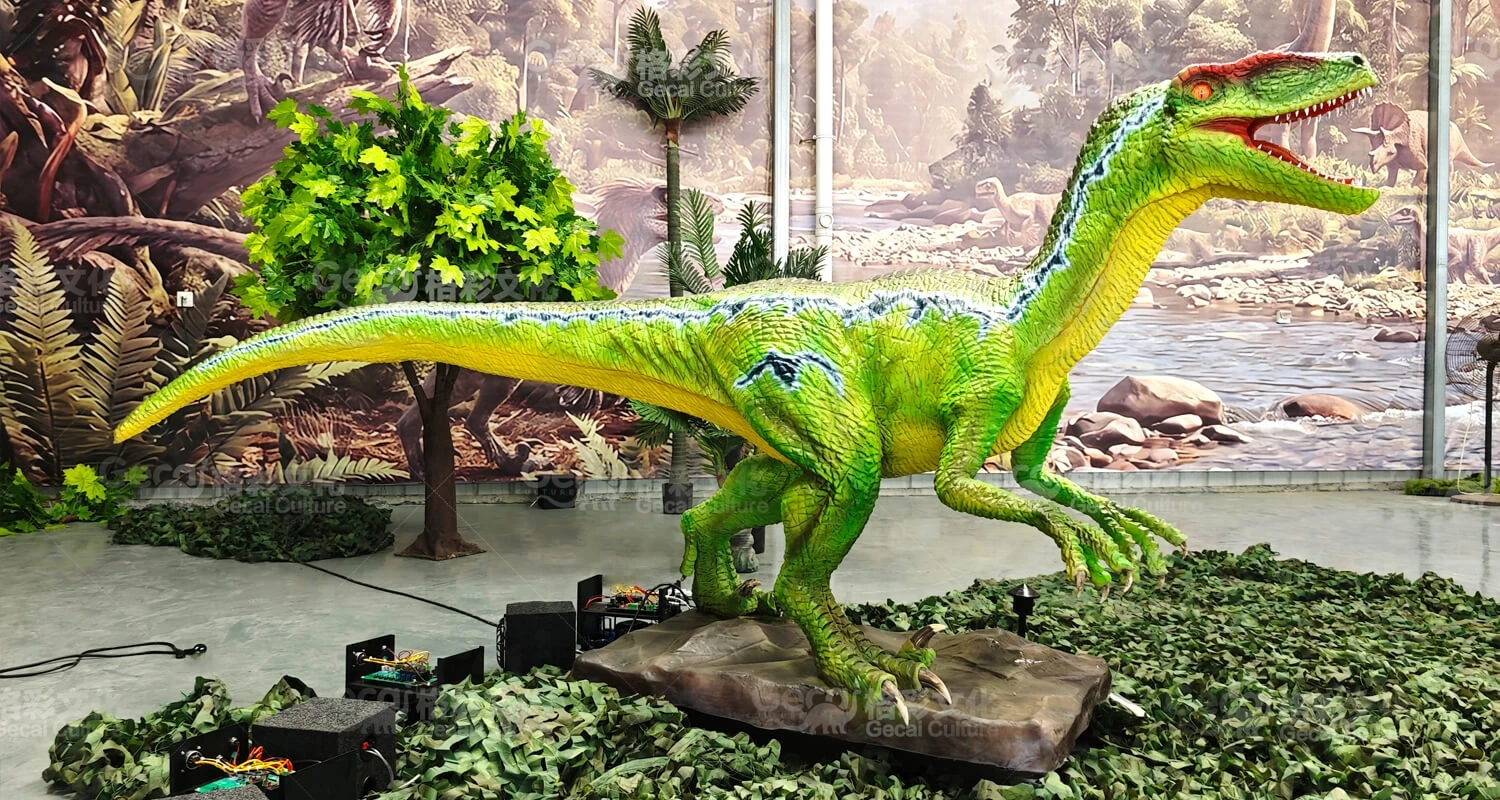
How much does an animatronic dinosaur cost?
There is no universal price. The cost depends on size, structure, movements, motor type, appearance, functions and delivery requirements.
Are servo animatronic dinosaurs more expensive?
Servo systems generally require different mechanical designs, controllers, programming and testing. This can increase the price, but servo motors are not necessary for every project.
Are in-stock dinosaurs cheaper?
In-stock models usually require less design and production work. However, the final cost also depends on their size, configuration, modifications and shipping requirements.
Does the price include shipping?
Not always. Buyers should confirm whether packing, freight, customs clearance, taxes and installation are included in the quotation.
Conclusion
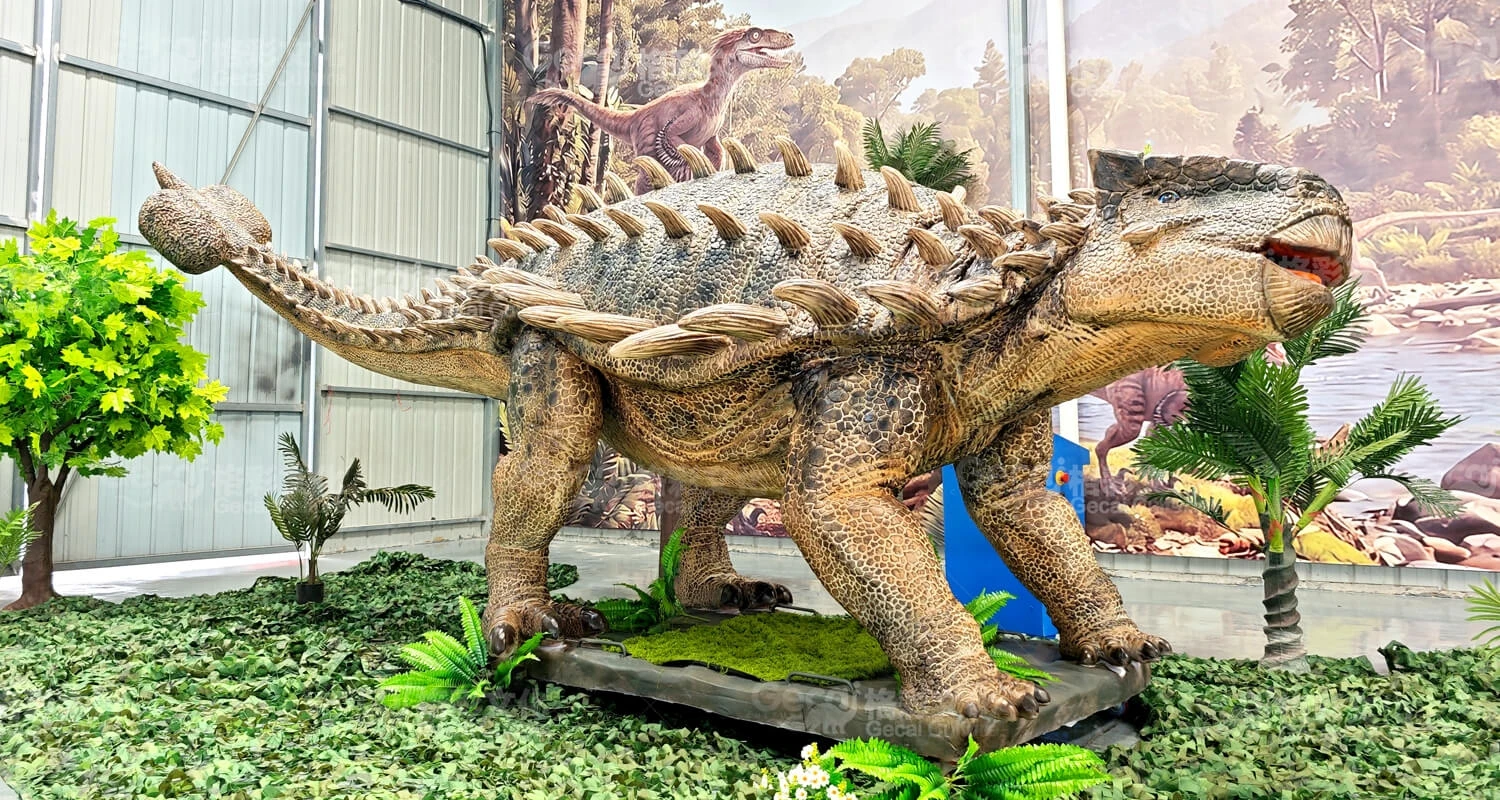
Animatronic dinosaur prices vary because each project has different technical and installation requirements. Buyers should compare the same size, movements, motor system, functions and included services rather than selecting a product based only on its unit price.
Send us your preferred dinosaur type, size, quantity, movements, installation environment, destination and project schedule to receive a suitable recommendation and quotation.
Tags: