About us
Gecai Culture stands at the forefront of bringing the past to life through our state-of-the-art Animatronic Dinosaurs, enchanting Animatronic Creatures, vibrant Chinese Festival Lanterns, and tailored Custom Products. As a professional manufacturer nestled in the heart of China, we harbor a deep-seated passion for showcasing our lifelike dinos and animals in museums, exhibitions, zoos, parks, and beyond, aiming to kindle a flame of curiosity and learning in people of all ages.
Get a free quote
Company News
How We Created a Custom Winged Animatronic Unicorn
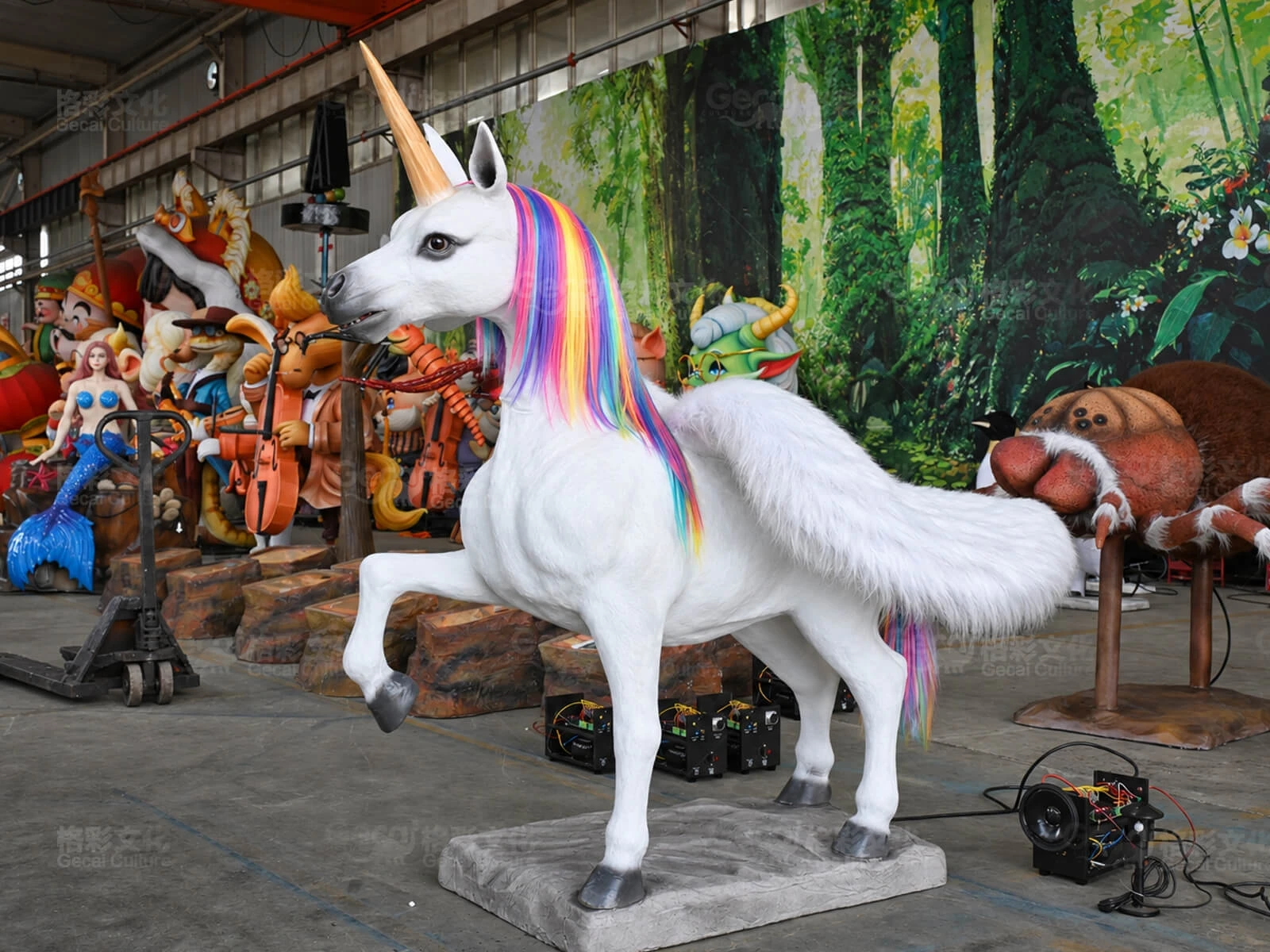
Creating a custom winged animatronic unicorn requires artistic design and mechanical engineering to be developed together. Its body proportions, wings, horn, movements, internal structure and surface finish must all support the same creative concept.
This project was developed as a fantasy attraction model with five main functions: flapping wings, a turning head, a moving front hoof, an opening mouth and synchronized sound. The process began with a design concept and continued through 3D modeling, mechanical fabrication, sculpting, painting and final testing.
Understanding the Project Concept
Every custom animatronic project begins by defining how the finished product should look and operate.
Unlike a standard animal model, a winged unicorn has no single real-world reference. The customer and design team therefore need to agree on its visual style, proportions and character before production starts.
The main project information includes:
Required size
Indoor or outdoor use
Installation space
Standing or dynamic posture
Wing size and shape
Horn design
Mane and tail style
Main colors
Required movements
Sound and control method
Destination and installation schedule
Customers can provide drawings, reference images, 3D files or a written description. The manufacturer then evaluates whether the proposed appearance and functions can work together.
Developing the Unicorn’s Appearance
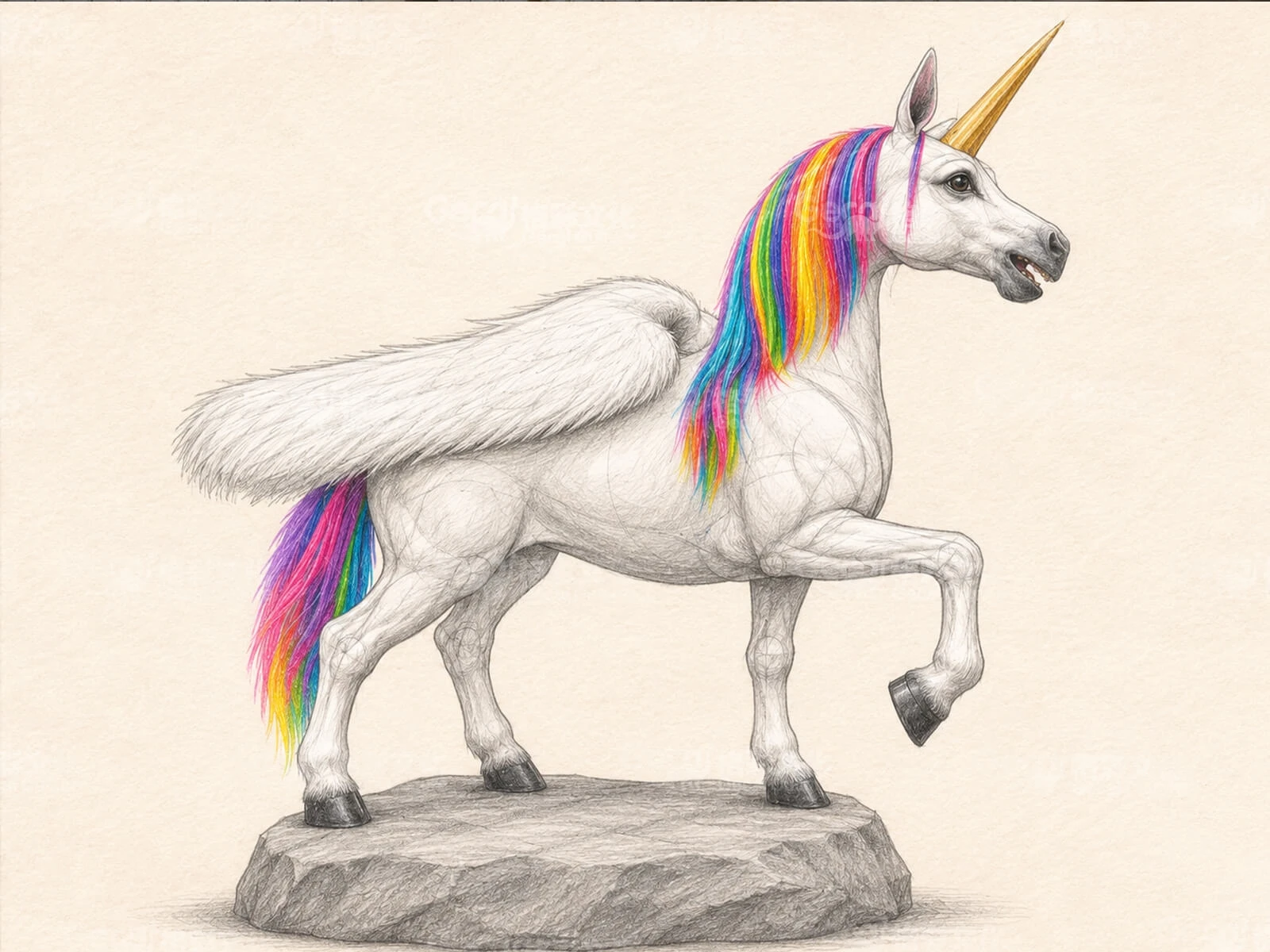
The concept design establishes the unicorn’s overall visual identity.
This model combines a horse-like body with a fantasy horn, large feathered wings and colorful decorative details. Each feature must feel like part of one creature rather than a collection of separate elements.
The design team focuses on:
Head and body proportions
Facial expression
Neck curvature
Position of the raised front hoof
Horn length and spiral shape
Wing size and feather arrangement
Mane and tail volume
Main color and gradients
Viewing angle
Movement requirements also affect the appearance. For example, the wings must have enough clearance to flap without touching the body or nearby scenery. The raised front hoof must appear natural while leaving room for the internal mechanism.
Creating and Confirming the 3D Model
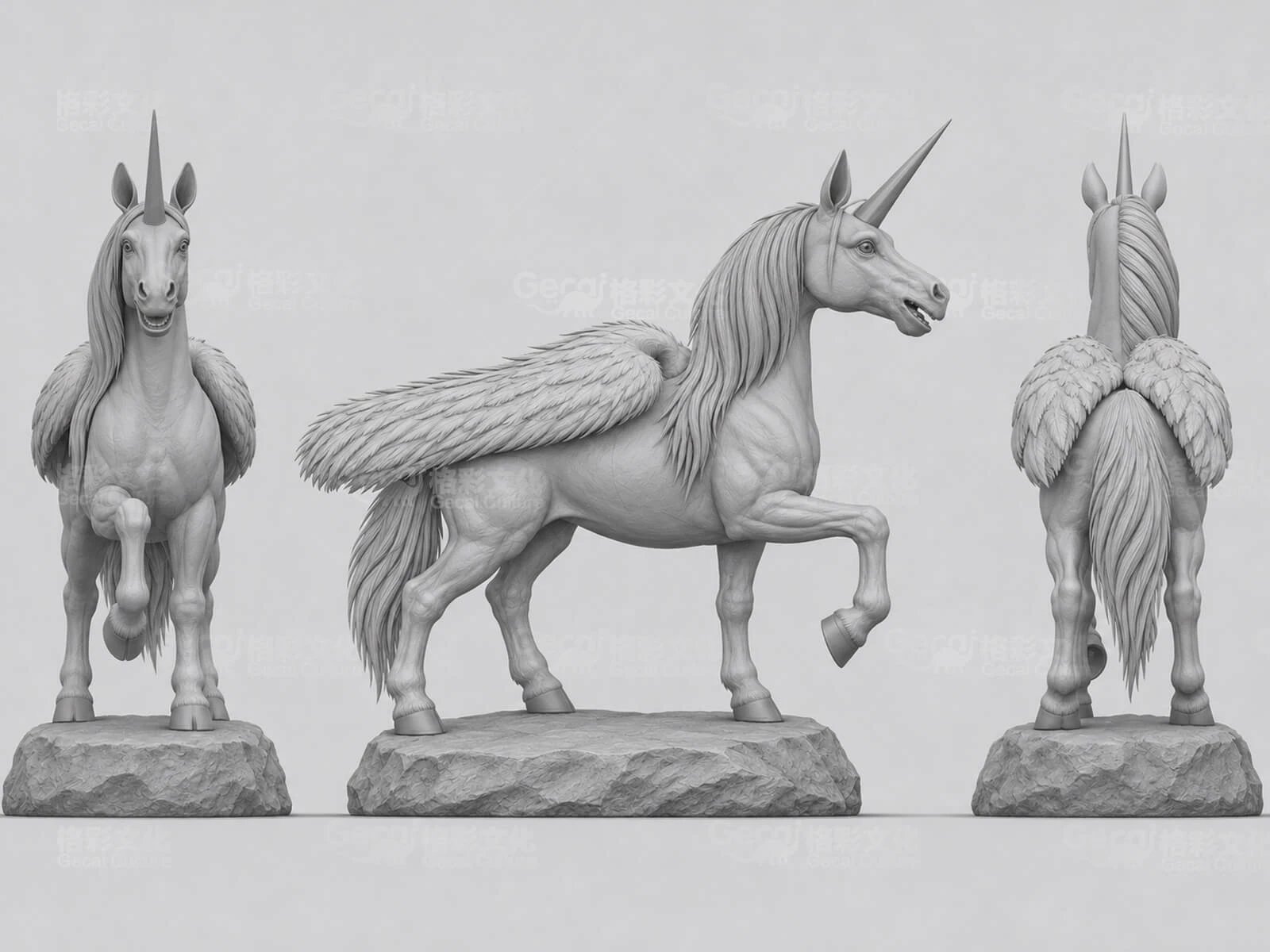
A three-dimensional model helps turn the approved concept into a design that can be reviewed from every angle.
During this stage, the team checks the front, side and rear views of the unicorn. The digital model can be adjusted before the physical structure is produced, reducing the risk of major changes later.
The 3D model helps confirm:
Body proportions
Head and neck position
Leg posture
Wing dimensions
Feather layers
Horn placement
Mane and tail shape
Overall height and length
Base dimensions
Main viewing angles
The engineering team can also use the design to estimate movement clearance and identify where motors, linkages and structural supports will be positioned.
Once the customer confirms the appearance, the approved model becomes an important reference for the mechanical and artistic production teams.
Designing the Animatronic Movements
The movement system is planned according to the unicorn’s posture, size and visitor viewing position.
This custom model includes five main functions:
| Function | Intended Effect |
|---|---|
| Wings | Coordinated flapping movement |
| Head | Turning from side to side |
| Front hoof | Controlled lifting or movement |
| Mouth | Opening and closing |
| Sound | Synchronized fantasy or horse-like call |
The wings require particular attention because their size creates additional weight and leverage. The internal mechanism must support repeated movement while keeping both wings coordinated.
The turning head needs sufficient clearance around the neck and mane. The front-hoof mechanism must move without affecting the stability of the body or base. Mouth movement can be programmed to operate together with the sound, making the finished model feel more responsive.
The movement sequence may run automatically or be activated by a button, sensor, timer or remote control, depending on the project.
Building and Testing the Steel Frame
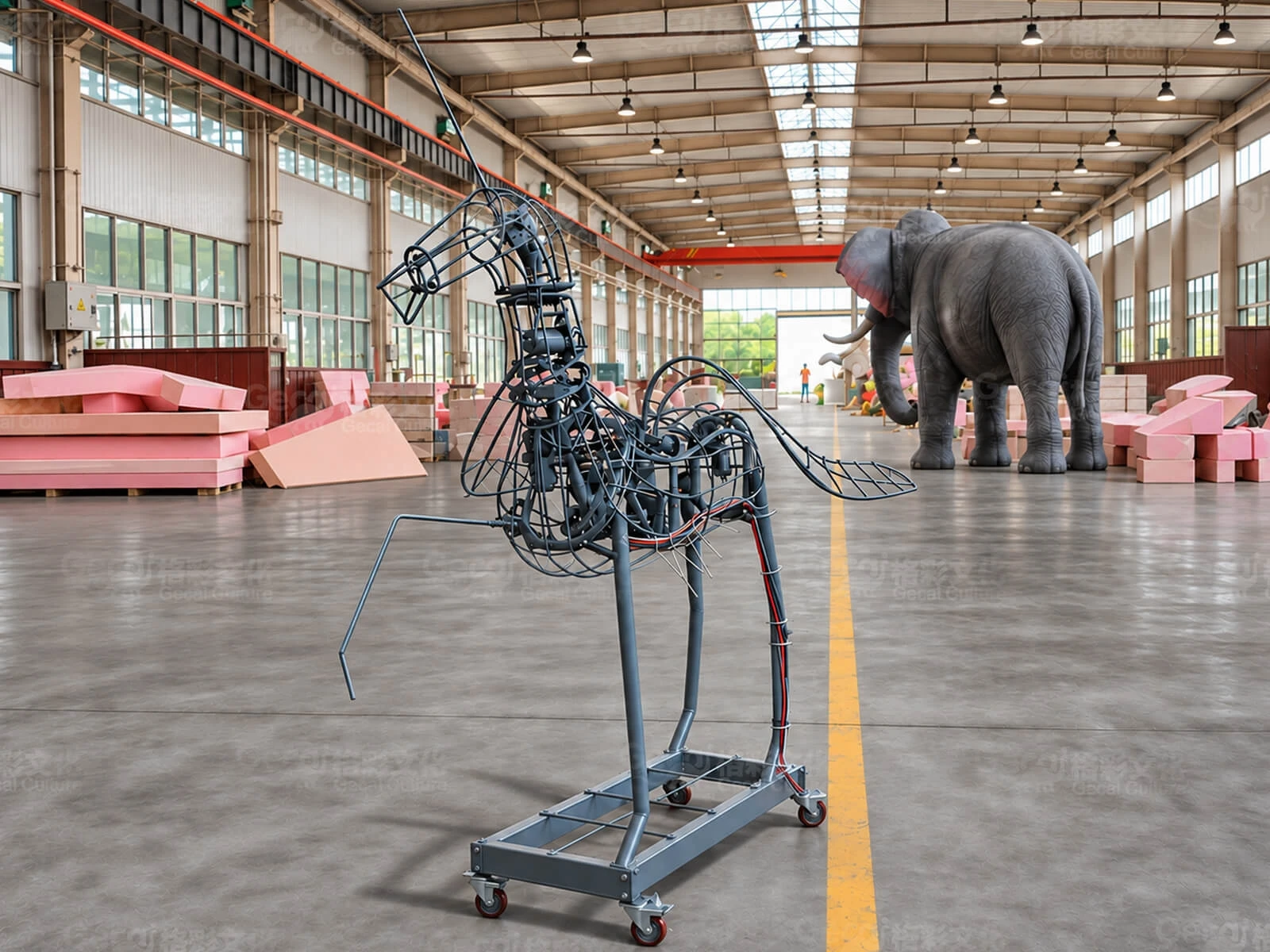
After the design and movement plan are confirmed, technicians build the internal steel structure.
The frame acts as the skeleton of the animatronic unicorn. It supports the body, maintains the approved posture and holds the mechanical components in the correct positions.
The production process includes:
Cutting and welding the steel frame
Reinforcing the body and base
Building the wing-support structure
Installing the head-turning mechanism
Installing the front-hoof mechanism
Adding the mouth linkage
Mounting motors and transmission components
Routing electrical cables
Connecting the control system
The first mechanical tests are completed before the outer body is fully formed. At this stage, technicians can observe the wings, head, hoof and mouth directly and adjust the mechanism more easily.
The test checks movement range, operating speed, structural stability and possible interference between components.
Sculpting the Body and Wings
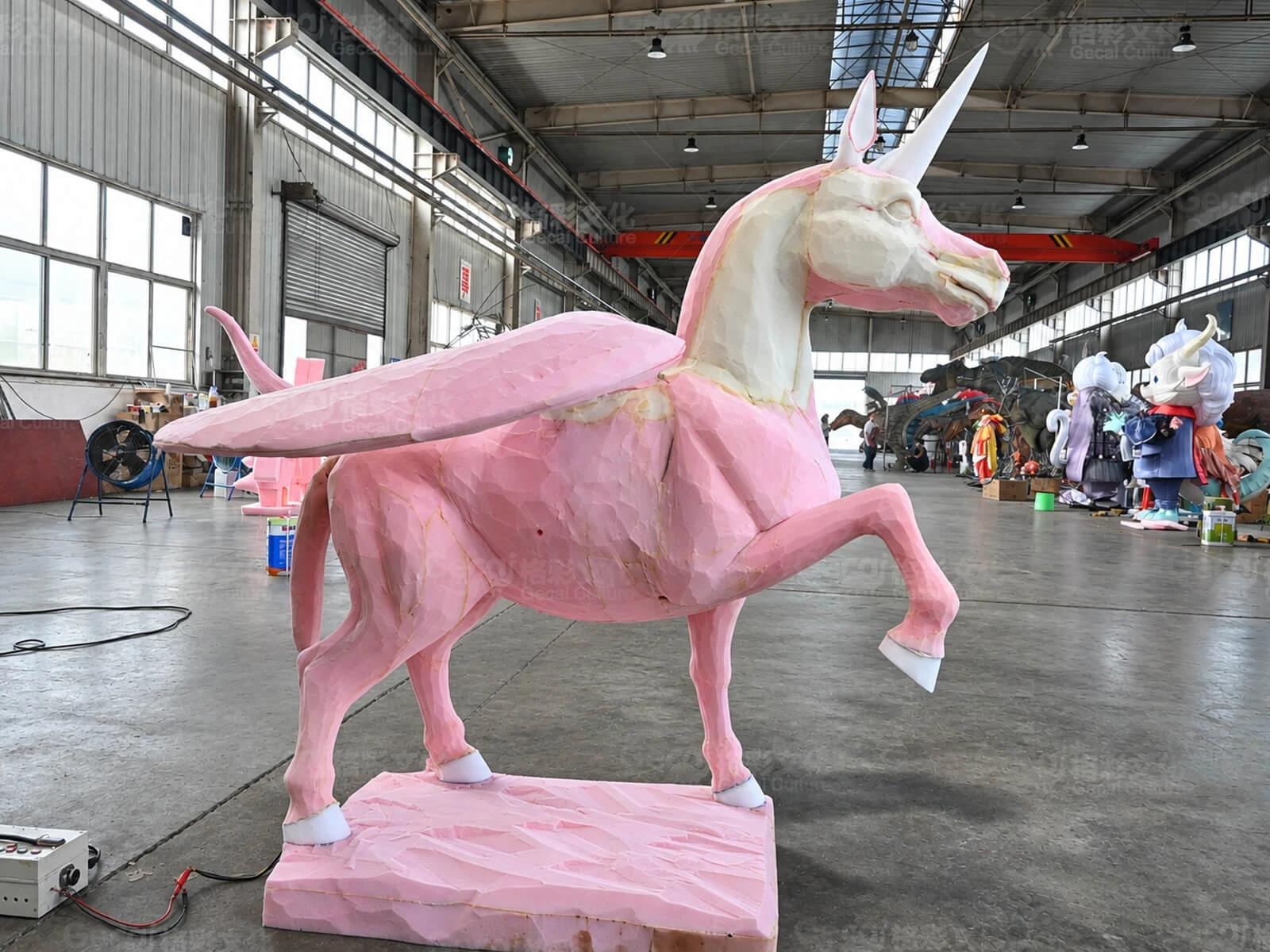
Once the mechanical structure operates correctly, the artistic team begins developing the physical form.
High-density foam or another suitable shaping material is applied around the frame. Craftspeople sculpt the head, neck, body and legs according to the approved design.
The body shape must remain balanced from different angles. Particular attention is given to the face, neck, chest and raised front leg because these areas strongly influence the unicorn’s expression and posture.
The wings are created with layered feather forms. Their construction needs to balance three requirements:
The feathers must look detailed and three-dimensional.
The completed wings must remain light enough to move reliably.
The feather layers must not collide while the wings are flapping.
Enough flexible space must also remain around the neck, mouth, hoof and wing joints so the outer surface does not restrict the mechanical system.
Creating the Horn, Mane and Surface Details
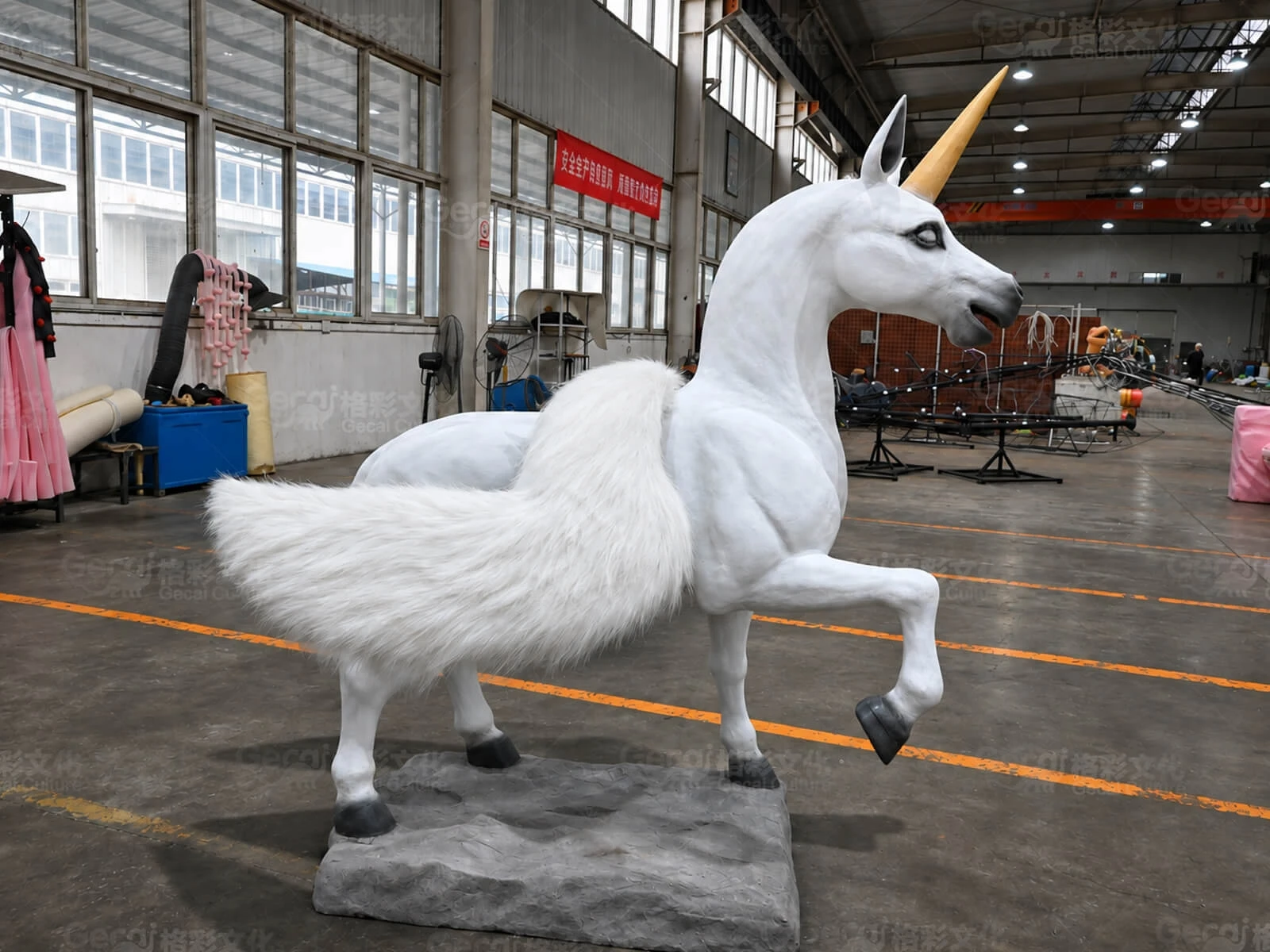
The fantasy details give the unicorn its recognizable character.
The horn can be customized in length, shape, surface pattern and color. It may use a natural, metallic, pearl or translucent finish. Lighting can also be integrated when the horn structure and project design allow it.
The mane and tail can be created with sculpted forms, flexible materials or artificial hair. Their color, length and texture should complement the body and wings without interfering with the head movement.
Other surface details may include:
Facial texture
Eye color
Hoof finish
Feather lines
Decorative markings
Metallic highlights
Gradient color effects
Fantasy patterns
Moving areas require careful finishing. Surface materials around the mouth, neck, front hoof and wing roots must remain compatible with the planned movement range.
Painting and Final Artistic Finishing
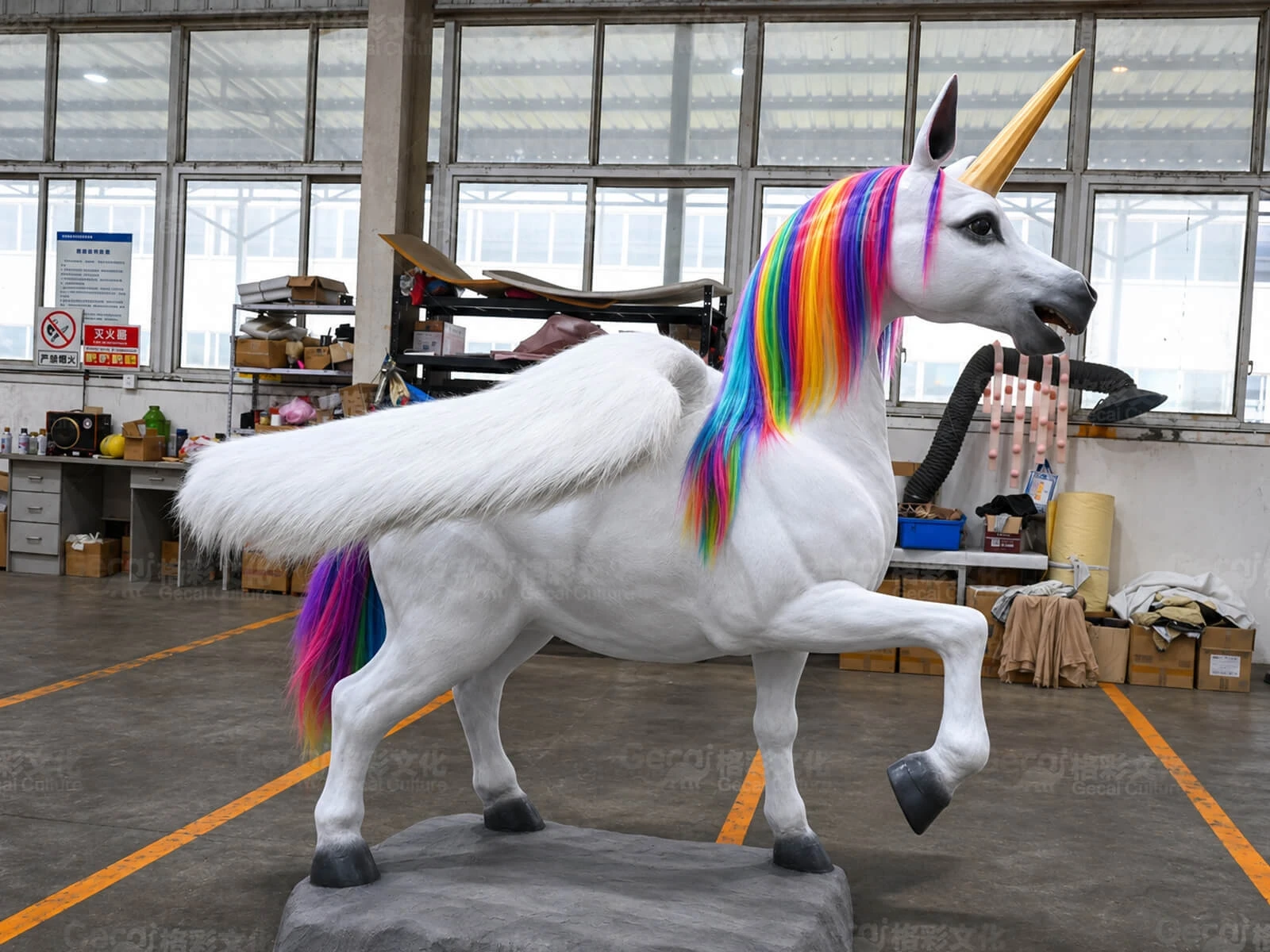
Painting transforms the sculpted model into the finished fantasy creature.
Instead of applying one flat color, painters use several layers of shading and highlighting. This creates depth around the muscles, face, feathers and joints.
For a colorful unicorn, the finish may combine:
A white or light-colored body
Rainbow or gradient mane
Multicolored wings
Metallic horn details
Defined eyes and eyelashes
Shading around the mouth and nose
Coordinated hoof colors
Pearl or reflective highlights
The color scheme can be adjusted for a children’s park, fantasy attraction, shopping mall event or seasonal exhibition.
For outdoor use, the surface system should be selected according to the local environment. Outdoor installation still requires suitable drainage, electrical protection and regular inspection.
Final Assembly and Movement Testing
After the surface and painting are completed, the unicorn is fully assembled for final testing.
Technicians test each function individually before running the complete programmed sequence.
The final inspection includes:
Continuous wing-flapping tests
Head-turning tests
Front-hoof movement
Mouth opening and closing
Sound playback
Mouth-and-sound synchronization
Control-system operation
Base and structural stability
Electrical connections
Surface clearance around moving joints
Overall appearance
Repeated operating cycles help identify abnormal noise, unstable movement or surface friction. Any problem should be corrected before the model is packed.
Photos and videos of the finished appearance and functions can also be provided for customer confirmation.
The Finished Custom Animatronic Unicorn
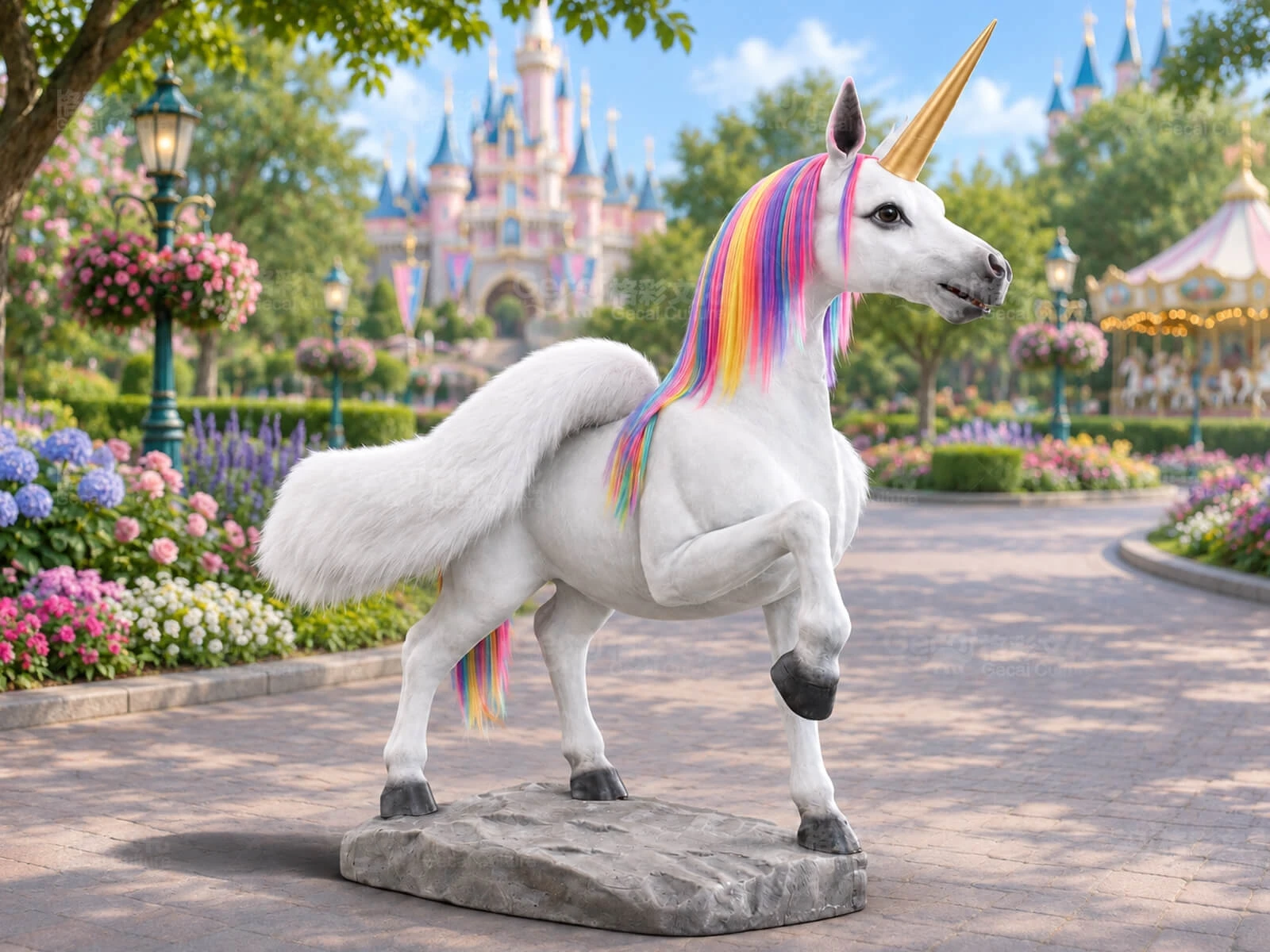
The finished model combines the approved fantasy design with coordinated mechanical movement.
When activated, the wings flap, the head turns, the front hoof moves and the mouth opens with sound. Together, these functions create a more engaging display than a static sculpture.
A custom winged animatronic unicorn can be used in:
Theme parks
Children’s amusement parks
Shopping malls
Resorts
Indoor exhibitions
Fantasy-themed attractions
Festivals and events
Film or stage sets
Photo areas
Its size, color, movement sequence, control method and surrounding scenery can be adapted to the intended venue.
Frequently Asked Questions
Can a custom unicorn be produced from a drawing?
Yes. The design can begin with a drawing, reference image, 3D file or written idea. The manufacturer will evaluate the design and technical requirements before production.
Can the wing movement be customized?
Yes. Wing size, movement range and operating speed can be adjusted according to the structure and intended effect.
Can the mouth move with the sound?
Yes. The mouth movement and sound can be programmed to operate together. The exact synchronization depends on the control system and required sequence.
Can it be installed outdoors?
It can be configured for outdoor installation. The structure, surface, electrical protection, fixing method and maintenance plan should be designed for the local environment.
Conclusion
Creating a custom winged animatronic unicorn involves more than adding a horn and wings to an animal model.
The appearance, 3D design, steel structure, mechanical system, body shape, feather details and surface finish must be planned as one complete project. Careful testing ensures that the wings, head, front hoof, mouth and sound work together reliably.
To request a customized design, share your reference images, preferred size, colors, movements, installation environment, destination and project schedule with Gecai Culture.
WhatsApp: +8618990006494
Email: lisaxiong@gecaiculture.com
Tags:
- No Data Available