About us
Gecai Culture stands at the forefront of bringing the past to life through our state-of-the-art Animatronic Dinosaurs, enchanting Animatronic Creatures, vibrant Chinese Festival Lanterns, and tailored Custom Products. As a professional manufacturer nestled in the heart of China, we harbor a deep-seated passion for showcasing our lifelike dinos and animals in museums, exhibitions, zoos, parks, and beyond, aiming to kindle a flame of curiosity and learning in people of all ages.
Get a free quote
Company News
Can Animatronic Dinosaurs Be Used Outdoors? Installation and Care Guide
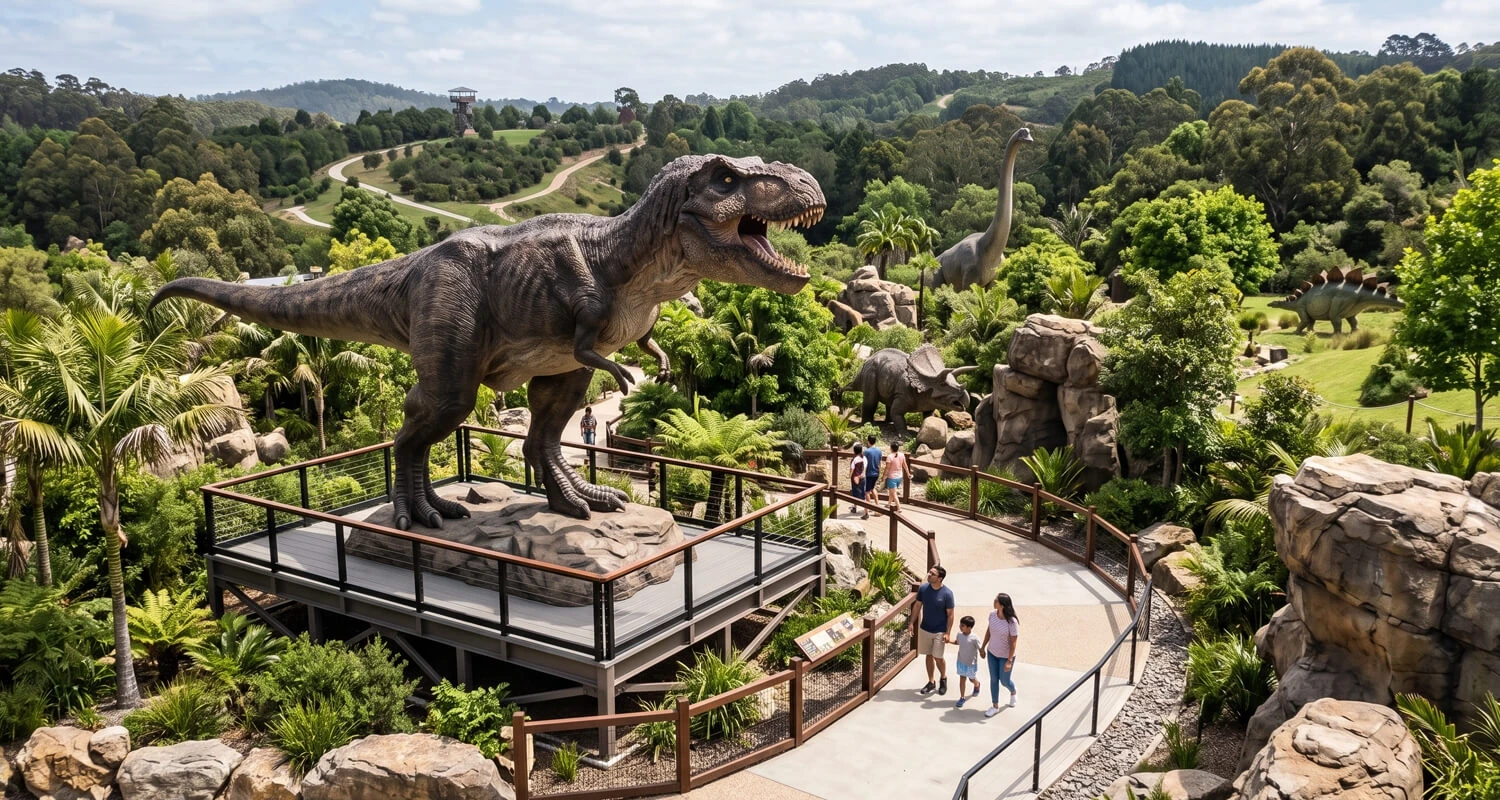
Yes, animatronic dinosaurs can be installed outdoors when their structure, surface treatment, electrical protection and installation method are designed for the local environment.
However, outdoor-ready does not mean fully waterproof or suitable for operation during every extreme weather condition. Rain, sunlight, wind, temperature changes and standing water can all affect the model. Buyers should provide local climate and venue information before production so the manufacturer can recommend a suitable configuration.
Can Animatronic Dinosaurs Stay Outdoors?
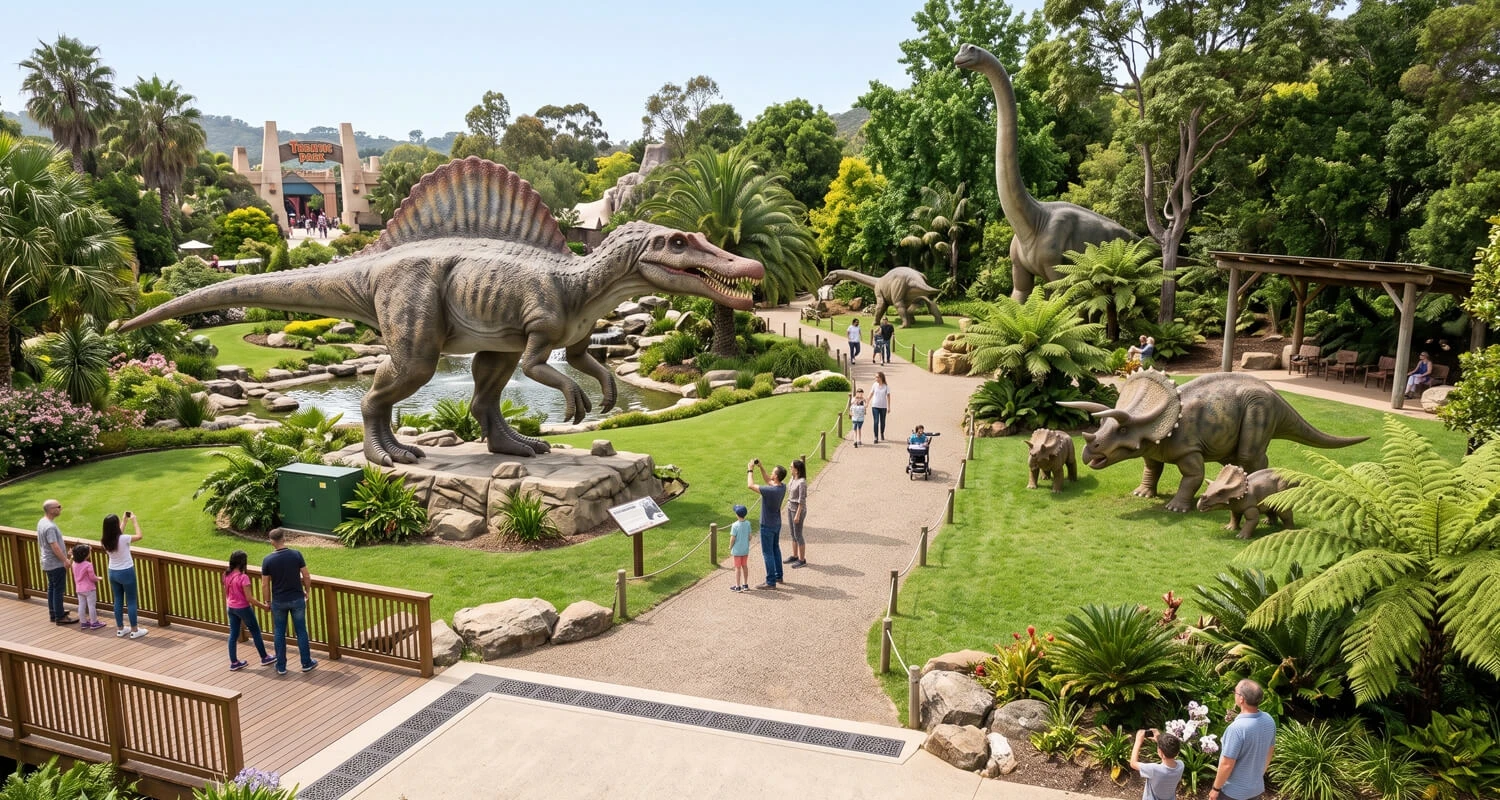
Outdoor animatronic dinosaurs are commonly used in theme parks, zoos, botanical gardens, resorts, commercial plazas and traveling exhibitions.
Whether a model can remain outside for a long period depends on:
Local rainfall and humidity
Sunlight and temperature
Maximum wind conditions
Ground drainage
Foundation and fixing method
Daily operating hours
Inspection and maintenance
The product and installation site must be considered together. Even a weather-resistant model may develop problems if it is installed in a low-lying area with poor drainage or an unstable foundation.
| Condition | Recommendation |
|---|---|
| Sun / Light Rain | Regular inspection |
| Heavy Rain | Stop and check |
| Strong Wind | Stop operation |
| Standing Water | Avoid installation |
| Extreme Climate | Extra protection |
These are general recommendations. Specific operating limits should be confirmed according to the product design and local conditions.
What Makes an Animatronic Dinosaur Outdoor-Ready?
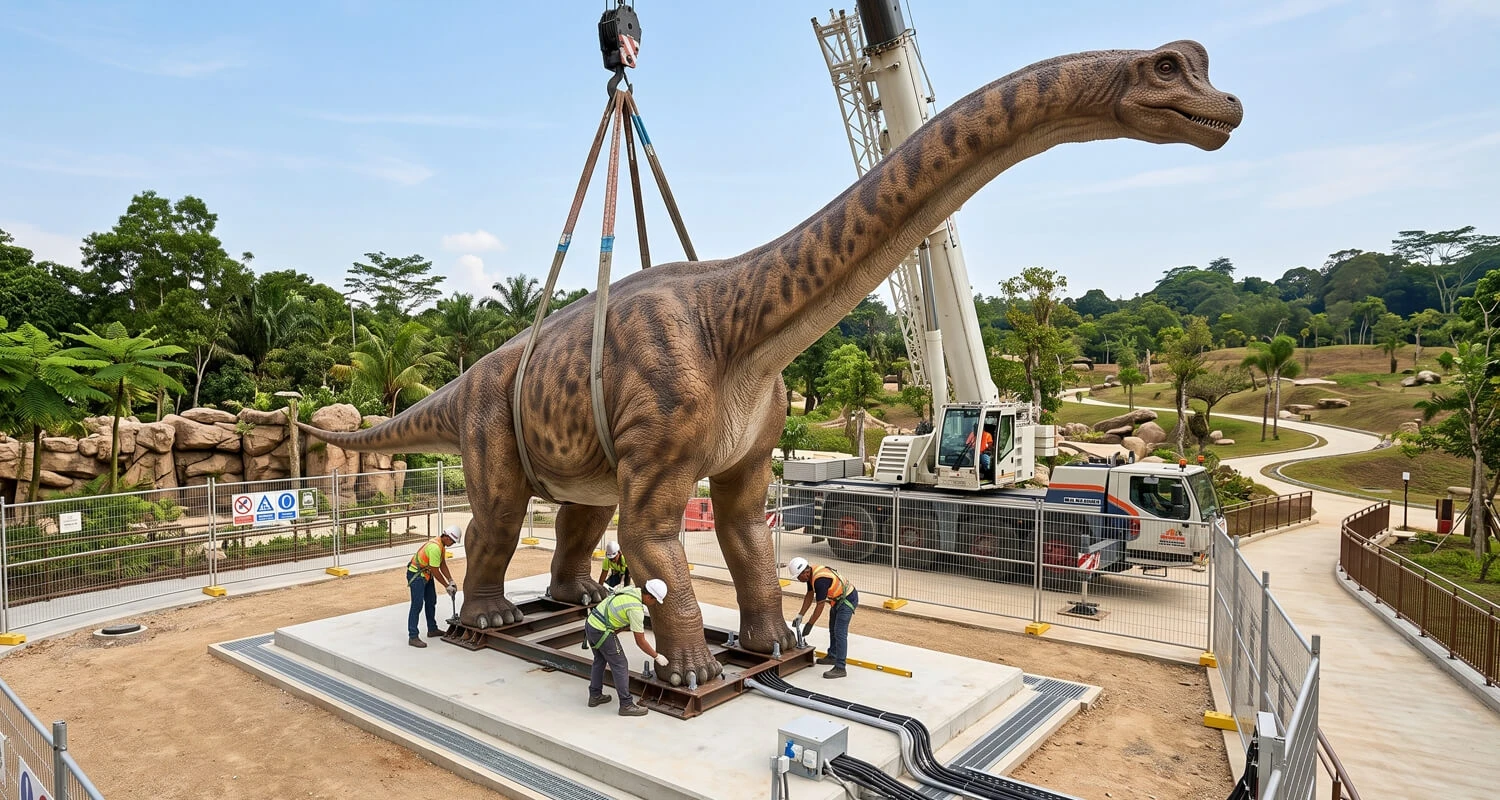
An outdoor animatronic dinosaur needs more than a realistic appearance. Its surface, steel structure, electrical system and base must all be prepared for exterior installation.
Weather-Resistant Surface
The outer surface can use suitable materials, paint and protective treatments to reduce the effects of rain, sunlight and temperature changes.
Regular exposure may still cause gradual fading, cracking or wear, especially around moving areas such as the neck, mouth, legs and tail. These areas should be inspected regularly and repaired when necessary.
“Weather-resistant” is a more accurate description than “fully waterproof.” The model should not be submerged or installed where water can collect around its base.
Protected Steel Structure
The internal steel frame supports the dinosaur and its movements. Outdoor structures should be prepared according to the model’s size, posture, weight and installation environment.
Large dinosaurs and models with raised heads or long tails may require additional consideration for wind and structural stability. Protective treatment can help reduce corrosion, but the frame, welds and connection points still require inspection during long-term use.
Electrical Protection
Control boxes, cables, plugs and electrical connections require suitable protection from rain and moisture.
The control box should be installed above ground level and away from areas where water may collect. Exposed cables should be properly secured and protected from visitors, maintenance equipment and surface water.
Electrical components should not be opened or repaired while connected to power. If water enters the control system, operation should stop until the equipment has been inspected by qualified personnel.
Stable Base and Fixing
A stable foundation is essential for outdoor installation. The correct fixing method depends on the dinosaur’s dimensions, posture, base design and local ground conditions.
The installation plan should consider:
Concrete or other suitable foundations
Anchoring points
Ground level
Drainage
Wind exposure
Visitor distance
Maintenance access
The manufacturer should receive venue information before finalizing the base and supporting structure.
How Should the Installation Site Be Prepared?
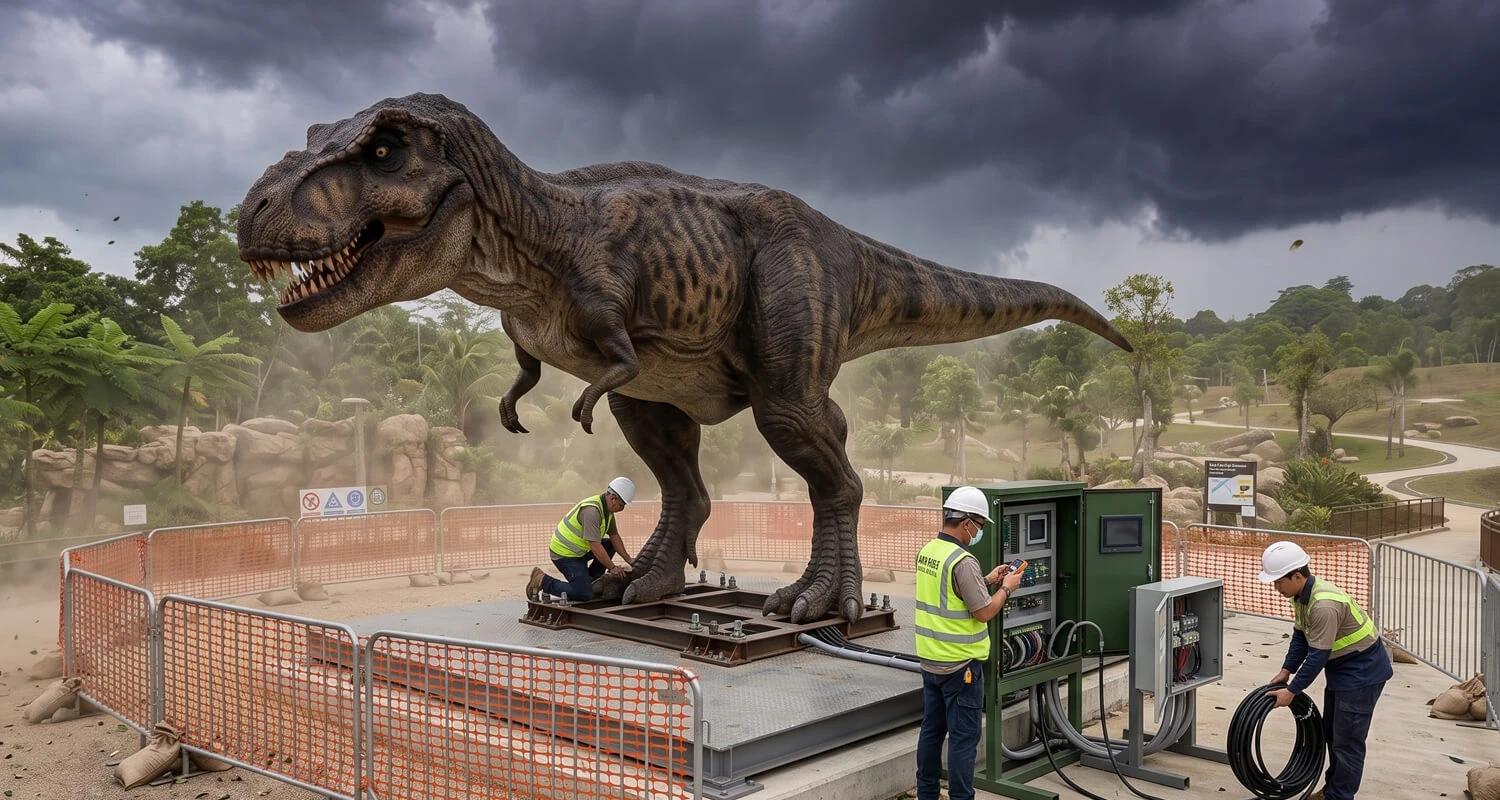
Site preparation directly affects the safety and long-term performance of outdoor animatronic dinosaurs.
Avoid low-lying or flood-prone areas. The ground should allow rainwater to drain away instead of collecting around the dinosaur, cables or control box.
Before installation, confirm:
Available space
Check the dinosaur’s length, height, movement range and visitor clearance.
Foundation conditions
Prepare a stable base and appropriate fixing points.
Drainage
Prevent standing water around the model and electrical equipment.
Power supply
Confirm the local voltage, plug type, cable route and control-box position.
Installation access
Make sure lifting equipment and technicians can reach the site if required.
Maintenance access
Leave enough space for future inspection and repair.
Venue photos, measurements and layout drawings can help the manufacturer identify possible installation problems before production and shipping.
When Should Outdoor Dinosaurs Stop Operating?
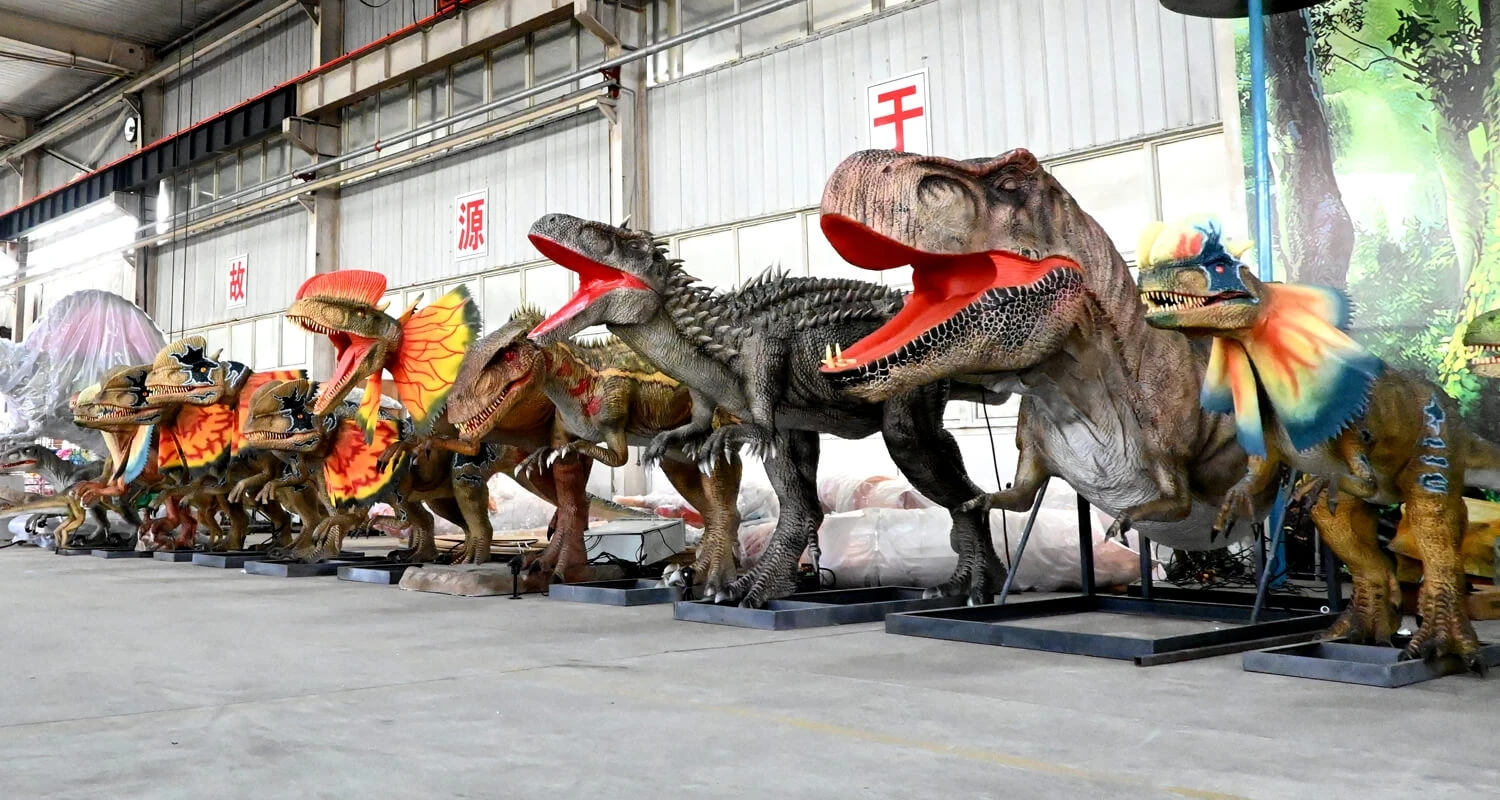
Outdoor animatronic dinosaurs should not continue operating when weather or equipment conditions may create a safety risk.
Stop operation and disconnect the power when there is:
Heavy rain or flooding
Strong wind
Standing water around electrical equipment
Damaged or exposed cables
Water inside the control box
An unstable foundation or loose fixing point
Abnormal noise or movement
Unusual heat or a burning smell
Temperatures outside the specified operating range
After extreme weather, inspect the foundation, fixing points, surface, joints, cables and control system before restarting the model.
Do not repeatedly restart a dinosaur to test a potentially dangerous fault. Keep visitors away and contact technical personnel when the cause is unclear.
What Maintenance Do Outdoor Dinosaurs Require?
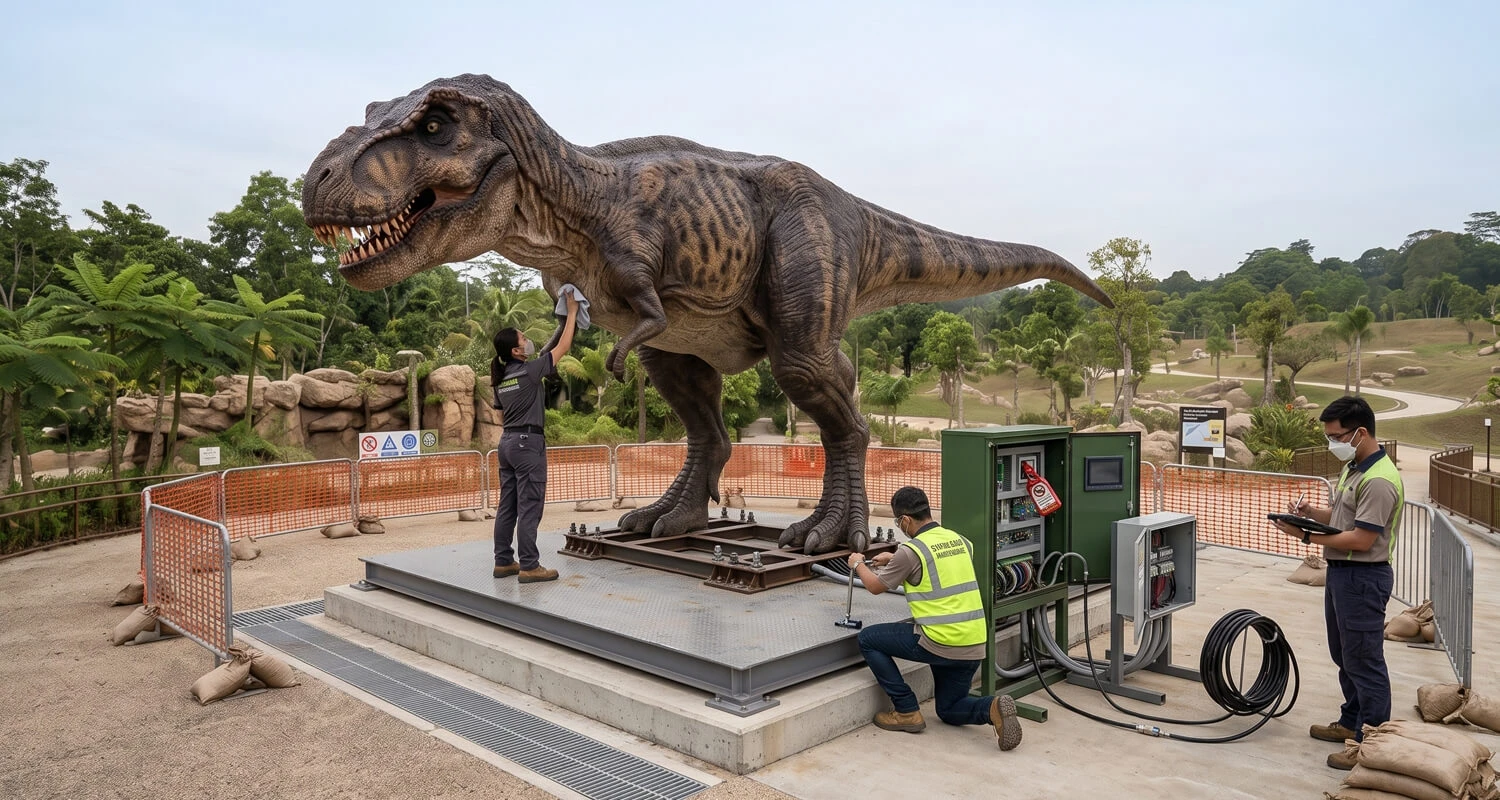
Outdoor models generally require more frequent inspection than indoor dinosaurs because they are exposed to weather, dust and temperature changes.
Routine maintenance should include:
Cleaning dust, leaves and surface dirt
Checking the skin, paint and seams
Inspecting moving areas for wear
Checking bolts, joints and fixing points
Keeping drainage areas clear
Inspecting cables and electrical connections
Checking the control box for moisture
Testing movements and sound
Recording faults and repairs
Before touching internal mechanical or electrical components, disconnect and isolate the power. Lubrication, internal wiring repairs, motor replacement and control-system adjustments should follow the manufacturer’s instructions.
Maintenance frequency depends on operating hours, climate and product configuration. Models operating daily in outdoor parks normally require closer inspection than temporary or indoor displays.
For a more detailed inspection schedule, see our animatronic dinosaur maintenance guide.
What Information Should Buyers Provide?
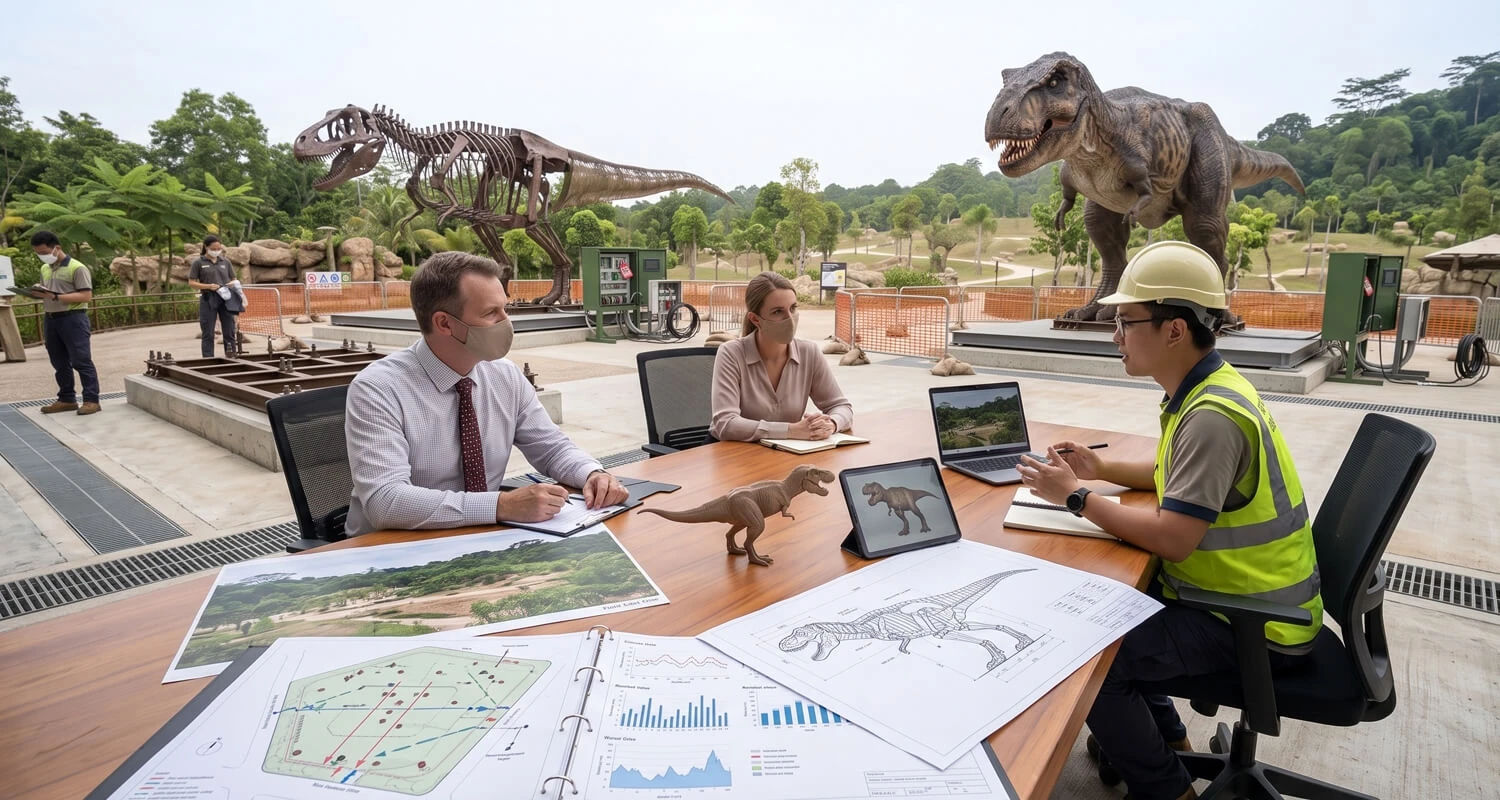
To recommend a suitable outdoor configuration, the manufacturer needs more than the dinosaur species and size.
Buyers should provide:
Installation country and city
Indoor or outdoor application
Local rainfall and temperature
Known strong-wind conditions
Dinosaur species and size
Quantity
Required movements and functions
Ground and foundation information
Available power supply
Venue photos or drawings
Expected installation date
Planned operating period
If the model is intended for a coastal, tropical, desert or very cold environment, mention this during the initial consultation. Different climates may require different surface, structural, electrical and maintenance solutions.
Frequently Asked Questions
Can animatronic dinosaurs stay outside all year?
They can remain outdoors when they are designed, installed and maintained for the local environment. Locations with extreme heat, cold, rainfall or strong wind may require additional protection or seasonal storage.
Are animatronic dinosaurs fully waterproof?
Outdoor animatronic dinosaurs can use weather-resistant surfaces and protected electrical systems, but they should not be described as fully waterproof. They must not be submerged or installed in areas with standing water.
Can they operate in heavy rain or strong wind?
Operation should stop during unsafe weather. Heavy rain, flooding and strong wind may affect electrical safety, structural stability and movement. The equipment should be inspected before restarting.
Do outdoor dinosaurs require foundations?
Most large outdoor animatronic dinosaurs require stable foundations and secure fixing. The exact design depends on product size, posture, base structure, ground conditions and wind exposure.
How long do outdoor animatronic dinosaurs last?
There is no universal lifespan. Service life depends on production quality, climate, operating frequency, installation and maintenance. Regular inspection and timely repair can help prevent minor damage from becoming more serious. Learn more about the factors affecting animatronic dinosaur lifespan.
Conclusion
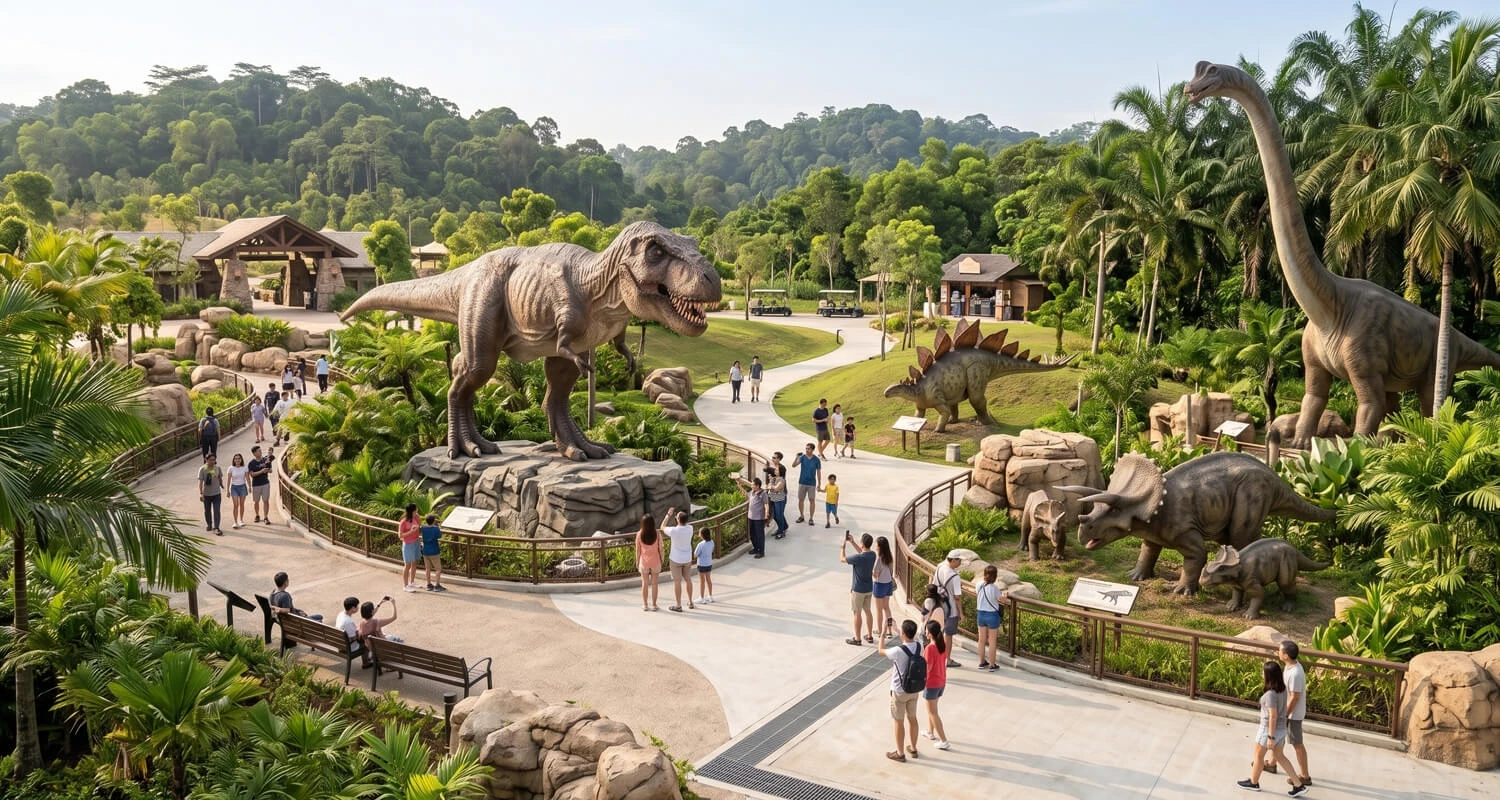
Animatronic dinosaurs can be used outdoors, but successful installation depends on the product configuration, local climate and site preparation.
Weather-resistant surfaces, protected electrical systems, stable foundations, effective drainage and regular maintenance are all important. Models should stop operating during extreme weather or when electrical, structural or movement problems are detected.
Send Gecai Culture your venue location, climate conditions, preferred dinosaur sizes, required movements and installation schedule. Our team can recommend a suitable outdoor animatronic dinosaur configuration for your project.
Tags: