About us
Gecai Culture stands at the forefront of bringing the past to life through our state-of-the-art Animatronic Dinosaurs, enchanting Animatronic Creatures, vibrant Chinese Festival Lanterns, and tailored Custom Products. As a professional manufacturer nestled in the heart of China, we harbor a deep-seated passion for showcasing our lifelike dinos and animals in museums, exhibitions, zoos, parks, and beyond, aiming to kindle a flame of curiosity and learning in people of all ages.
Get a free quote
Dinosaur Knowledge
Long Neck Dinosaurs: Names, Sizes and Key Facts
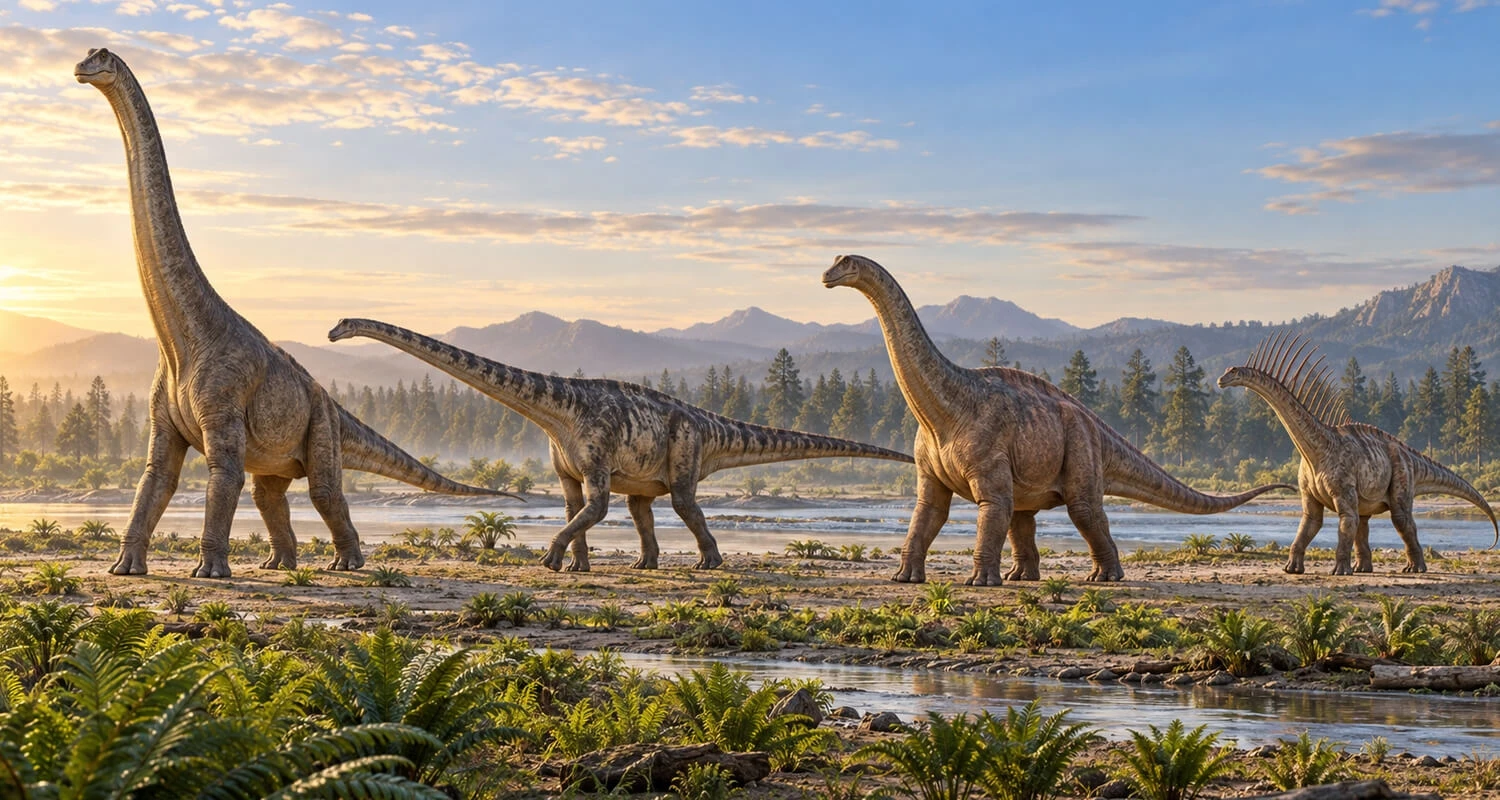
Long neck dinosaurs are commonly called sauropods. They were four-legged, plant-eating dinosaurs known for their long necks, long tails, small heads and large bodies.
Famous long neck dinosaurs include Brachiosaurus, Diplodocus, Brontosaurus, Mamenchisaurus and Patagotitan. However, they did not all have the same body shape or feeding strategy. Some reached vegetation high in trees, while others fed closer to the ground.
What Are Long Neck Dinosaurs Called?
Most of the dinosaurs people describe as “long neck dinosaurs” belong to a group called Sauropoda.
Sauropods lived during much of the Mesozoic Era and were found on several continents. The group included relatively small species as well as some of the largest land animals known from the fossil record.
Typical sauropod features included:
| Feature | Description |
|---|---|
| Long neck | Increased the dinosaur’s feeding range |
| Small head | Reduced the weight carried at the end of the neck |
| Long tail | Helped balance the body and may have served other functions |
| Four strong legs | Supported the animal’s weight |
| Large digestive system | Helped process large amounts of plant material |
| Air-filled vertebrae | Reduced skeletal weight in many species |
Although these characteristics were common, sauropod proportions varied considerably. Brachiosaurus had longer front legs and a more elevated body, while Diplodocus had a lower, more horizontal build.
Long Neck Dinosaur Names and Sizes
The following are some of the best-known long neck dinosaurs. All sizes are approximate because many species are known from incomplete skeletons.
| Dinosaur | Approximate length | Main characteristic |
|---|---|---|
| Brachiosaurus | 22 m / 72 ft | Tall body and longer front legs |
| Diplodocus | 24–26 m / 79–85 ft | Slender body and very long tail |
| Brontosaurus | 21–22 m / 69–72 ft | Strong body with a long, flexible neck |
| Apatosaurus | 21–23 m / 69–75 ft | Heavy body and robust neck |
| Mamenchisaurus | Varies by species | Exceptionally long neck |
| Argentinosaurus | 30–35 m / 98–115 ft | One of the largest known sauropods |
| Patagotitan | About 30–37 m / 98–121 ft | Giant titanosaur known from several specimens |
| Amargasaurus | About 10 m / 33 ft | Tall spines along the neck and back |
| Nigersaurus | About 9 m / 30 ft | Wide muzzle and more than 500 teeth |
These estimates may change as new fossils are discovered and reconstruction methods improve. It is more accurate to present dinosaur size as a range rather than an exact measurement.
Brachiosaurus

Brachiosaurus is one of the most recognizable long neck dinosaurs. It lived in North America during the Late Jurassic period.
Unlike many sauropods, its front legs were longer than its hind legs. This created a body that rose toward the shoulders and helped the dinosaur reach vegetation above the feeding range of many other herbivores.
Brachiosaurus is often shown with a giraffe-like posture. However, scientists do not have a complete Brachiosaurus skeleton, and some older reconstructions were partly based on the related African dinosaur Giraffatitan.
Brontosaurus and Apatosaurus

Brontosaurus and Apatosaurus were closely related sauropods that lived during the Late Jurassic period.
For much of the twentieth century, Brontosaurus was considered another type of Apatosaurus. A large anatomical study published in 2015 concluded that there were enough skeletal differences to recognize Brontosaurus as a separate genus again.
Both dinosaurs had powerful bodies, long tails and strong necks. Apatosaurus was generally more robust, while Brontosaurus had a somewhat lighter build.
Diplodocus

Diplodocus had an extremely long neck and tail but a more lightly built body than many other large sauropods.
It probably held much of its neck in a relatively horizontal position, allowing it to feed across a wide area without constantly moving its body. Its peg-like teeth were concentrated near the front of the jaws and were suited to stripping or gathering vegetation rather than chewing it.
The long, narrow tail helped balance its neck. Scientists have proposed several additional functions for sauropod tails, but some ideas remain uncertain.
Mamenchisaurus

Mamenchisaurus is famous for having one of the longest necks of any dinosaur.
Several species have been assigned to this genus, and their anatomy and classification continue to be studied. A 2023 scientific reassessment estimated that the neck of Mamenchisaurus sinocanadorum may have exceeded 14 meters and possibly reached approximately 15 meters.
This estimate is based on incomplete remains and comparisons with related dinosaurs, so it should not be treated as a precise measurement. Even so, Mamenchisaurus remains one of the strongest candidates for the dinosaur with the longest neck.
Argentinosaurus and Patagotitan

Argentinosaurus and Patagotitan were titanosaurs from South America and are among the largest land animals ever discovered.
Argentinosaurus may have reached approximately 30–35 meters in length, but its fossils are incomplete. This makes estimates of its total length and weight uncertain.
Patagotitan is known from a larger collection of fossil bones belonging to several individuals. It is therefore easier to reconstruct, although scientists still obtain different size estimates depending on the method used.
It is safest to describe both dinosaurs as being among the largest known dinosaurs rather than declaring one species the undisputed largest.
Amargasaurus

Amargasaurus was much smaller than giants such as Patagotitan and Argentinosaurus. It measured approximately 10 meters long and lived in South America during the Early Cretaceous period.
Its most unusual feature was a row of elongated spines along its neck and back. Scientists have proposed that these spines supported a display structure, helped protect the neck or served another biological function. Their exact appearance in life remains uncertain.
Nigersaurus
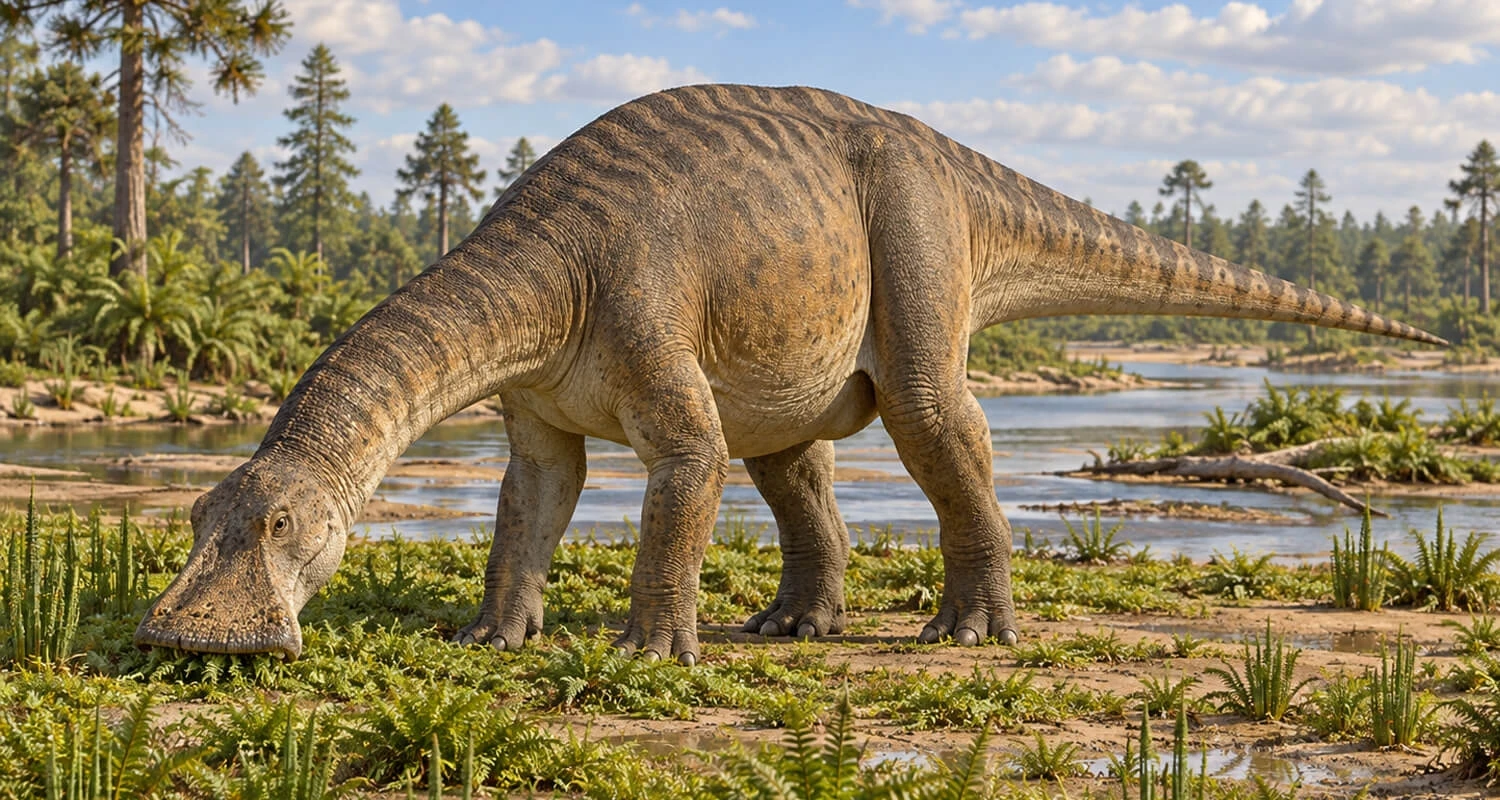
Nigersaurus was a relatively small and short-necked sauropod that lived in what is now Niger, Africa.
Unlike sauropods adapted to reach high vegetation, Nigersaurus had a downward-facing muzzle suited to feeding close to the ground. Its jaws contained more than 500 active and replacement teeth arranged in dental batteries.
Learn more about the unusual dinosaur with 500 teeth.
Why Did Sauropods Have Long Necks?
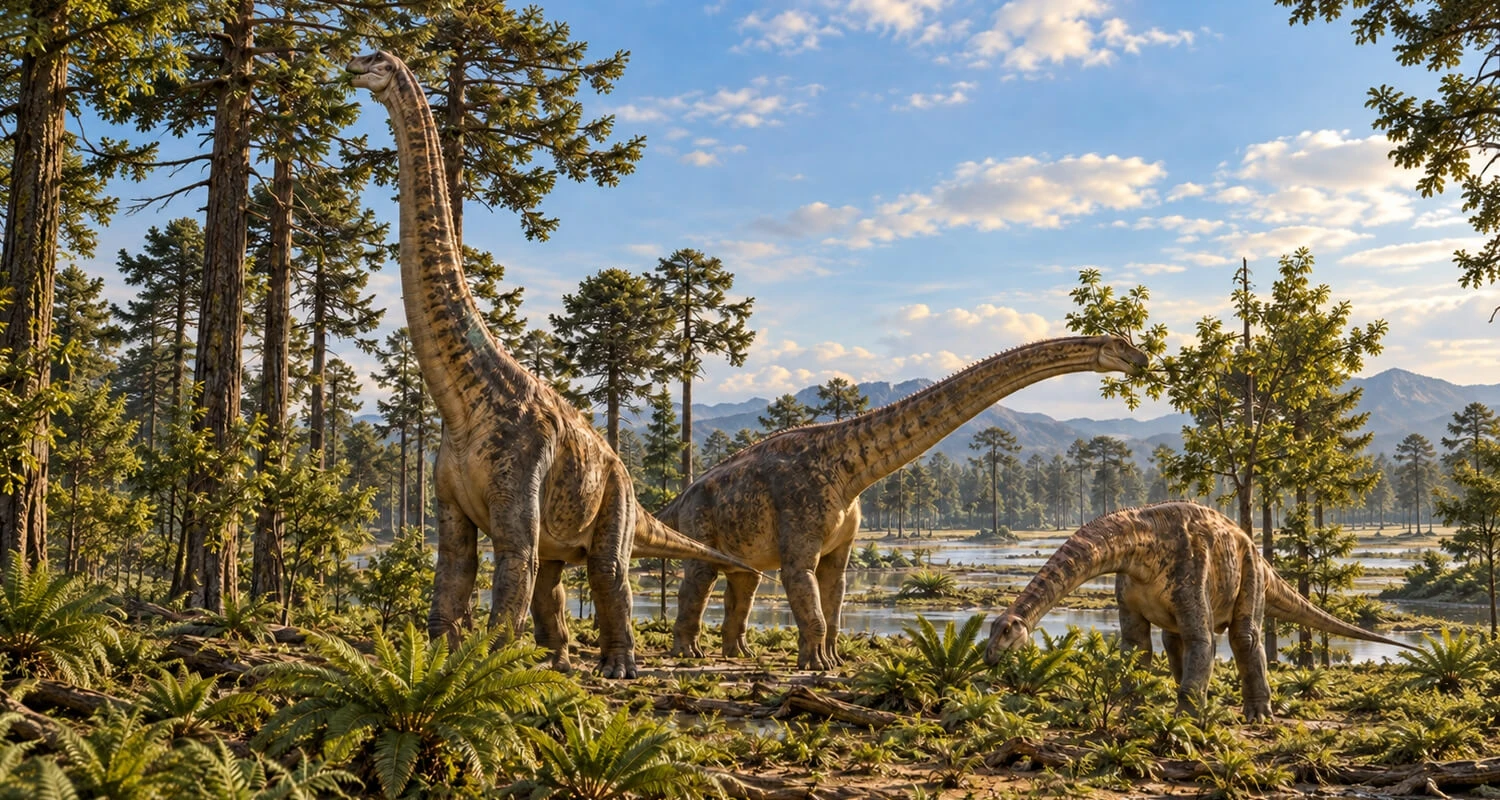
A long neck gave sauropods access to a larger feeding area. A dinosaur could gather vegetation from different heights or sweep its head across a wide area without moving its entire body.
Possible benefits included:
Reaching vegetation unavailable to shorter herbivores
Feeding over a wider area while standing in one place
Reducing the energy required to move a large body
Accessing different plant layers in the same environment
Displaying or interacting with other members of the species
Not every sauropod used its neck in the same way. Body posture, neck flexibility, teeth and habitat all influenced how an individual species probably fed.
How Did Long Neck Dinosaurs Support Their Necks?
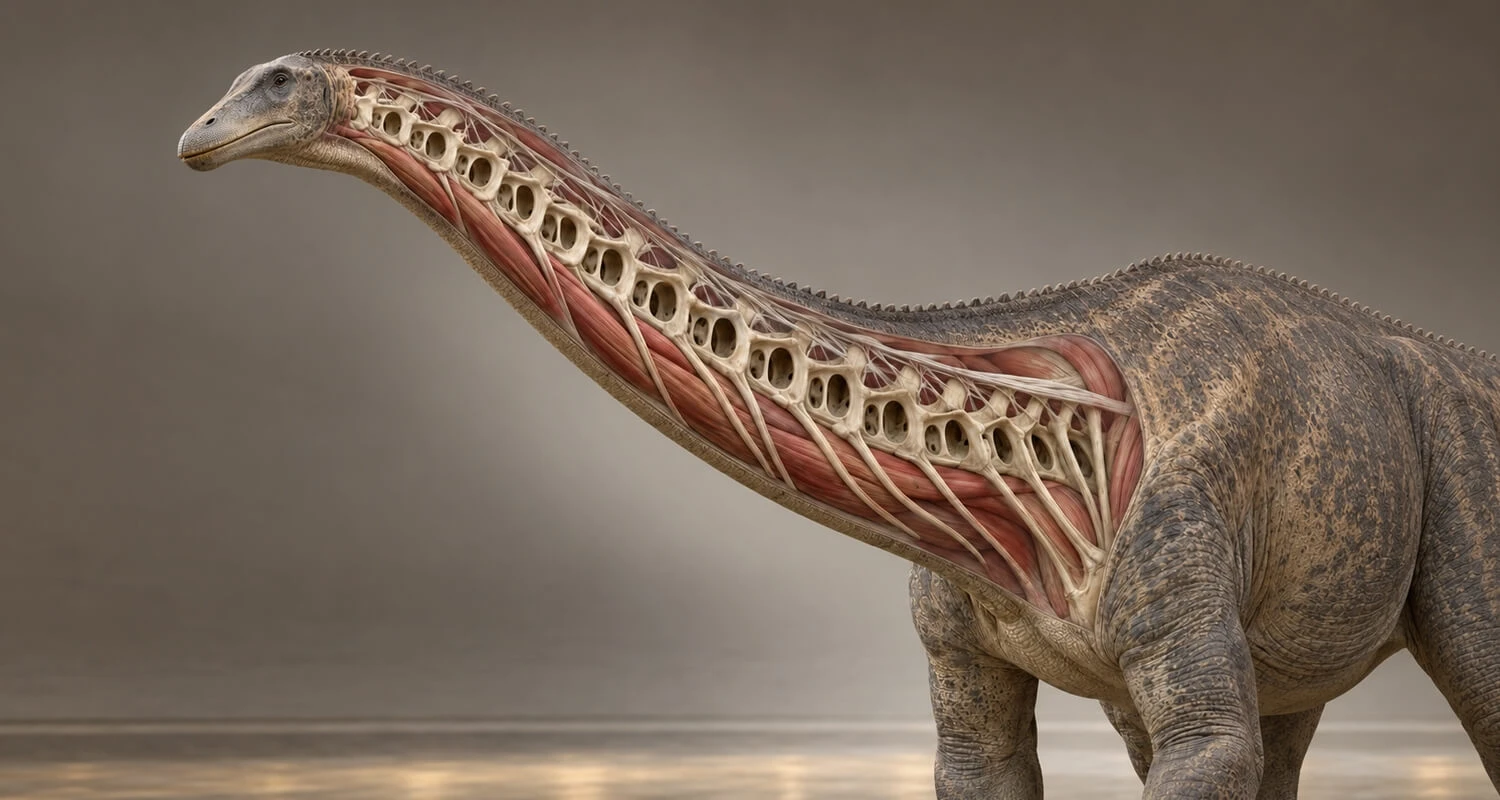
Sauropod necks were long but not constructed as solid, heavy columns of bone.
In many species, the vertebrae contained air-filled spaces connected to a bird-like respiratory system. These spaces helped reduce skeletal weight while maintaining the size and structure of the vertebrae.
Ligaments, muscles and elongated cervical ribs also helped support and stabilize the neck. Different sauropods had different combinations of vertebral shape, flexibility and soft-tissue support.
Because muscles and ligaments rarely fossilize, scientists use bones, comparisons with living animals and biomechanical models to reconstruct how sauropods held and moved their necks.
Did All Long Neck Dinosaurs Eat from Tall Trees?
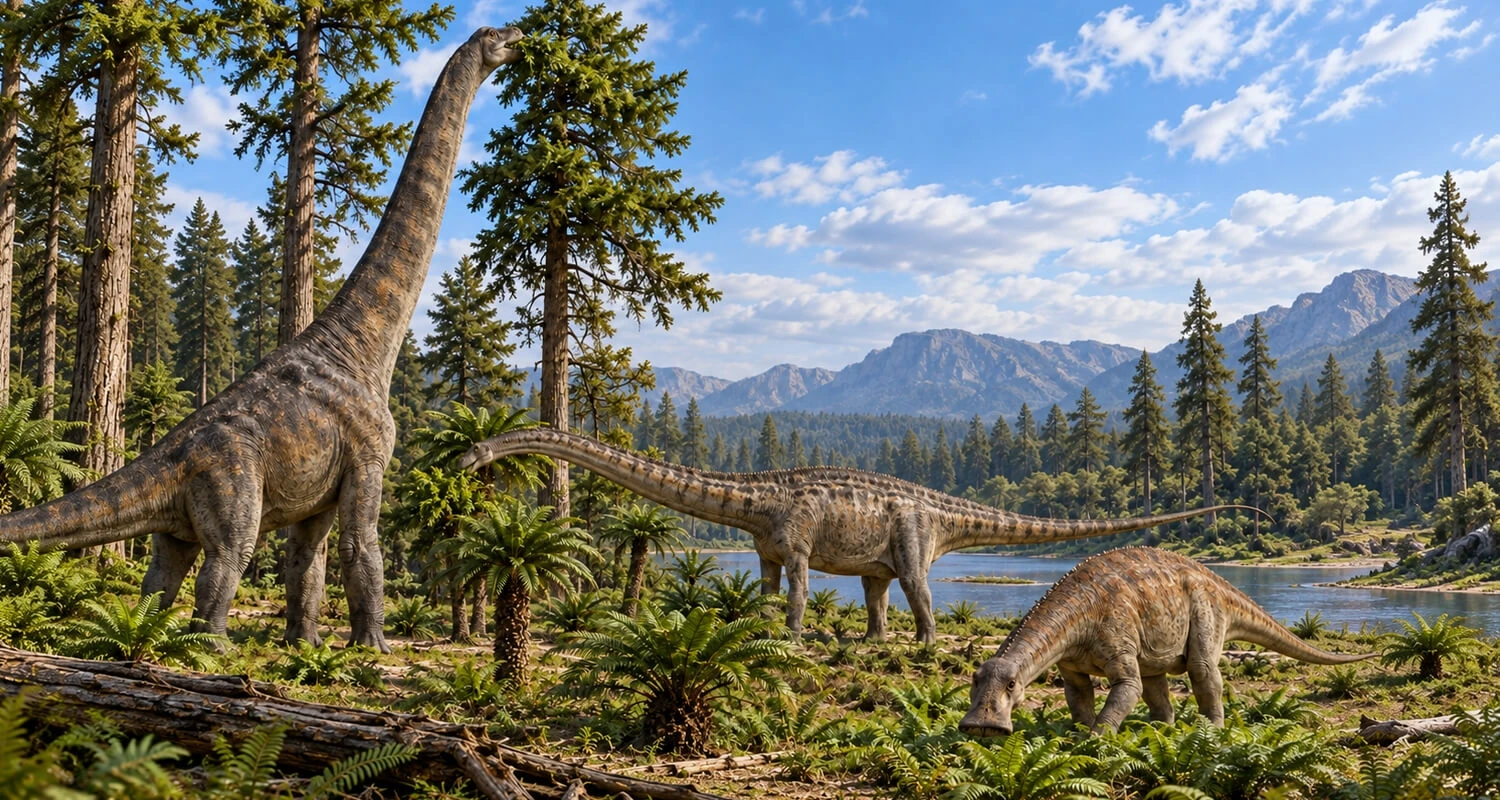
No. Long neck dinosaurs used different feeding heights and strategies.
Brachiosaurus had a tall shoulder position and was likely suited to feeding from relatively high vegetation. Diplodocus may have held much of its neck horizontally, allowing it to reach both low and moderately high plants.
Nigersaurus had a short neck and a muzzle adapted for ground-level browsing. This variation reduced direct competition by allowing different sauropods to feed on different plants or at different heights.
What Did Long Neck Dinosaurs Eat?
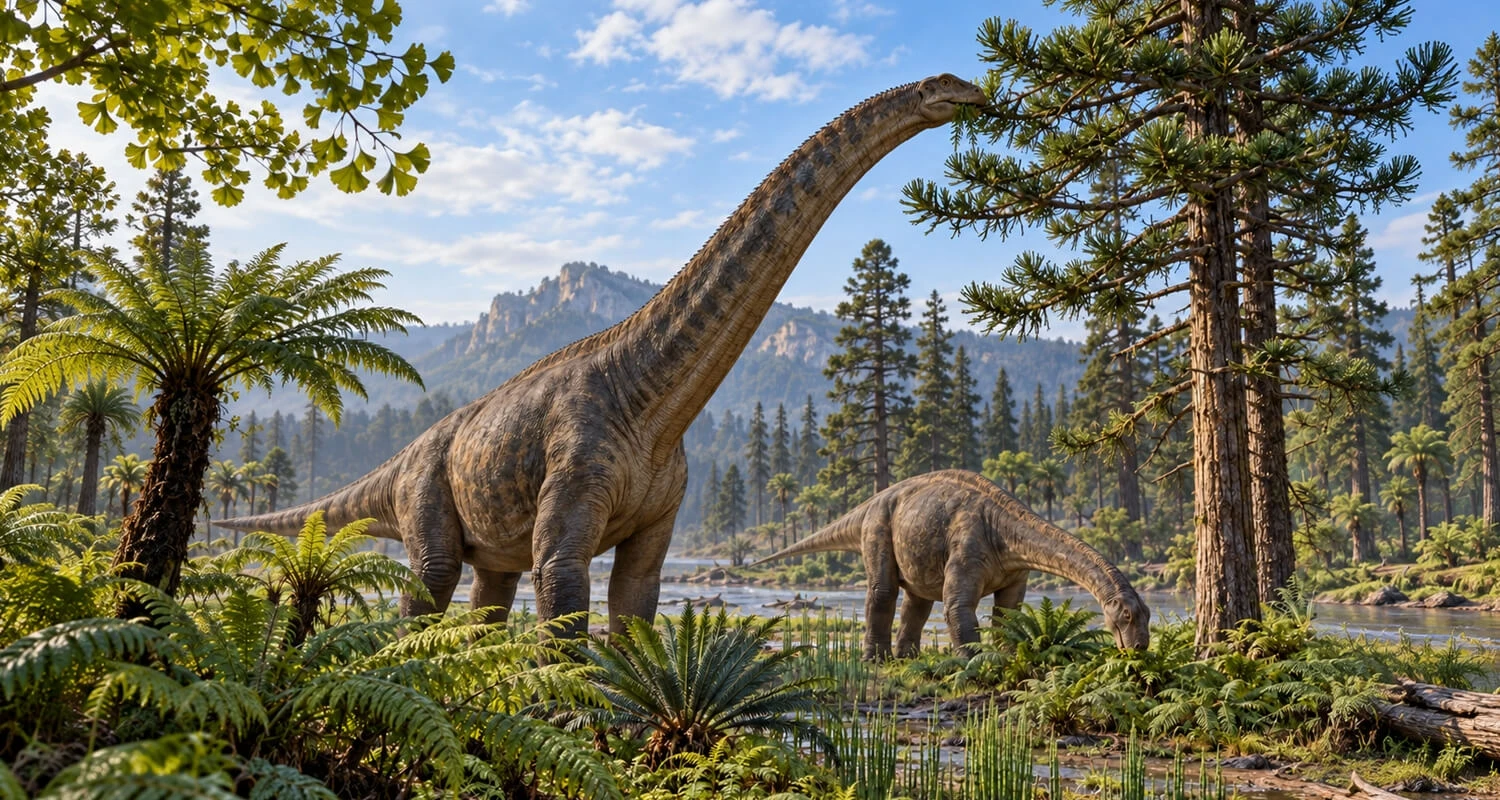
Sauropods were herbivores, but their specific diets varied by species, habitat and geological period.
Possible food sources included:
Conifers
Ferns
Cycads
Horsetails
Ginkgo-like plants
Leaves and young shoots
Low-growing vegetation
Most sauropods did not chew food in the same way as modern mammals. Their teeth usually cut, stripped or gathered plants, while a large digestive system processed the swallowed vegetation.
Frequently Asked Questions
What is the name of the long neck dinosaur?
There was no single long neck dinosaur. Brachiosaurus, Diplodocus, Brontosaurus, Apatosaurus and Mamenchisaurus are all well-known examples. Most long neck dinosaurs are classified as sauropods.
Which dinosaur had the longest neck?
Mamenchisaurus sinocanadorum is one of the leading candidates. Its neck has been estimated at more than 14 meters and possibly about 15 meters, although the fossil material is incomplete.
What was the biggest long neck dinosaur?
Argentinosaurus and Patagotitan are among the largest known long neck dinosaurs. Argentinosaurus may have been larger, but Patagotitan is represented by more complete fossil material. Exact rankings remain uncertain.
What was a small long neck dinosaur?
Amargasaurus and Nigersaurus were relatively small compared with giant sauropods. Both were approximately 9–10 meters long, although that was still large compared with most modern land animals.
Were all long neck dinosaurs herbivores?
Known sauropods were plant-eaters. Their teeth and jaw structures were adapted to gather, cut or strip vegetation rather than capture prey.
Did long neck dinosaurs live in water?
Sauropods were land animals. Early reconstructions sometimes placed them in deep water because their bodies appeared too heavy to support on land. Fossil tracks, limb anatomy and other evidence now show that they were fully terrestrial.
Did long neck dinosaurs live with Tyrannosaurus rex?
Some titanosaurs lived during the Late Cretaceous, the same broad period as Tyrannosaurus rex. However, famous Jurassic sauropods such as Brachiosaurus, Diplodocus and Brontosaurus lived tens of millions of years earlier.
Conclusion
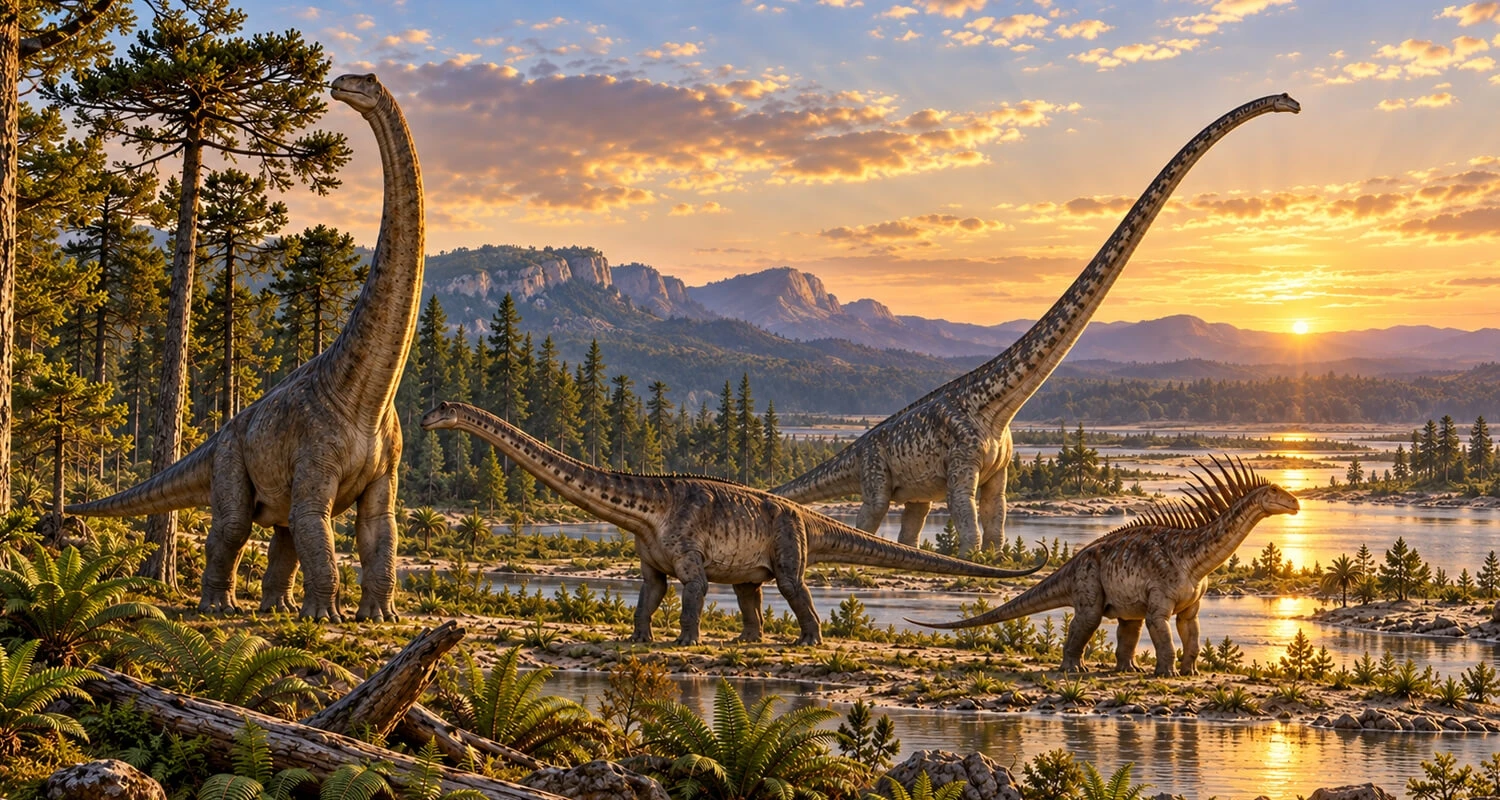
Long neck dinosaurs were a diverse group of plant-eating dinosaurs rather than a single species. Their neck length, body size, posture and feeding strategies differed considerably.
Brachiosaurus was adapted for relatively high browsing, Diplodocus had a long and more horizontal body plan, Mamenchisaurus developed an exceptionally long neck, and Nigersaurus specialized in feeding close to the ground.
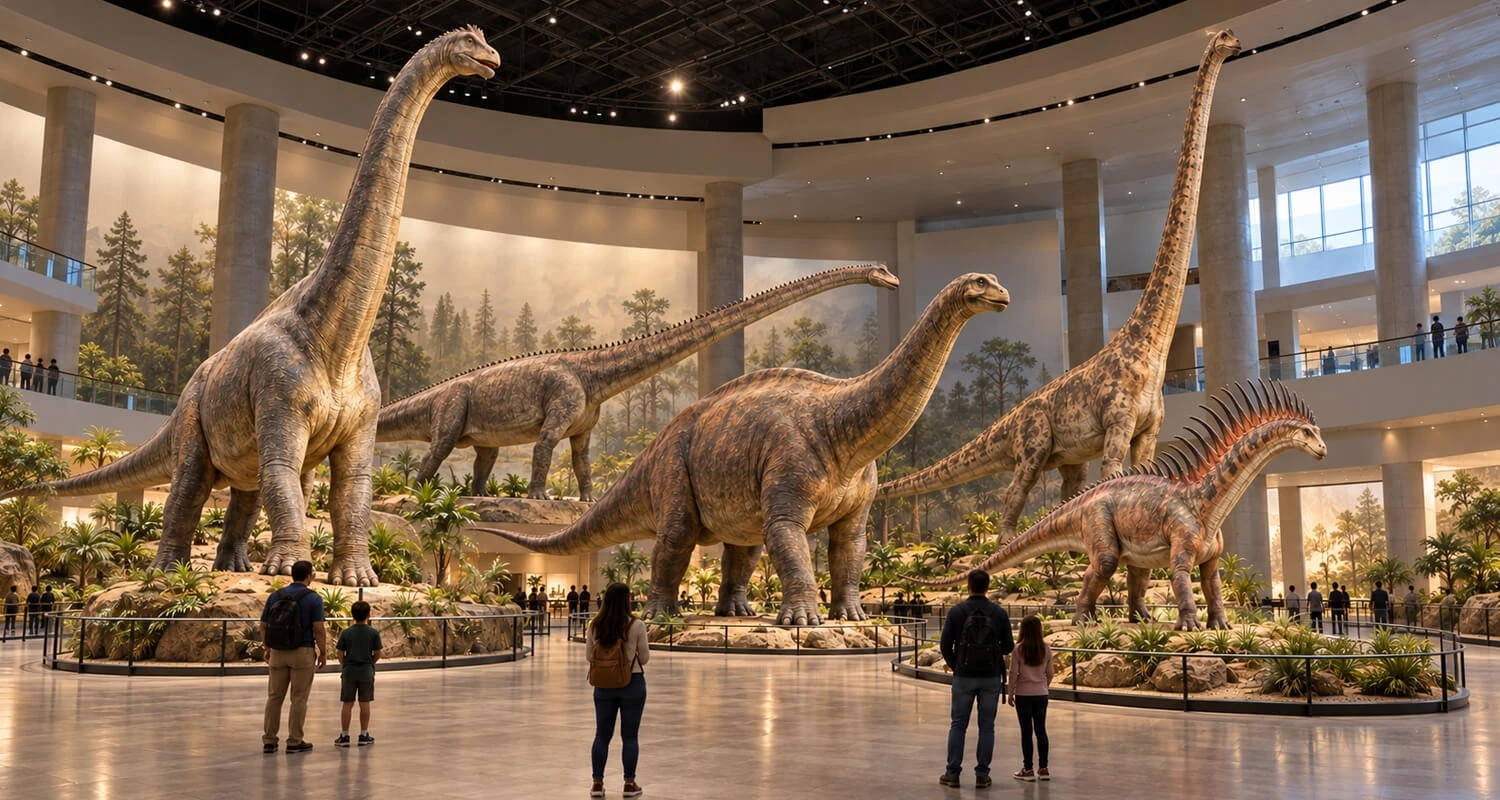
For museums, theme parks and educational exhibitions, Gecai Culture can customize an animatronic long neck dinosaur according to the required species, size, posture, movement and installation environment.
Tags: